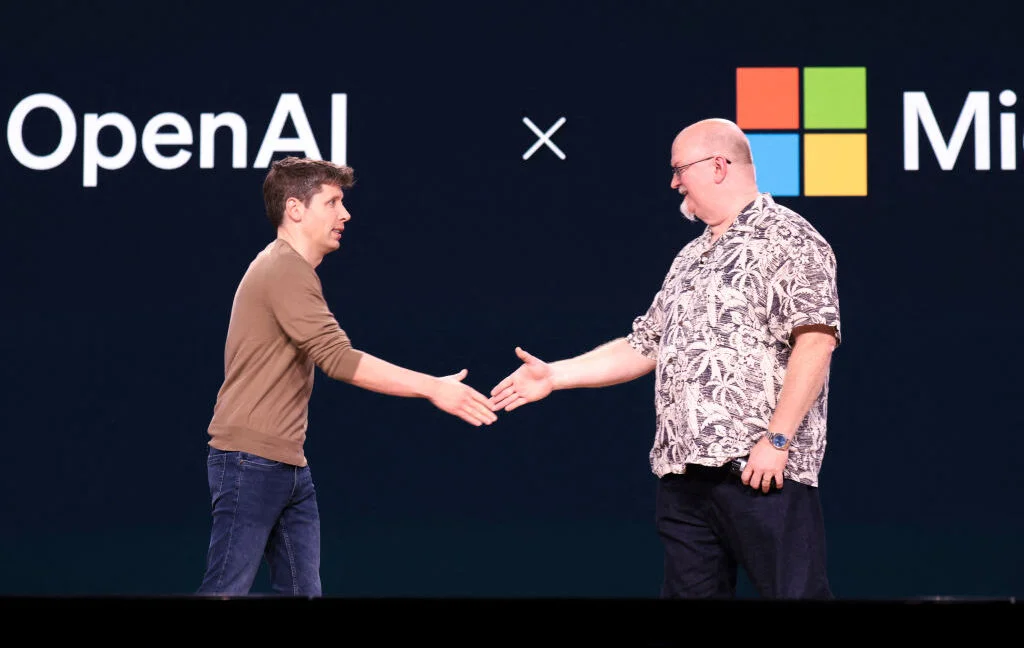
🔍 Executive Summary
- OpenAI and Microsoft have officially terminated their cloud exclusivity agreement as of April 2026, enabling the integration of OpenAI’s models into Amazon Bedrock to drive a more resilient, multi-cloud enterprise strategy.
Strategic Deep-Dive
The Dissolution of Cloud Exclusivity and the 13-Billion-Dollar Partnership
In a landmark shift that redefines the competitive landscape of the artificial intelligence industry, OpenAI and Microsoft have officially amended their long-standing partnership agreement to terminate cloud exclusivity as of April 28, 2026. Since the inception of their deep collaboration, OpenAI’s high-performance models were mandated to run exclusively on Microsoft’s Azure infrastructure. This arrangement provided Microsoft with a unique competitive edge, positioning Azure as the premier destination for cutting-edge generative AI.
However, the two entities have reached a consensus to allow OpenAI’s models to reside on alternative cloud infrastructures, signaling a transition toward a more flexible, multi-cloud strategy for the AI research giant.
Strategic Integration with Amazon Bedrock and Architectural Shifts
The most immediate and consequential outcome of this amended agreement is the availability of OpenAI models on Amazon Bedrock. Amazon Bedrock is a fully managed service from Amazon Web Services (AWS) that offers high-performing foundation models through a unified API. From a Data Architect’s perspective, this move addresses critical challenges regarding model weight portability and latency-sensitive inference.
By opening the gates to Bedrock, OpenAI effectively removes the barrier that previously prevented AWS-heavy enterprises from accessing its technology natively. This transition is expected to trigger a massive influx of enterprise adoption, as companies already established within the AWS ecosystem can now leverage OpenAI’s capabilities without the friction of migrating massive datasets across clouds or managing the overhead of multi-cloud complexities.
Navigating CaaS Volatility and Hardware Cluster Availability
From a strategic standpoint, the end of exclusivity represents OpenAI’s pursuit of technical and commercial autonomy in an era of Compute-as-a-Service (CaaS) volatility. Relying on a single infrastructure provider presents significant risks, including potential hardware bottlenecks related to H100/B200 cluster availability and limited negotiation leverage regarding compute costs. By adopting a multi-cloud approach, OpenAI can optimize its resource allocation across different global regions and hardware configurations, ensuring that its trajectory toward Artificial General Intelligence (AGI) remains resilient against supply chain disruptions.
Market Implications and the Maturity of AI Distribution
Furthermore, this shift reflects the maturing nature of the AI market. As Large Language Models (LLMs) become fundamental utility layers for global business operations, the focus is moving from exclusive access to pervasive availability. While Microsoft remains a pivotal stakeholder and strategic ally, the decoupling of the model from the cloud provider marks a maturation of the industry where the software layer begins to exert more dominance over the underlying hardware.
This move ensures that OpenAI maintains its market leadership by being present wherever enterprise data resides. For Amazon, this provides a vital boost in its ongoing battle to match the AI offerings of Microsoft and Google, effectively democratizing access to the world’s most advanced AI models across the dominant cloud platform.