🔍 Executive Summary
- OpenAI is reportedly making a push into consumer hardware with devices driven by AI agents, potentially redefining the traditional smartphone experience.
- Industry analyst Ming-Chi Kuo identifies MediaTek, Qualcomm, and Luxshare Precision Industry as key suppliers for OpenAI’s hardware ambitions.
- The shift from software-based LLMs to dedicated AI-agent hardware poses a strategic threat to traditional smartphone OEMs like Apple and Samsung.
Strategic Deep-Dive
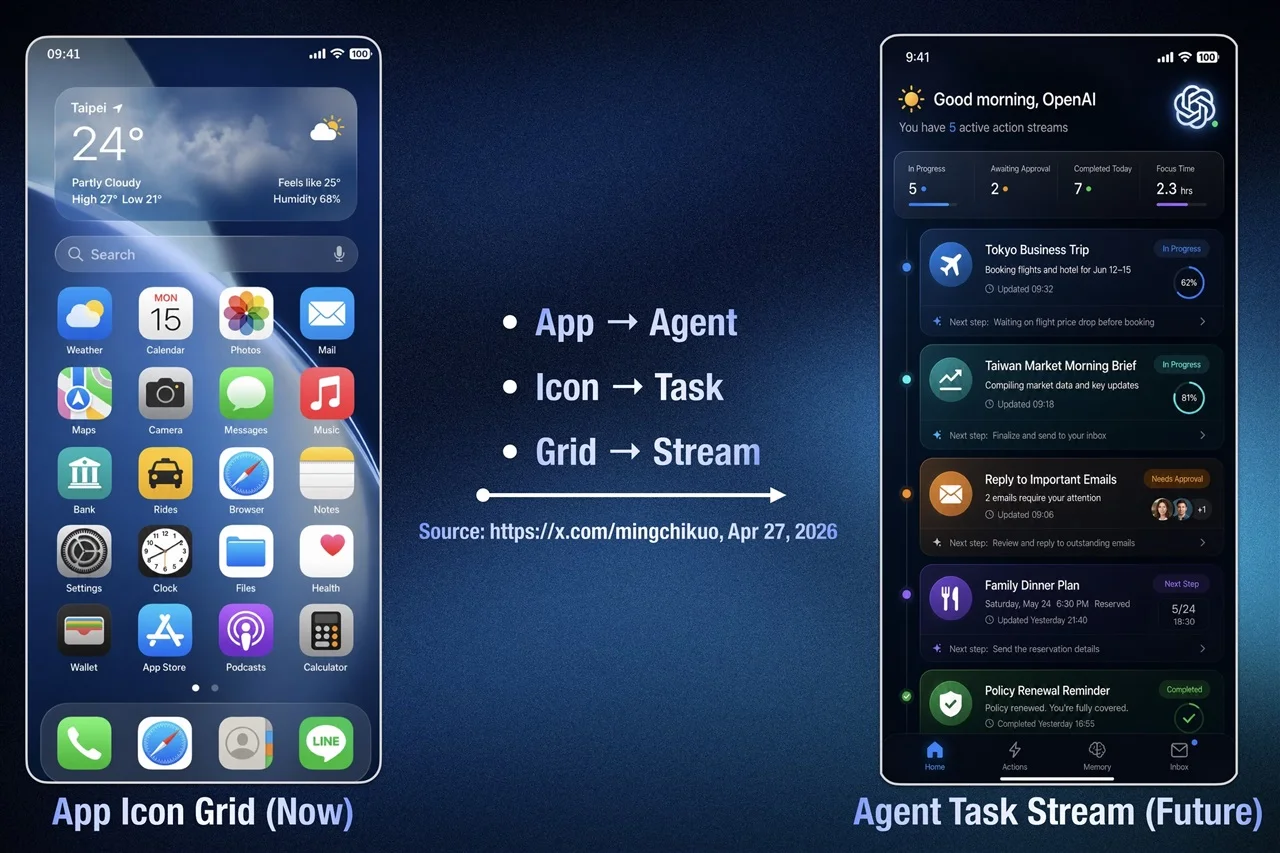
OpenAI, the organization that catalyzed the generative AI revolution, is now reportedly orchestrating a bold entry into the physical consumer electronics market. This move, analyzed in detail by industry veteran Ming-Chi Kuo, suggests that OpenAI aims to ‘redefine’ the smartphone by centering the user experience around a hardware-integrated AI agent rather than traditional mobile applications. This shift represents a transition from software-only Large Language Models (LLMs) to dedicated hardware that prioritizes proactive task execution and intent recognition.
If successful, this could mark the most significant disruption to the personal computing paradigm since the introduction of the first iPhone.
The potential supply chain for OpenAI’s hardware push highlights a fascinating strategic alignment with premier silicon and assembly partners. MediaTek and Qualcomm are emerging as the likely providers of the high-performance system-on-chips (SoCs) required to process complex AI tasks locally on-device. However, their roles are distinct.
MediaTek is known for its cost-effective integration of powerful AI Processing Units (APUs), making it an ideal partner for scaling AI hardware to a broader market. In contrast, Qualcomm leads in raw NPU performance, providing the specialized architecture needed for high-fidelity, real-time inference in premium segments. The involvement of Luxshare Precision Industry as a primary manufacturing partner further validates the seriousness of this endeavor, as Luxshare brings sophisticated vertical integration and assembly capabilities similar to those it provides for Apple’s most advanced products.
Technically, an AI agent-driven device would fundamentally differ from current smartphone architectures. It would likely move away from an app-store-centric model toward a seamless, intent-based interface where the operating system itself is the AI. This poses a strategic threat to established smartphone OEMs like Apple and Samsung.
If the user interface is dominated by an OpenAI-driven agent, the underlying hardware brand and the traditional app ecosystem become secondary to the AI’s intelligence and utility. While OpenAI has not yet independently confirmed these plans, the level of supply chain mobilization and the caliber of the partners involved suggest a project of immense scale. The hardware world is watching closely as OpenAI prepares to potentially bridge the gap between abstract software intelligence and a new category of physical consumer devices that could render the traditional smartphone obsolete.