🔍 Executive Summary
- Industrial giants Fanuc and Siemens are integrating their manufacturing expertise to pioneer 'Physical AI,' moving beyond digital data to autonomous physical operations.
Strategic Deep-Dive
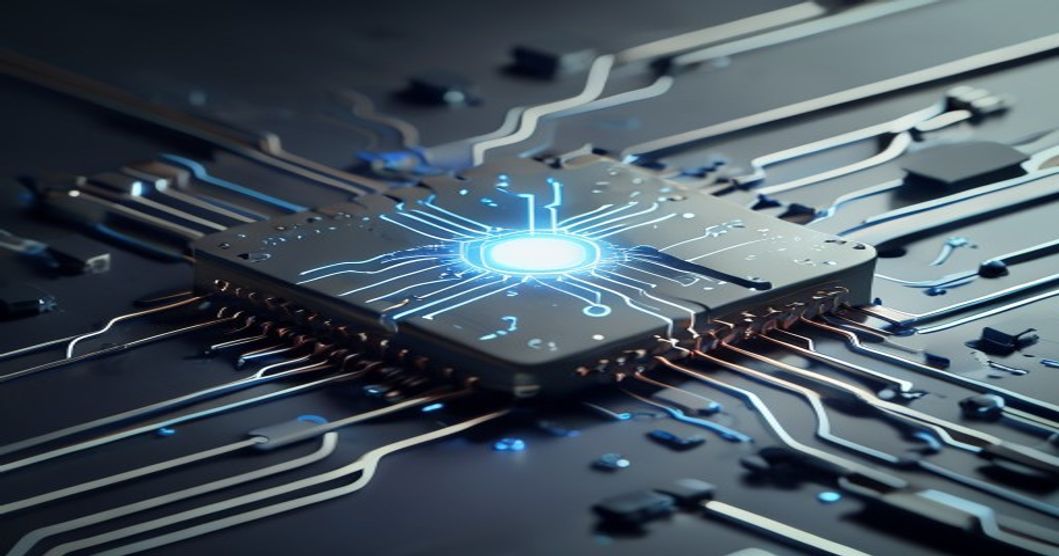
The boundary between Information Technology (IT) and Operational Technology (OT) is being fundamentally rewritten as Fanuc and Siemens announce a joint push into ‘Physical AI.’ This strategic collaboration aims to instill a cognitive understanding of physical principles into industrial robots and CNC machinery, moving away from reactive automation toward proactive autonomy. By integrating Siemens’ comprehensive software suite and Digital Twin technology with Fanuc’s market-leading robotics and numerical control systems, the partnership is addressing the ’last mile’ of industrial intelligence: the gap between digital models and real-world physical execution. Physical AI, as defined in this context, involves the real-time processing of sensory data—such as vibrations, thermal expansion, and motor torque—through high-performance edge computing modules.
This allows a robot to not just follow a pre-programmed path, but to adjust its movements dynamically based on the resistance it feels or the wear and tear it detects on a workpiece. A critical component of this synergy is the use of the OPC UA (Open Platform Communications Unified Architecture) protocol, which ensures seamless data interoperability between disparate hardware and software layers. Furthermore, the collaboration leverages Siemens Xcelerator and Fanuc’s FIELD system to create a feedback loop where physical performance data constantly refines the virtual design model.
This is particularly transformative for industries with zero-tolerance for error, such as aerospace manufacturing and pharmaceutical packaging. From a technical standpoint, the focus is on ‘Domain-Aware AI,’ which utilizes decades of proprietary manufacturing data to train neural networks that understand mechanical physics. This approach effectively digitizes the expertise of an aging workforce, preserving decades of manual precision in the form of scalable algorithms.
By reducing the latency between sensing and action through localized AI inference, Fanuc and Siemens are enabling a level of precision that was previously unattainable. This movement also aligns with global sustainability goals; smarter machines mean less waste, lower energy consumption, and optimized resource utilization. As the manufacturing sector grapples with labor shortages and rising complexity, the Fanuc-Siemens alliance positions Physical AI as the foundational architecture of the 2030 factory.
The collaboration underscores a shift in value from selling standalone machines to providing holistic, AI-driven ‘intelligence-as-a-service’ for the global industrial ecosystem.