🔍 Executive Summary
- The emergence of the Irtysh C632, a 32-core processor born from the strategic technological nexus between Russian and Chinese engineering, represents a bold attempt at breaking Western semiconductor hegemony. However, recent empirical data from the technical outlet *PRO Hi-Tech* provides a sobering reality check regarding the chip's real-world utility in high-performance consumer scenarios. In a rigorous evaluation using *The Witcher 3: Wild Hunt*, the C632 was paired with the cutting-edge AMD Radeon RX 9600 XT, a combination that should theoretically produce triple-digit frame rates. Instead,...
Strategic Deep-Dive
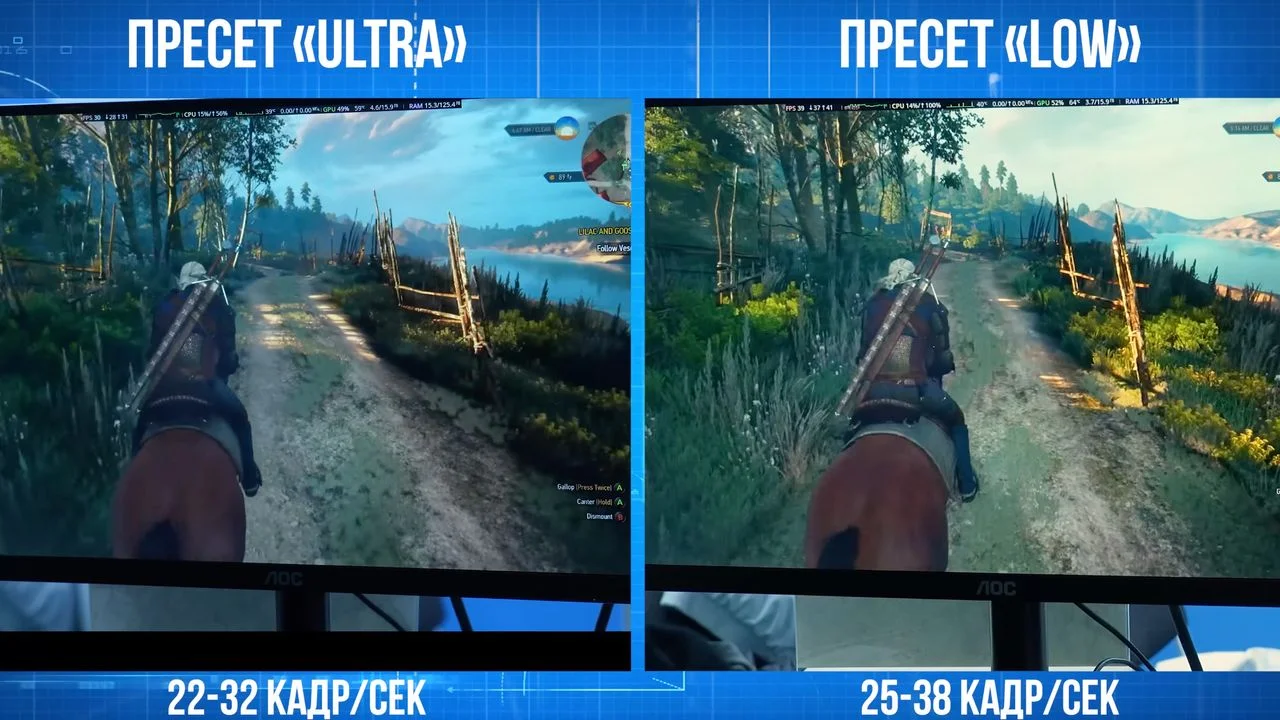
The emergence of the Irtysh C632, a 32-core processor born from the strategic technological nexus between Russian and Chinese engineering, represents a bold attempt at breaking Western semiconductor hegemony. However, recent empirical data from the technical outlet PRO Hi-Tech provides a sobering reality check regarding the chip’s real-world utility in high-performance consumer scenarios. In a rigorous evaluation using The Witcher 3: Wild Hunt, the C632 was paired with the cutting-edge AMD Radeon RX 9600 XT, a combination that should theoretically produce triple-digit frame rates.
Instead, the system struggled to maintain a baseline of 30+ FPS, revealing a profound architectural mismatch.
Architectural Dissection and Performance Bottlenecks
The primary culprit identified in the synthesis is the severe CPU bottleneck. While the C632 boasts an impressive count of 32 physical cores, the underlying architecture appears to suffer from several critical deficiencies typical of early-stage independent silicon projects:
- Low Instructions Per Clock (IPC): The individual core efficiency lags significantly behind current-generation Zen or Raptor Lake architectures, making it ill-suited for serial tasks inherent in gaming logic.
- Inter-Core Latency: With a high core count, the interconnect fabric becomes a critical failure point. High latency between cores hampers the rapid synchronization required for frame rendering.
- NUMA Overhead: The memory controller and cache hierarchy seem optimized for throughput-heavy server tasks rather than the low-latency requirements of real-time physics and AI in modern game engines.
The Geopolitical and Technical Context
From an Information Architect’s perspective, the Irtysh C632 is a ‘heavyweight’ chip in a literal sense—designed for brute force parallelization but lacking the sophisticated internal logic found in high-tier Western silicon. The pairing with the RX 9600 XT highlights a stark disparity; the GPU’s high-speed memory and massive compute units are left idling, waiting for instructions from a CPU that cannot dispatch them fast enough. This ‘starvation’ of the GPU underscores the difficulty of creating balanced system-on-chip (SoC) ecosystems outside of established IP libraries.
Conclusion of Synthesis
The Irtysh project demonstrates that while Russia and China have successfully scaled core counts to impressive levels, the intellectual property gap in architectural efficiency remains the final frontier. For this collaboration to challenge global giants like Intel or AMD, future iterations must move beyond marketing-friendly core counts and focus on the granular micro-architectural optimizations—such as improved branch prediction and L3 cache management—that define modern high-performance computing. Until then, the C632 remains a niche solution, more capable of handling background server threads than front-end interactive experiences.