🔍 Executive Summary
- Driven by a surge in domestic AI compute orders and state-led infrastructure projects, Chinese GPU architect Moore Threads achieved its first quarterly profit in 2026 following years of R&D intensity.
Strategic Deep-Dive
The financial results for the first quarter of 2026 have confirmed a pivotal shift in the Chinese semiconductor landscape: Moore Threads, the nation’s leading domestic GPU designer, has officially reached profitability. Following a stellar 2025 characterized by triple-digit revenue growth, the company reported its first-ever quarterly profit in early 2026. This milestone is not merely a financial success but a strategic victory for China’s goal of semiconductor self-reliance in the face of ongoing international trade restrictions.
As a Data Architect, it is crucial to analyze how Moore Threads managed this transition from a capital-intensive R&D firm to a self-sustaining hardware powerhouse.
The primary engine of this growth is the unprecedented demand for AI compute infrastructure within mainland China. With access to high-end NVIDIA and AMD accelerators strictly limited by export controls, domestic firms have had no choice but to seek local alternatives. Moore Threads has filled this void by aggressively marketing its MUSA (Moore Threads Unified System Architecture) platform.
The profit reported in early 2026 is largely derived from massive orders for government-backed cloud computing projects in major tech hubs like Beijing, Shanghai, and Shenzhen. These projects are focused on building ‘sovereign AI’ capabilities, ranging from municipal smart-city monitoring to state-led large language model (LLM) initiatives. While Moore Threads’ hardware may still lag behind the flagship products of global leaders in terms of peak TFLOPS (Teraflops) and energy efficiency, its ‘good enough’ performance and guaranteed availability have made it the de facto standard for the Chinese domestic market.
Technically, Moore Threads has been focusing on software-hardware co-design to overcome the limitations imposed by sanctions on advanced node fabrication. Since they cannot easily access sub-5nm manufacturing, their architects have optimized the MUSA software stack to extract maximum performance from current-generation nodes. A significant portion of their R&D budget is now directed toward creating a software ecosystem that can serve as a viable alternative to NVIDIA’s CUDA.
By providing robust compilers and libraries that simplify the porting of AI workloads from CUDA to MUSA, Moore Threads has lowered the barrier to entry for domestic developers. This ’ecosystem lock-in’ is a classic Data Architect strategy: win the software layer to ensure the longevity of the hardware.
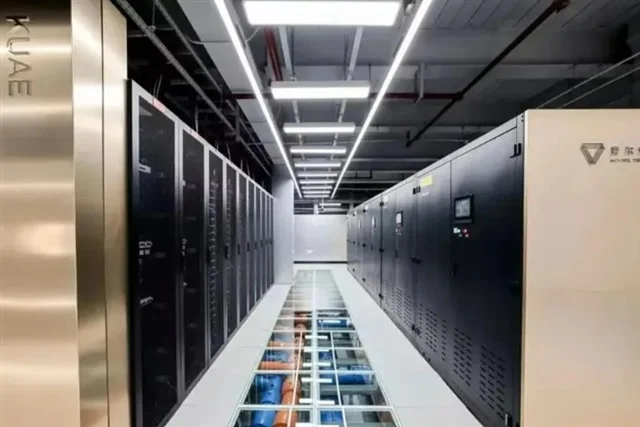
Furthermore, the monetization phase is being bolstered by a shift in the Chinese AI market from training to inference. While training massive models requires the highest-end interconnects and memory bandwidth, inference tasks can be effectively distributed across larger clusters of mid-to-high-range domestic GPUs. Moore Threads has capitalized on this by deploying its chips in high-density rack configurations optimized for inference at scale.
The company’s ability to generate profit under such severe geopolitical constraints is a testament to the sheer size of the Chinese internal market and the effectiveness of state-coordinated industrial policy. As Moore Threads moves forward, its biggest challenge will be maintaining this profitability while reinvesting into the next generation of GPU architecture, all while navigating the ever-tightening net of global supply chain regulations. Their success signals to the global hardware community that the era of a unified global GPU market may be coming to an end, replaced by distinct, geographically isolated compute ecosystems.