🔍 Executive Summary
- OpenAI is orchestrating a radical hardware shift by developing an 'agent-centric' smartphone supported by a high-tier supply chain involving Qualcomm, MediaTek, and exclusive manufacturer Luxshare.
Strategic Deep-Dive
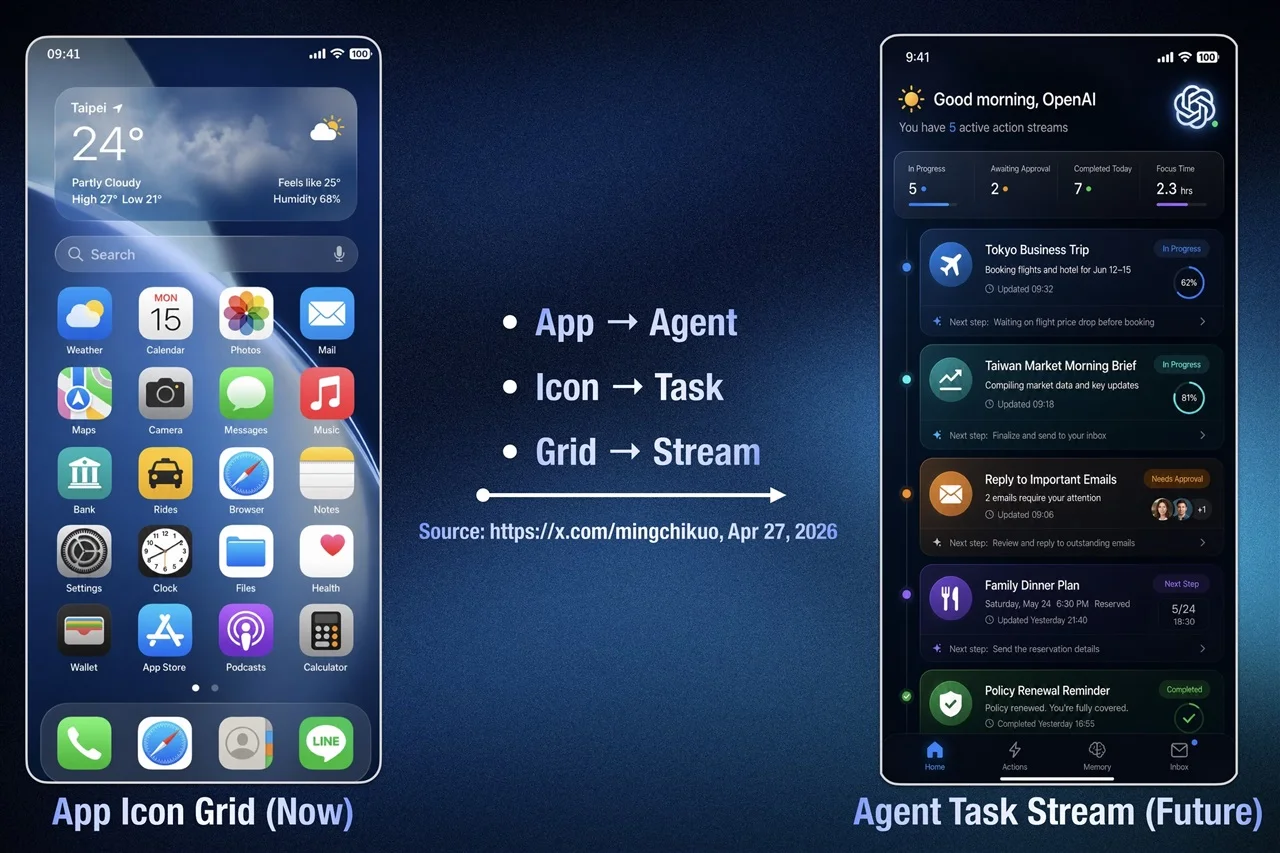
The smartphone industry is bracing for a paradigm shift that could render the traditional application-centric model obsolete. OpenAI is reportedly leading a secretive hardware project designed to replace the familiar grid of apps with a seamless, agent-driven interface. According to veteran analyst Ming-Chi Kuo, the project’s supply chain is already taking shape, marked by a rare and significant collaboration between Qualcomm and MediaTek.
These two silicon giants are jointly designing a custom-silicon processor specifically tuned for the high-concurrency demands of agentic AI, ensuring that the device can process complex reasoning tasks locally without constant cloud reliance.
Adding further weight to the project is the involvement of Luxshare Precision Industry. As a primary manufacturer for Apple, Luxshare’s role as the exclusive co-designer and manufacturer suggests a level of build quality and production scale that rivals the iPhone. This partnership indicates that OpenAI is not merely building a niche gadget, but a flagship-grade competitor.
The technical challenge lies in creating an operating system where AI agents can interact with third-party services via APIs or headless browsers, effectively bypassing the need for traditional graphical user interfaces (GUIs). If successful, this device would decouple the mobile experience from the Apple and Google app store duopoly, positioning OpenAI as the primary gateway to the digital world. This is a direct assault on the ‘App Economy,’ shifting the value from individual software vendors to the centralized intelligence of the AI agent.
Strategic Insights
By securing a high-tier supply chain (Qualcomm, MediaTek, Luxshare), OpenAI is making a serious bid to bypass the gatekeeping fees of traditional mobile OS providers. The move from apps to agents isn’t just a UI change; it is a total disruption of the mobile business model, threatening the multi-billion dollar app store revenues that currently sustain Google and Apple.