🔍 Executive Summary
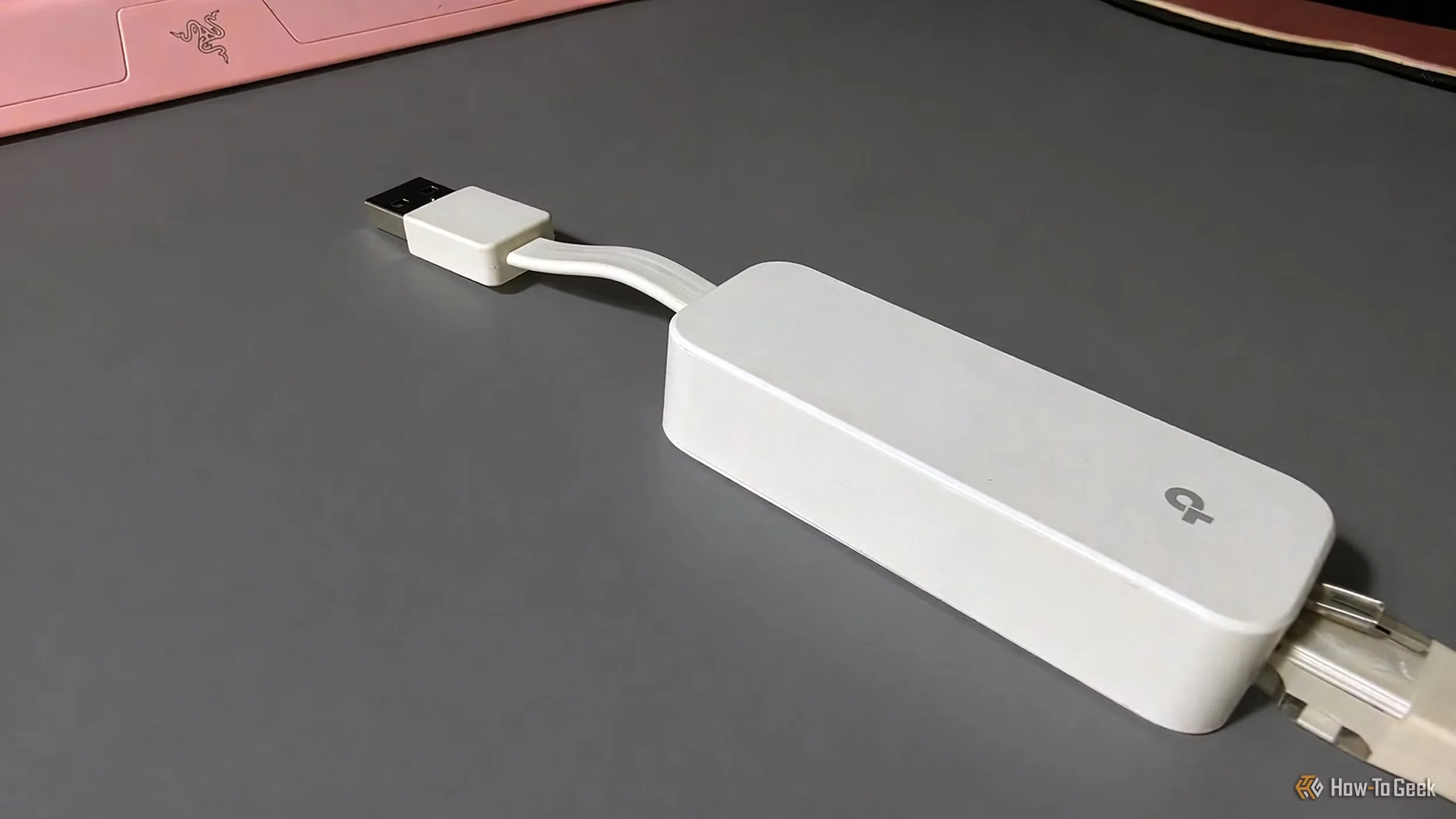
- In an era of multi-gigabit wireless tech, professional network engineers find that a simple $10 USB-to-Ethernet adapter remains their most indispensable tool for ensuring flawless connectivity and diagnostic accuracy.
Strategic Deep-Dive
The Pragmatic Necessity of Wired Infrastructure in a Wireless World
The landscape of modern computing is increasingly defined by the removal of physical ports in favor of sleek, minimalist aesthetics. While this transition to Wi-Fi-centric mobility is convenient for the average user, it has created a critical gap for IT professionals and network enthusiasts. The humble $10 USB-to-Ethernet adapter has emerged as the unsung hero of the digital age, bridging the divide between ultra-portable hardware and the uncompromising stability of wired data transmission.
Despite daily interactions with high-end, multi-thousand-dollar enterprise routers, industry experts consistently rank this inexpensive dongle as their most valuable diagnostic asset.
Eliminating Variables in Network Diagnostics
At the core of professional networking is the principle of isolation. When a connection fails, the first step is to eliminate environmental variables. Wireless signals are inherently volatile, susceptible to everything from microwave interference to physical obstructions and channel congestion.
A $10 wired adapter serves as the ‘control’ in any networking experiment. If a technician can achieve a stable, high-speed connection through a physical cable but not via Wi-Fi, the problem is immediately localized to the wireless spectrum. This certainty is priceless in high-stakes enterprise environments where downtime equates to significant financial loss.
Furthermore, the standardized chipsets used in these affordable adapters, such as those produced by TP-Link, offer near-universal compatibility. Their ‘plug-and-play’ nature means they function during the pre-boot environment or in OS recovery modes where wireless drivers are often non-existent.
The Economics of Tech Utility
This phenomenon highlights a fascinating disconnect between price and utility in the technology sector. In many cases, a $10 tool that performs one function perfectly is more valuable than a $500 multi-function device that introduces complexity. For the modern professional, the USB Ethernet adapter represents the ultimate insurance policy.
It is a compact, durable, and highly efficient solution to the fragility of wireless networking. As we move toward even more complex network architectures involving AI-driven traffic management and mesh optimization, the need for a physical, ‘ground truth’ connection point becomes even more vital. This adapter is not just a legacy tool; it is a fundamental requirement for anyone serious about network integrity, proving that sometimes, the most effective technological advancements are those that return to the basic principles of direct, physical connectivity.