🔍 Executive Summary
- OpenAI is reportedly designing a custom-silicon smartphone in collaboration with Qualcomm and MediaTek, aiming to replace the traditional app ecosystem with a hardware-integrated AI agent interface.
Strategic Deep-Dive
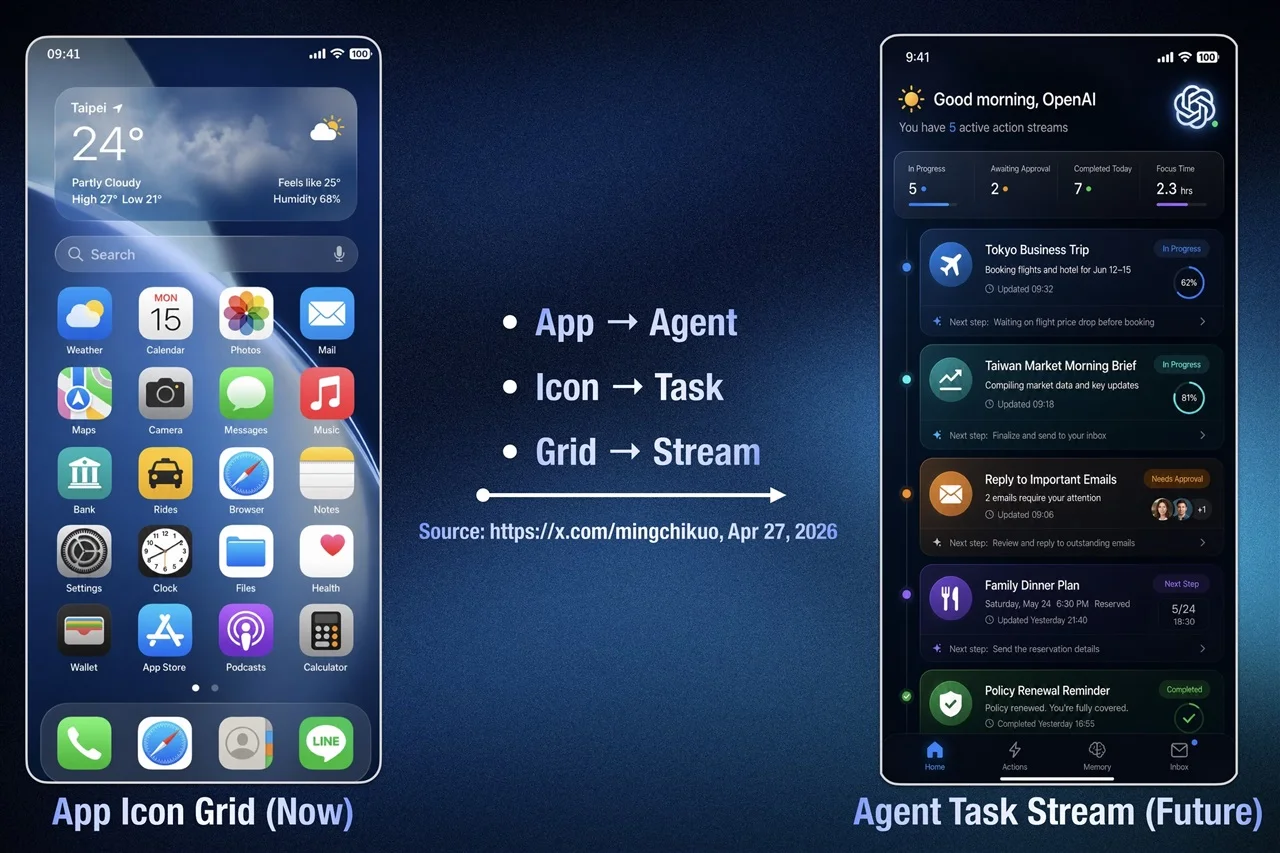
OpenAI is reportedly embarking on a mission to disrupt the mobile status quo by developing an ‘AI-First’ smartphone. According to analyst Ming-Chi Kuo, OpenAI is collaborating with Qualcomm and MediaTek to engineer custom silicon tailored specifically for local LLM (Large Language Model) inference. This move signifies a pivot away from the traditional application-based smartphone experience toward an ‘agentic’ interface.
Instead of users navigating a grid of siloed apps, the device would feature a core AI agent capable of executing complex multi-step tasks natively at the OS level.
The strategic rationale behind OpenAI designing its own hardware is two-fold. Technically, custom-built NPUs (Neural Processing Units) allow for lower latency and superior power efficiency, which are critical for maintaining a conversational AI experience on an edge device. Economically, this represents a significant attempt to build a new ’economic moat.’ By owning the hardware and the agent interface, OpenAI can effectively bypass the 30% commission fees imposed by Apple and Google’s app stores.
This ‘app-less’ paradigm would allow OpenAI to establish a direct relationship with the user, controlling the entire value chain from silicon to service. If successful, this hardware-level AI agent could render the current App Store/Play Store model obsolete, shifting the gatekeeper role from OS providers to the AI model creator.