🔍 Executive Summary
- The aggressive marketing of high-speed USB ports on modern Network Attached Storage (NAS) units creates a dangerous misconception for end-users regarding storage scalability. While a 'plug-and-play' multi-terabyte expansion sounds appealing, as a Senior Technical Data Architect, I must emphasize that relying on the USB protocol for primary server storage is an architectural anti-pattern. The disparity between marketing claims and technical reality centers on three critical pillars: protocol reliability, electrical interference, and CPU resource allocation.
Strategic Deep-Dive
The aggressive marketing of high-speed USB ports on modern Network Attached Storage (NAS) units creates a dangerous misconception for end-users regarding storage scalability. While a ‘plug-and-play’ multi-terabyte expansion sounds appealing, as a Senior Technical Data Architect, I must emphasize that relying on the USB protocol for primary server storage is an architectural anti-pattern. The disparity between marketing claims and technical reality centers on three critical pillars: protocol reliability, electrical interference, and CPU resource allocation.
From a protocol standpoint, the USB Mass Storage Class was never designed for the 24/7 high-concurrency workloads typical of a NAS environment. Unlike the SATA or NVMe stacks which utilize Direct Memory Access (DMA) to bypass the host CPU for data transfers, the USB protocol is inherently interrupt-driven. This means every data packet requires constant CPU intervention and context switching.
In a server rack environment, where the NAS may be hosting virtual machines or complex Docker containers, the overhead of managing a high-bandwidth USB storage device can lead to significant latency spikes and overall system instability. This is colloquially known as the ‘USB tax’ on system performance.
Furthermore, the physical and electrical integrity of external connections is significantly inferior to internal backplanes. In a dense server environment, electromagnetic interference (EMI) is a persistent threat. Internal drives benefit from the Faraday cage effect provided by the NAS chassis and the robust shielding of high-quality SATA connectors.
External USB cables, conversely, act as antennas for EMI, which can induce signal noise and lead to packet loss on the bus. This often results in ‘silent’ data corruption where the OS believes a write was successful, but the lack of end-to-end ECC on the USB controller means the data is inconsistent on the platter. Even a minor electrical surge or a slight physical nudge of the connector can cause the drive to unmount instantly.
If this occurs while a ZFS or BTRFS filesystem is performing a metadata update, it can render the entire volume unmountable.
Finally, the software ecosystem of enterprise NAS vendors like Synology and QNAP is intentionally designed to treat USB devices as second-class citizens. You will find that these operating systems prohibit the integration of USB drives into a primary RAID array or a global storage pool. This is a deliberate safety measure because the latency and jitter of a USB connection would cause constant ‘heartbeat’ failures in a RAID sync process.
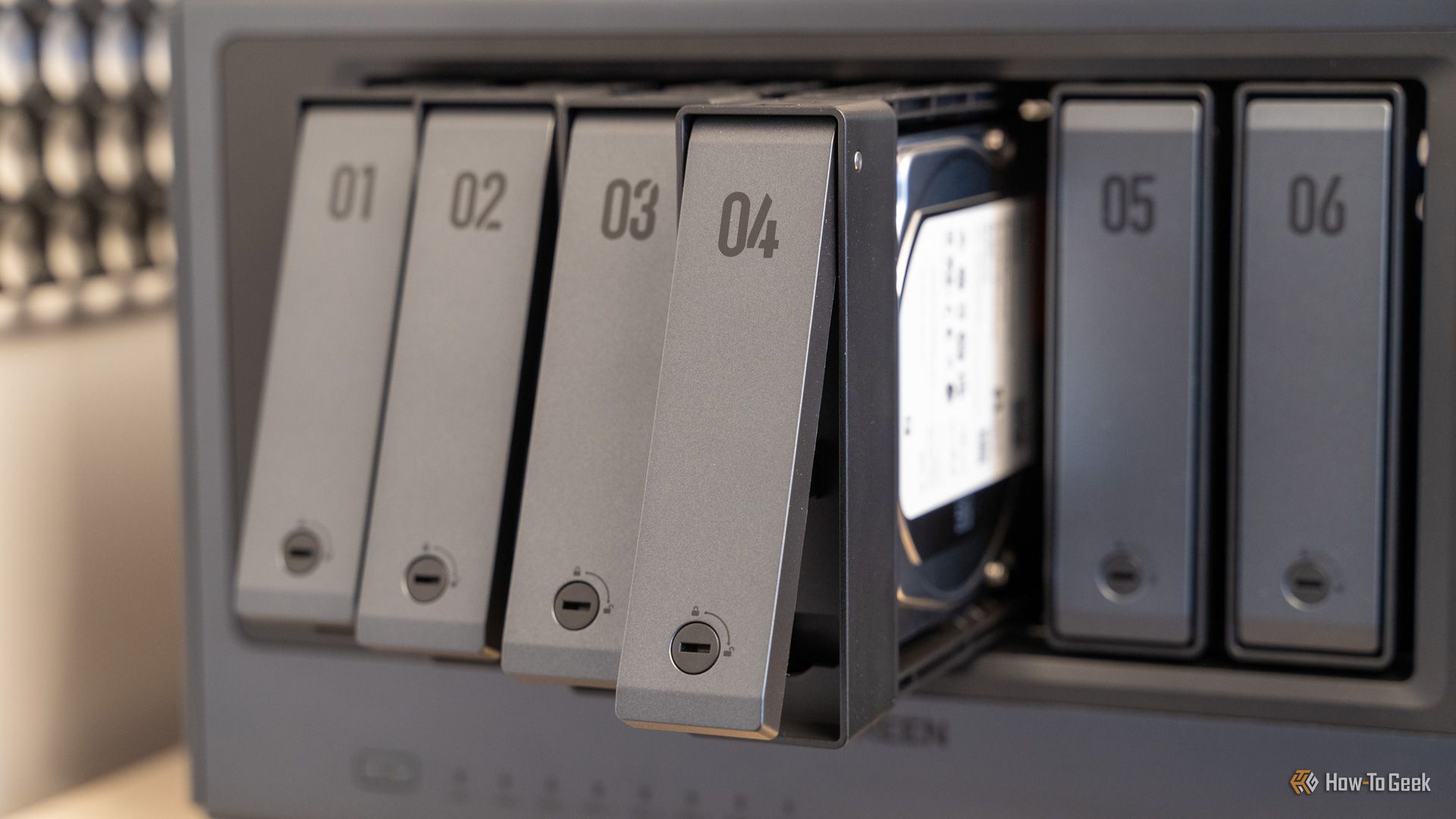
Professional data integrity requires the self-healing capabilities of modern filesystems, which are typically disabled for external partitions due to their lack of low-level hardware control. Therefore, treat those front-facing USB ports as temporary data ingestion points for photography or off-site ‘cold’ backups, but never view them as a substitute for a proper multi-bay internal hardware configuration. If your data matters, keep it behind the SATA backplane.