🔍 Executive Summary
- Taiwan's leading panel manufacturers are transforming their business models by leveraging large-scale glass substrate expertise to dominate the emerging CPO and FOPLP semiconductor packaging sectors.
Strategic Deep-Dive
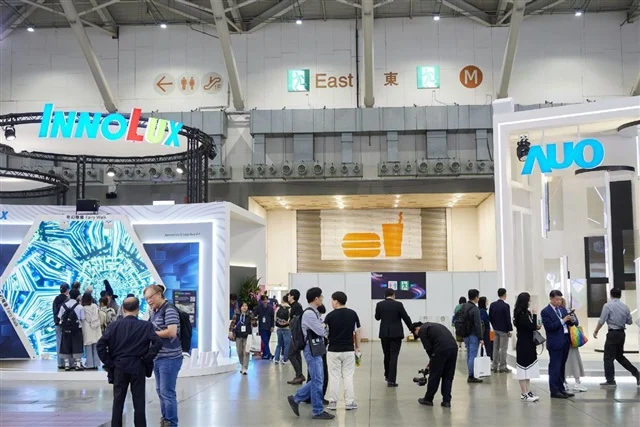
The semiconductor backend landscape is undergoing a structural disruption as Taiwan’s primary panel manufacturers, AUO and Innolux, leverage their legacy display infrastructure to enter the high-stakes world of advanced packaging. As AI-driven data traffic demands faster and more energy-efficient interconnects, the industry is moving away from traditional pluggable optical transceivers toward Co-Packaged Optics (CPO). This transition necessitates a paradigm shift in how chips are integrated, placing a premium on technologies like Fan-out Panel-level Packaging (FOPLP).
For display makers, this represents a unique opportunity to repurpose their multi-billion dollar glass substrate processing lines for semiconductor applications.
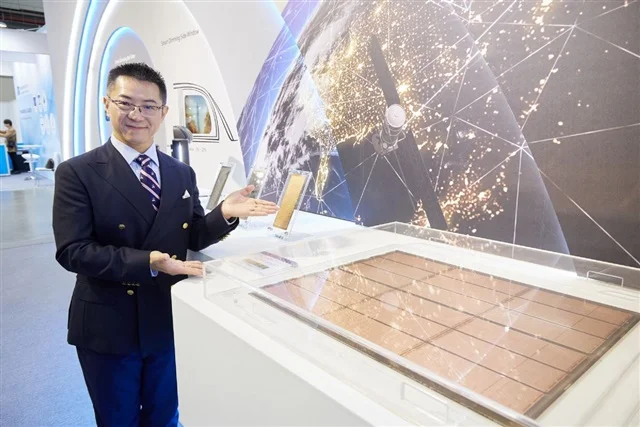
The technical advantage of FOPLP over traditional Wafer-level Packaging (WLP) lies in its ‘rectilinear efficiency.’ Standard 12-inch wafers are circular, leading to significant wasted space at the periphery when packaging rectangular dies. In contrast, the large rectangular panels used in display manufacturing allow for a much denser arrangement of dies, significantly increasing throughput and reducing unit costs. AUO and Innolux, with their deep expertise in handling Gen 3.5 and higher glass substrates, possess the precision alignment and large-scale thin-film deposition capabilities required for complex fan-out processes.
This allows them to package massive AI accelerators and high-bandwidth memory (HBM) stacks with a scale of economy that traditional OSATs struggle to match.
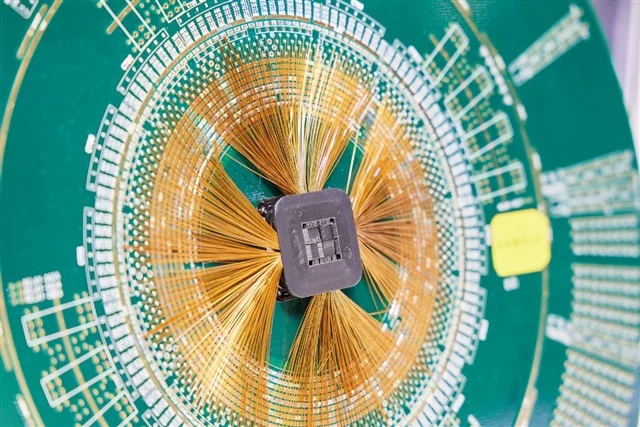
Furthermore, the move toward CPO is specifically aimed at reducing the power consumption associated with SerDes (Serializer/Deserializer) links. By placing the optical engine closer to the compute ASIC, the electrical reach is shortened, drastically lowering latency and heat generation. Display manufacturers can apply their experience in high-density interconnects—originally developed for high-resolution panels—to create the intricate RDL (Redistribution Layers) necessary for CPO.
This strategic pivot allows AUO and Innolux to diversify their revenue streams away from the volatile and commoditized panel market and into the high-margin AI hardware sector. Analysts expect that as panel-level standards stabilize, these manufacturers will become indispensable partners for Tier-1 chip designers looking for scalable packaging solutions for next-generation network switches and AI training clusters. The convergence of display and semiconductor processes is no longer a fringe experiment but a central pillar of the 2026 hardware roadmap.