🔍 Executive Summary
- Amazon AWS has formally integrated OpenAI models into its cloud portfolio, marking the definitive end of Microsoft Azure's three-year exclusive distribution rights and signaling a shift toward a model-agnostic infrastructure era.
Strategic Deep-Dive
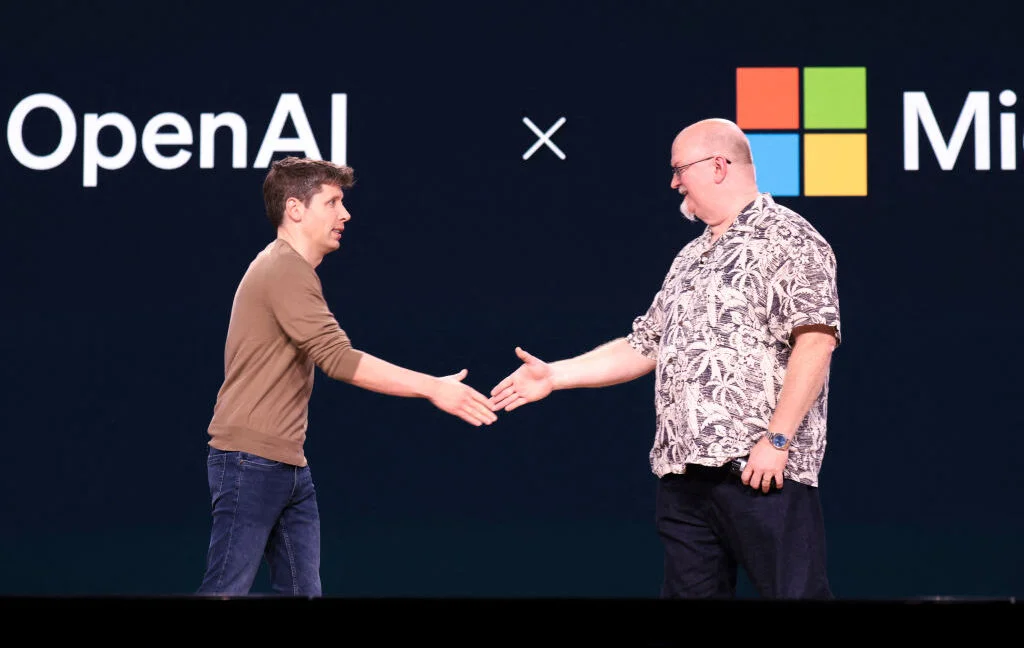
The enterprise artificial intelligence landscape has undergone a tectonic shift with Amazon Web Services (AWS) announcing the integration of OpenAI’s proprietary models into its global service catalog. This milestone occurs exactly one day after the expiration of Microsoft Azure’s three-year exclusive reselling agreement, a period that effectively forced high-stakes generative AI workloads into the Microsoft ecosystem. From the perspective of a technical architect, this transition is the definitive end of the ‘walled garden’ era of AI distribution.
AWS’s immediate move to capture OpenAI’s models demonstrates a strategic necessity: neutralizing the migration risk that has persisted as AWS-native organizations were tempted by Azure’s exclusive access to GPT-4.
Technically, this integration is poised to reshape how developers build production-grade AI applications. By hosting OpenAI models within the AWS framework—likely via Amazon Bedrock’s serverless architecture—enterprise users can now perform inference while maintaining their data residence within AWS VPCs (Virtual Private Clouds). This eliminates the security complexities and latency overhead associated with cross-cloud API calls to Azure.
Furthermore, it allows for seamless integration with existing AWS IAM (Identity and Access Management) roles, ensuring that governance protocols applied to S3 buckets or Lambda functions extend naturally to AI workloads. For engineering teams, this simplifies the orchestration layer significantly. Instead of managing disparate SDKs for Azure OpenAI and AWS Bedrock, teams can increasingly rely on unified orchestration frameworks like LangChain or Bedrock’s own InvokeModel API to swap between Anthropic’s Claude, Meta’s Llama, and OpenAI’s GPT models with minimal code refactoring.
From a market standpoint, this expansion represents OpenAI’s pivot toward a ‘volume-first’ distribution strategy. While the partnership with Microsoft provided the initial capital and compute necessary for survival, saturating the enterprise market requires reaching the thousands of developers who have standardized their operations on AWS. For AWS, this move restores its competitive parity.
It can now offer a ‘supermarket’ approach where models are treated as interchangeable assets, and the value is added through AWS’s superior scaling capabilities, robust monitoring tools (like CloudWatch integration for LLMs), and cost-management features. This marks the beginning of a truly model-agnostic cloud market, where the underlying infrastructure’s ability to facilitate efficient inference and R&D outweighs the prestige of any single exclusive partnership. Ultimately, as exclusivity dissolves, the competition shifts toward which cloud provider can offer the most cost-effective and secure environment for model deployment, rather than who has the most famous model provider on their roster.