🔍 Executive Summary
- Wuhan has unveiled a massive CNY 260 billion (US$38.1 billion) investment strategy for 2026, targeting 355 projects with a heavy focus on scaling memory semiconductor production through YMTC and XMC, reinforcing China's push for technology self-sufficiency.
Strategic Deep-Dive
Wuhan, long established as the central nexus for China’s semiconductor ambitions, has formally codified its trajectory for the latter half of the decade with the announcement of the 2026 major project plan. This comprehensive roadmap involves a staggering capital commitment of CNY 260 billion (approximately US$38.1 billion), distributed across 355 high-priority city-level projects. While the scope of the investment is broad, its strategic heart lies in the rapid scaling of memory semiconductor fabrication and the solidification of a domestic supply chain ecosystem.
Leading this charge are the dual titans of the Wuhan economic zone: Yangtze Memory Technologies Co. (YMTC) and XMC. YMTC, which has successfully challenged the global memory oligopoly with its proprietary Xtacking architecture, is expected to utilize this capital infusion to accelerate the development and mass production of its next-generation 3D NAND flash, likely targeting layers exceeding the 300-count threshold.
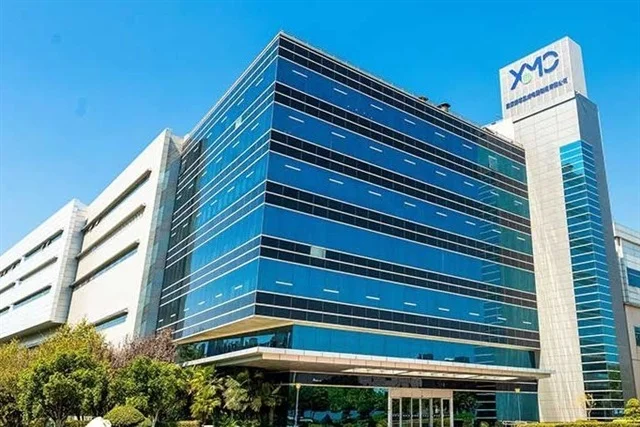
Simultaneously, XMC—a pioneer in specialized foundry services and NOR flash—is slated to expand its capacities in 3D IC integration and Through-Silicon Via (TSV) technologies, which are critical for the heterogeneous integration required in modern AI accelerators. From a data systems architect’s perspective, the expansion in Wuhan is not just about raw capacity; it is about the maturation of fabrication nodes that can withstand external geopolitical pressures. The investment covers every facet of the semiconductor lifecycle, including the cultivation of local suppliers for high-purity chemicals, advanced lithography sub-systems, and testing equipment.
By creating this high-density clustering effect, Wuhan aims to insulate its semiconductor industry from the volatility of international trade restrictions. The implications for the global market are significant. As YMTC and XMC ramp up their output, the competitive pressure on South Korean and American memory giants will intensify, particularly in the enterprise storage and consumer electronics segments.
The influx of US$38.1 billion ensures that Wuhan will have the state-of-the-art facilities necessary to attract global engineering talent, further closing the R&D gap with established leaders. Furthermore, the sheer volume of the 355 projects suggests a holistic approach to urban-tech integration, where the semiconductor industry serves as the anchor for a wider intelligence-driven economy. For global observers, Wuhan’s 2026 plan is a clear signal that China is not retreating in the face of headwinds; rather, it is doubling down on its domestic manufacturing base with unprecedented financial backing and a clear focus on the strategic memory sector.