🔍 Executive Summary
- OpenAI is fundamentally altering its approach to AI infrastructure by abandoning the direct ownership of its ambitious 'Stargate' data centers. Instead, the company has opted for a flexible leasing model, effectively transferring the capital expenditure risks to its partners. This strategic pivot also involves a rebranding of 'Stargate' from a singular project to a broad umbrella term for its diverse compute acquisition efforts.
Strategic Deep-Dive
OpenAI has officially recalibrated its long-term infrastructure roadmap, marking a significant departure from the direct ownership and construction of the massive ‘Stargate’ data center initiatives. According to industry reports from Tom’s Hardware, the AI organization has modified its arrangement on several Stargate projects, transitioning to a more financially agile model that prioritizes leasing compute power over owning physical hardware assets. This pivot allows OpenAI to offload the immense capital expenditure (CapEx) and depreciation risks onto its infrastructure partners, who will now carry the primary burden of investing in the physical facilities, power grids, and cooling systems required for next-generation AI training.
The strategic shift is further characterized by a fundamental change in nomenclature. ‘Stargate,’ once synonymous with a monolithic, first-party server farm rumored to cost up to $100 billion, has been rebranded as an ‘umbrella term’ that encompasses various computational partnerships and infrastructure projects. By adopting this flexible stance, OpenAI avoids being locked into specific hardware configurations or geographic locations, allowing it to pivot as faster or more efficient chips become available in the market.
This move suggests that OpenAI is prioritizing capital efficiency and speed of execution over the vertical integration of its hardware stack. From a data journalist’s perspective, this represents a transition from ‘Building the Future’ to ‘Orchestrating the Future,’ where the ability to secure compute through diverse channels is viewed as a superior competitive advantage than maintaining a heavy balance sheet of depreciating silicon.
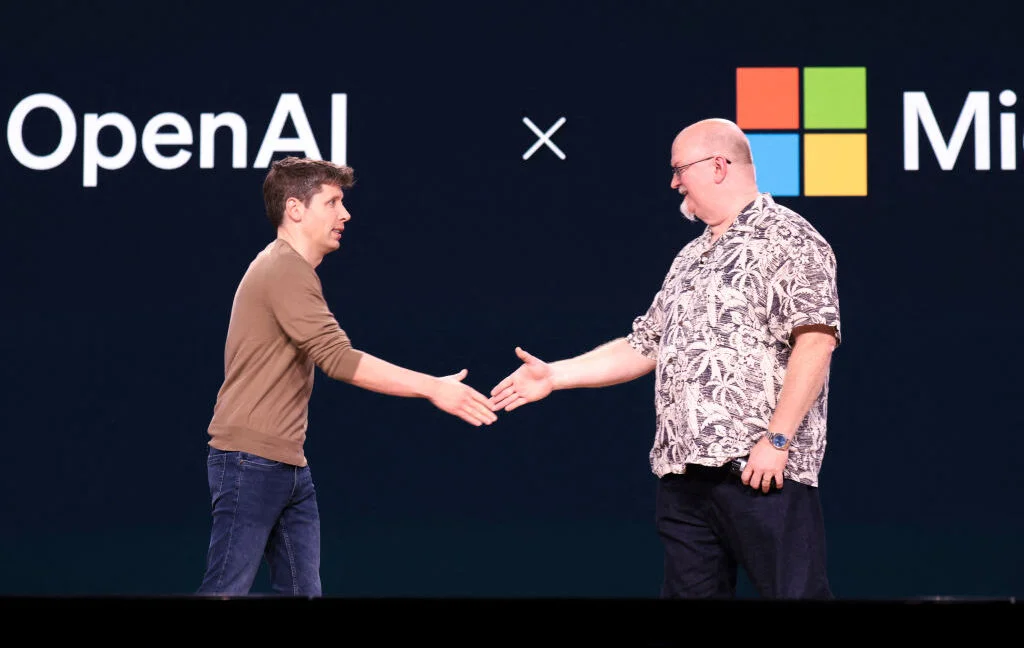
For industry heavyweights like Microsoft and other emerging cloud infrastructure providers, this change represents a significant shift in the risk-reward dynamic of their partnerships with OpenAI. While OpenAI focuses on the intellectual property and algorithmic breakthroughs of Large Language Models (LLMs), the partners take on the ‘hard’ risk of infrastructure development, including the volatility of energy costs and the long-term viability of specific hardware nodes. This evolution reflects a maturing AI sector where the costs of scaling have reached a point where even the most well-funded startups must seek more sustainable and distributed financial models.
Ultimately, OpenAI’s move toward a leasing-heavy strategy underscores the reality that in the race for Artificial General Intelligence (AGI), the agility to access the best hardware via an asset-light model may be more valuable than owning the facilities that house it. By de-risking its capital position, OpenAI can better withstand potential ‘AI winters’ or regulatory shifts that might otherwise jeopardize a company burdened by multi-billion dollar real estate and hardware debt.