🔍 Executive Summary
- The AMS 2 Pro represents a strategic pivot toward multi-material orchestration, yet it is critically undermined by six specific engineering compromises that challenge its professional-grade positioning.
Strategic Deep-Dive
The introduction of the Bambu Lab AMS 2 Pro marks a significant architectural shift in the desktop fabrication landscape. As a Data Systems Architect, I view this device not merely as a peripheral, but as a complex material orchestration layer that attempts to manage the telemetry and delivery of various thermoplastic polymers. The core value proposition, as stated in the source, moves beyond aesthetic multi-color printing and into the realm of functional multi-material synthesis.
However, the ‘6 annoying things’ highlighted by professional users are not just minor inconveniences; they are symptomatic of deeper architectural compromises in Bambu Lab’s iterative design cycle.
First, the proprietary RFID ecosystem creates a data silo. By locking down the material identification protocol, Bambu Lab creates a ‘walled garden’ that prevents third-party materials from integrating into the automated workflow, which is a major friction point for distributed manufacturing. Second, the excessive material waste in the ‘purge tower’ logic reveals an inefficiency in the mechanical pathing.
From a systems perspective, this represents a failure in resource optimization, where the cost per unit increases significantly due to hardware-imposed waste. Third, the mechanical noise floor remains unacceptably high. The switching logic, while fast, lacks the acoustic dampening required for professional environments.
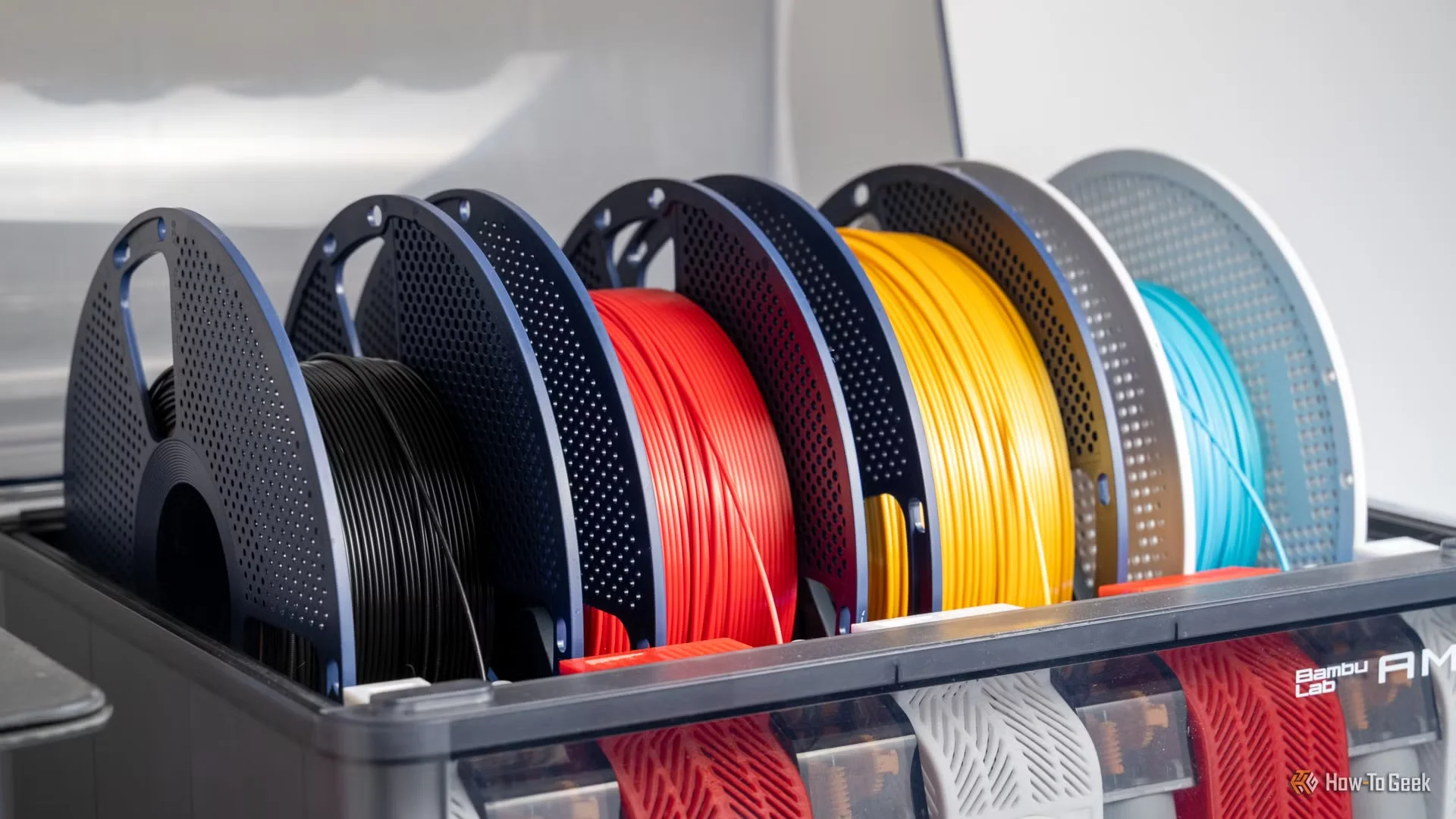
Fourth, the restrictive internal dimensions of the AMS unit limit spool compatibility, effectively acting as a hardware-level gatekeeper against diverse material sources.
Fifth, the sealing integrity for hygroscopic materials like Nylon or PVA is sub-optimal. In a professional data-driven production environment, material consistency is paramount; any failure in the moisture barrier is a failure of the entire environmental control system. Sixth, and perhaps most critically for the ‘Global Tech’ persona, is the inherent latency in the material switching logic.
The time required for the unit to retract, cut, and load a new filament strand creates a massive overhead in the job orchestration. For a 1,000-layer print with frequent swaps, this latency can extend the lead time by several hours, undermining the efficiency gains of the printer’s high-speed core.
Bambu Lab has attempted an ‘Apple-esque’ integration, but in the 3D printing industry, where material innovation often happens at the fringes, this closed-loop strategy is starting to chafe against the needs of power users. The architectural constraints of the AMS 2 Pro highlight a growing tension: as hardware becomes more automated, it often becomes more brittle. The ‘annoyances’ mentioned are actually design debt that has accumulated through rapid prototyping.
For the AMS 2 Pro to truly earn its ‘Pro’ suffix, Bambu Lab must move beyond functional addition and toward systemic refinement. They need to address the mechanical interrupt-driven delays and the proprietary data locks that currently stifle the versatility of the system. In conclusion, the AMS 2 Pro is a technological marvel of integration, yet it serves as a case study in how hardware-level restrictions can hamper the very innovation they were designed to facilitate.
The future of the 3D printing ecosystem will depend on whether manufacturers choose to build open, resilient architectures or remain confined within proprietary silos that prioritize vendor lock-in over technical excellence.