🔍 Executive Summary
- Researchers at EPFL have developed a groundbreaking hydrovoltaic nanoscale device that captures energy from water evaporation, potentially enabling a new generation of perpetual, battery-free wearable and environmental sensors.
Strategic Deep-Dive
The global semiconductor and hardware industries are currently grappling with the looming limitations of traditional lithium-ion battery technology, especially in the context of the Internet of Things (IoT) explosion. At the forefront of this challenge, researchers at the École Polytechnique Fédérale de Lausanne (EPFL) in Switzerland have unveiled a sophisticated nanoscale device capable of harvesting continuous electricity from a ubiquitous natural phenomenon: water evaporation. This innovation represents a strategic shift from energy storage to continuous energy generation at the point of use, utilizing what is known as the hydrovoltaic effect.
By engineering nanostructures that capitalize on the kinetic energy of evaporating water molecules, the EPFL team has created a power source that is not only sustainable but also remarkably consistent under ambient conditions.
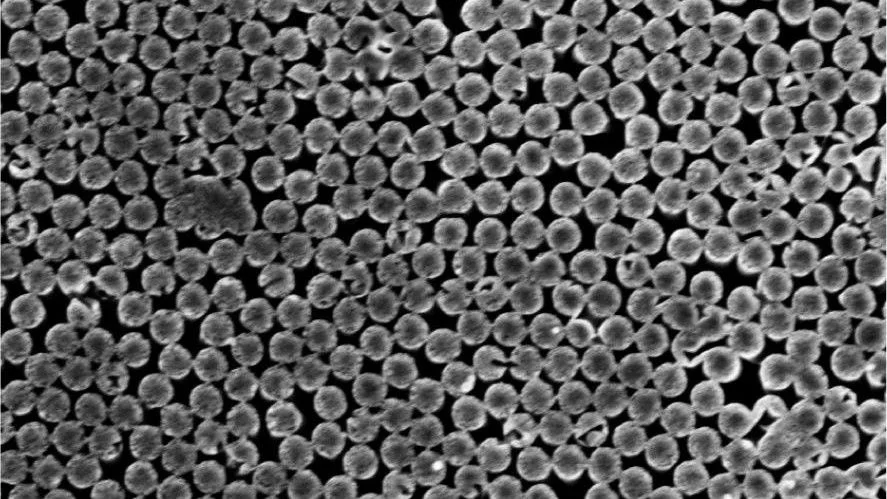
Technically, the device functions through a meticulously designed network of nano-channels that facilitate charge separation as water moves and evaporates. A critical technical advantage of the EPFL design is its ability to utilize environmental stimuli—specifically sunlight and ambient heat—to accelerate the evaporation rate. This synergy between thermal energy and fluid dynamics significantly boosts the electrical output compared to previous iterations of hydrovoltaic harvesters.
This capability is vital for high-density sensor applications where previous power harvesters fell short of the necessary microwatt thresholds. The integration of light-absorbing materials allows the device to function as a hybrid system, capturing both thermal and kinetic energy to drive a steady stream of electrons.
From a Senior Analyst’s perspective, the implications for the future of hardware architecture are profound. The current reliance on batteries creates a significant ‘maintenance tax’ for large-scale IoT deployments, requiring periodic replacements that are logistically challenging and environmentally damaging. EPFL’s discovery paves the way for a ‘deploy-and-forget’ infrastructure.
We are looking at a future where medical wearables, such as continuous glucose monitors or cardiac patches, could be powered indefinitely by the wearer’s own skin perspiration and body heat. This eliminates the need for bulky battery compartments, allowing for thinner, more conformable form factors that improve patient compliance and clinical data accuracy.
Furthermore, the scalability of these nanoscale harvesters suggests they could be integrated into the very fabric of our urban environments. Imagine smart city sensors embedded in building facades or infrastructure that generate their own operating power from morning dew or humidity changes. As the world moves toward the UN’s sustainability goals, the reduction of battery waste becomes a strategic imperative.
This technology offers a pathway to decouple electronic growth from rare-earth mineral dependence. The EPFL project is not merely a laboratory curiosity; it is a fundamental redesign of how small-scale electronics interact with their environment, signaling a transition from centralized energy storage to decentralized, environmental energy integration that will define the next decade of hardware innovation.