🔍 Executive Summary
- The acute shortage of Google's Tensor Processing Units (TPUs) serves as a definitive validation of the company's long-term vertical integration strategy, demonstrating that custom silicon sovereignty is now the primary differentiator in the hyperscale AI race.
Strategic Deep-Dive
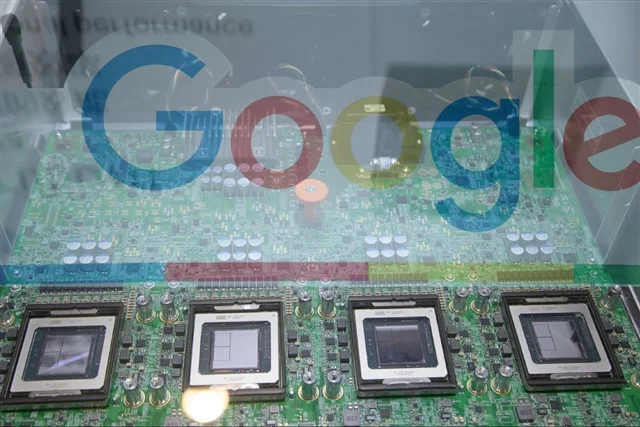
The current supply-demand imbalance regarding Google’s Tensor Processing Units (TPUs) provides a profound architectural lesson for the semiconductor and AI sectors. While much of the world remains tethered to general-purpose GPU allocations from third-party vendors, Google’s decade-long investment in proprietary silicon has created a massive competitive moat that is now coming into full focus. The TPU shortage is not merely a supply chain hiccup; it is a direct consequence of the industry realizing that custom-built hardware optimized for specific AI workloads—specifically transformer-based models—offers performance and TCO (Total Cost of Ownership) advantages that off-the-shelf components cannot match.
From a hardware intelligence perspective, Google’s integration of TPU v5p with advanced HBM3e stacks and their unique Optical Circuit Switching (OCS) fabric allows for massive-scale cluster configurations that bypass the traditional limitations of InfiniBand or Ethernet congestion. This represents a fundamental shift from ‘software-defined networking’ to ‘hardware-optimized infrastructure.’ Google’s vertical integration encompasses the entire stack: from the XLA (Accelerated Linear Algebra) compiler that maps high-level operations to silicon, down to the liquid-cooled rack architectures designed specifically for TPU power densities. This deep coupling allows Google to extract maximum utilization from every transistor, achieving a level of efficiency that rivals are desperately trying to replicate with initiatives like Microsoft’s Maia or Meta’s MTIA.
However, Google’s head start in silicon lifecycle management—spanning over five generations of TPU development—means they have already solved the complex thermal throttling and interconnect latency issues that new entrants are just beginning to encounter. The shortage highlights that even with massive capital expenditure, the physical limitations of wafer starts and HBM packaging remain a bottleneck. Yet, for Google, owning the intellectual property of the accelerator means they are not beholden to the margin premiums of external chipmakers.
As we move toward the era of 100-trillion parameter models, the bottleneck is no longer the code, but the power-efficient throughput of the silicon. Google’s shortage signifies that the world’s most advanced AI researchers are choosing TPUs for their specific architectural advantages in sparse core operations and massive embedding lookups. This ‘Silicon Sovereignty’ is the new gold standard of the AI age.
For the lead data architect, the message is clear: long-term sustainability in AI leadership requires a departure from general-purpose hardware toward a vertically integrated, application-specific integrated circuit (ASIC) future. Google has effectively proven that the most efficient way to run the world’s most complex software is to build the machine that was born to run it.