🔍 Executive Summary
- The skyrocketing power demands of generative AI clusters are mandating a total overhaul of data center physical layers, driving a massive upgrade cycle for high-speed interconnects and power delivery systems manufactured by leaders like BizLink and JPC.
Strategic Deep-Dive
The transition from general-purpose cloud computing to AI-centric high-performance computing (HPC) has fundamentally altered the physical topology of the modern data center. As individual server rack power densities climb from 20kW toward 100kW and beyond, the industry is witnessing an urgent necessity for next-generation power interconnect solutions. This surge in demand has placed specialized manufacturers like BizLink and JPC at the center of the AI infrastructure boom.
The focus is no longer just on the compute nodes themselves, but on the ‘physical fabric’—the cables, connectors, and busbars—that must sustain massive electrical loads without signal degradation or thermal runaway. We are currently in the midst of a massive transition from 400G/800G infrastructures toward 1.6T interconnects, a shift that requires advanced material science to maintain signal integrity over high-speed differential pairs. From a lead data architect’s perspective, the primary challenge is the Power Delivery Network (PDN) at the rack level.
High-end interconnects must now support increased DC voltages (moving toward 48V architectures) to reduce resistive losses while integrating complex shielding to prevent electromagnetic interference in densely packed AI clusters. BizLink and JPC have strategically pivoted toward these high-margin segments, developing proprietary connectors that interface with liquid-cooling manifolds and high-density power shelves. The shift toward Direct-to-Chip cooling has necessitated a new class of connectors that are resistant to specialized coolants and can operate reliably in higher ambient temperatures.
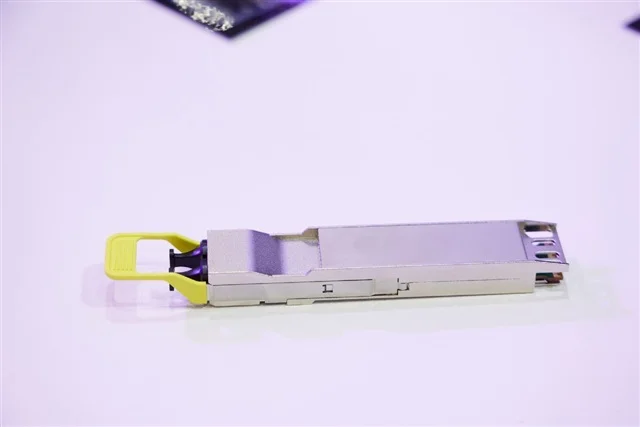
Furthermore, as AI clusters scale to tens of thousands of GPUs, the demand for Active Optical Cables (AOC) and high-performance Direct Attach Copper (DAC) has hit an all-time high, creating a lucrative cycle of specification upgrades. The role of companies like BizLink is critical because any failure in the interconnect layer can lead to catastrophic downtime in billion-dollar AI training runs. Therefore, data center operators are increasingly prioritizing ‘proven reliability’ over cost, favoring vendors who can provide end-to-end signal and power integrity solutions.
This infrastructure surge is not a temporary trend but a foundational reset of the data center industry. As we move toward PCIe 6.0 and 7.0 standards, the engineering requirements for connectors and cables will become even more stringent, further consolidating the market in favor of those who possess the architectural foresight to innovate at the physical layer. The bottleneck of AI has shifted from the chip to the rack, and the winners will be those who can connect the power and the data with the least resistance.