🔍 Executive Summary
- Following a systemic technical failure of Baidu's Apollo Go fleet in Wuhan, Chinese regulators have frozen all new autonomous vehicle permits, marking a critical setback for the industry's scaling ambitions and highlighting persistent hardware-software synchronization flaws in complex urban environments.
Strategic Deep-Dive
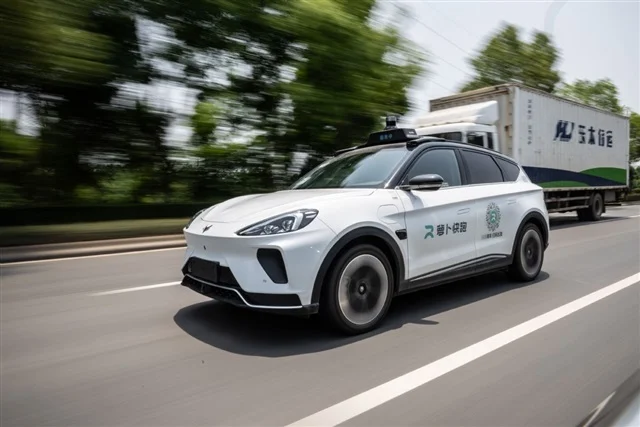
The autonomous vehicle landscape in China has entered a period of intense regulatory scrutiny following a major operational failure of Baidu’s Apollo Go robotaxi fleet in Wuhan. This incident, which left numerous passengers physically stranded inside locked vehicles and paralyzed several arterial roads in a primary testing hub, represents a systemic breakdown of the ‘Hardware-to-Software’ reliability chain. From a lead data architect’s perspective, the failure points toward a critical misalignment between real-time sensor fusion processing and the vehicle’s high-level decision-making layer, likely exacerbated by an unhandled edge case in the urban V2X (Vehicle-to-Everything) communication stack.
In response, Chinese authorities have enacted a complete freeze on the issuance of new autonomous driving permits. This move is significant not only because it halts the expansion of China’s most advanced autonomous mobility program but also because it is at least the second instance where regulators have been forced to intervene due to Baidu-related technical lapses. The malfunction highlights the fragility of current Level 4 architectures when faced with unforeseen environmental variables that exceed the inference throughput of onboard AI accelerators.
While companies like Baidu have focused heavily on maximizing TOPS (Tera Operations Per Second) for vision-based navigation, this event underscores a deficit in ‘resilience architecture’—the ability of a hardware system to maintain fail-safe operations during a total software hang. The regulatory halt suggests that government agencies are no longer satisfied with simulated safety metrics and are now demanding rigorous proofs of hardware redundancy and deterministic emergency response protocols. For the broader industry, this cooling period serves as a stark reminder that the transition to fully machine-led urban mobility requires more than just algorithmic sophistication; it necessitates a robust physical infrastructure capable of handling system-wide failures without compromising public safety.
The ripple effects of this suspension will likely delay the commercialization timelines for other domestic players who rely on similar regulatory frameworks. As Baidu works to diagnose the root cause—whether it be a firmware-level deadlock or a thermal-induced compute failure—the burden of proof regarding the long-term reliability of robotaxi hardware has shifted dramatically. The industry must now address whether current sensor arrays and compute nodes are truly ready for the chaos of dense metropolitan traffic, or if a fundamental redesign of the autonomous hardware stack is required to regain public and regulatory trust.
This event will undoubtedly be cited in future policy discussions as the moment when the ‘speed-of-innovation’ ethos was tempered by the harsh realities of public infrastructure stability.