🔍 Executive Summary
- JCET, China's leading OSAT, has reported a robust Q1 2026 performance, driven by the strategic acceleration of advanced packaging solutions for high-performance computing and the booming automotive sector.
Strategic Deep-Dive
The first quarter of 2026 has marked a definitive turning point for the Outsourced Semiconductor Assembly and Test (OSAT) sector, led by a stellar performance from China’s JCET Group. As the industry moves past the supply chain volatility of previous years, JCET is demonstrating that the future of semiconductor value creation lies in the sophistication of back-end processes. The company’s robust financial results are a direct consequence of its pivot toward high-margin segments: High-Performance Computing (HPC) and Automotive Electronics.
With front-end lithography nodes becoming prohibitively expensive and technically challenging, advanced packaging has emerged as the most viable path to maintaining the performance trajectory promised by Moore’s Law.
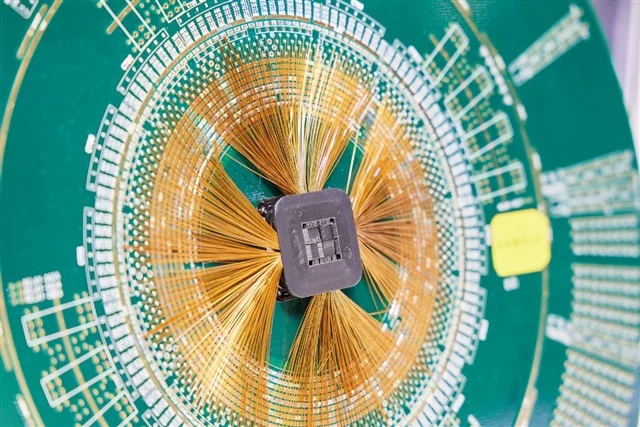
At the heart of JCET’s success is its mastery of ‘Heterogeneous Integration.’ This technical approach involves combining multiple functional dies—often fabricated at different process nodes—into a single high-performance package. This is essential for the modern AI hardware stack, where memory bandwidth and interconnect density are paramount. JCET’s expertise in Chiplet-based architectures allows its clients to optimize yields and reduce costs while delivering performance that rivals monolithic chips.
In the HPC domain, JCET has successfully scaled its 2.5D and 3D packaging solutions, which provide the thermal management and power delivery critical for the current generation of AI accelerators and server CPUs. The company’s ability to execute these complex processes at scale has made it an indispensable partner for top-tier fabless firms globally.
Furthermore, the automotive sector is providing a structural growth tailwind for JCET. The transition to electric vehicles (EVs) and increasingly autonomous systems requires semiconductors that can survive extreme temperature fluctuations and mechanical stress. JCET’s advanced testing facilities and specialized packaging techniques for power semiconductors and sensor modules have set a high bar for reliability.
This ‘automotive-grade’ certification acts as a protective moat, as competitors struggle to match the rigorous quality control standards required by global automotive OEMs. The convergence of AI features in cars is further blurring the lines between HPC and automotive chips, creating a sweet spot for JCET’s cross-disciplinary packaging capabilities.
Looking ahead, JCET’s performance signals a broader recovery in the semiconductor ecosystem, driven by the infrastructure build-out for the AI era. Analysts point to the company’s increasing investment in Wafer-Level Packaging (WLP) and System-in-Package (SiP) as indicators of sustained future growth. As the ‘physical limit’ of silicon atoms is approached, the ‘packaging limit’ becomes the new frontier.
JCET is no longer just an assembly house; it has evolved into a strategic technology partner that influences chip design from the earliest stages. Its ability to capture a significant portion of the advanced packaging market ensures that JCET will remain at the epicenter of the hardware industry’s transition toward modular, heterogeneous compute environments. For investors and industry watchers, JCET serves as a primary barometer for the health and technological direction of the global semiconductor supply chain in 2026.