🔍 Executive Summary
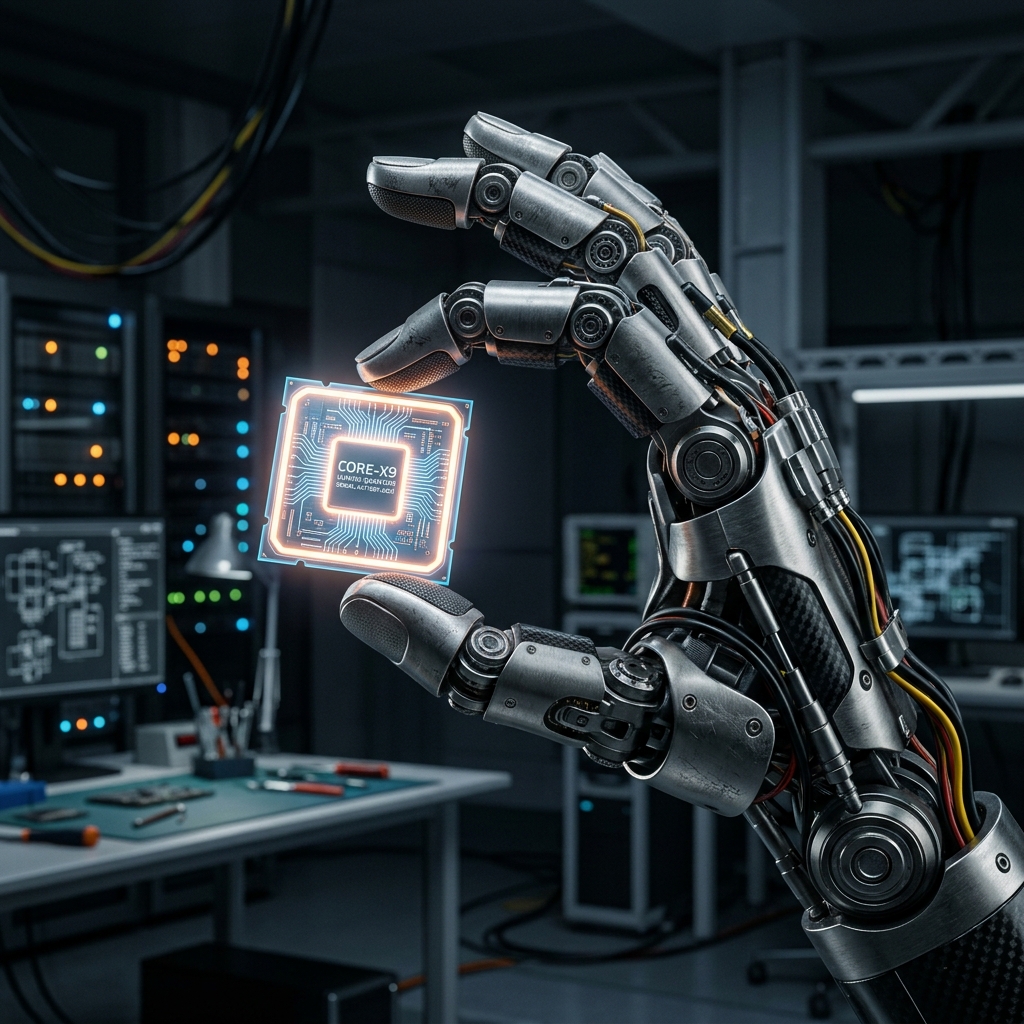
- Taiwan's Ministry of Economic Affairs has officially inaugurated the Quantum Industry Technology Promotion Office (QITPO) on April 27, uniting 18 leading companies in a strategic alliance. By leveraging its unparalleled semiconductor manufacturing base, Taiwan aims to secure a dominant position in the nascent quantum computing sector, signaling a shift from classical to post-silicon leadership.
Strategic Deep-Dive
Taiwan, long the center of the global semiconductor universe, is making a calculated and highly organized pivot toward the next frontier of computation: Quantum Computing. On April 27, the Ministry of Economic Affairs (MOEA) officially established the Quantum Industry Technology Promotion Office (QITPO), a centralized body tasked with orchestrating a new industrial ecosystem. By enlisting 18 of its most influential companies, Taiwan is signaling that it does not intend to be a mere observer in the quantum race.
Instead, it seeks to replicate the ‘Foundry Model’ that has made it indispensable to the world’s digital economy. The strategic logic is sound: the manufacture of quantum processors and the cryogenic hardware required to support them rely heavily on advanced materials science, precision lithography, and sophisticated packaging—all areas where Taiwan currently leads the world.
The establishment of QITPO represents a shift from experimental academic research to full-scale industrialization. The alliance includes not just chipmakers but companies specializing in telecommunications, advanced cooling, and systems integration. Taiwan’s MOEA views quantum technology as a ‘defining technology race’ of the coming decade, with implications reaching far beyond simple speed increases to fields like cryptography, drug discovery, and materials modeling.
The government’s role will be to serve as a catalyst, providing the funding and regulatory framework necessary for these 18 companies to develop commercial-grade quantum components. This involves tackling the immensely difficult challenge of scaling qubit counts while maintaining coherence, a task that requires the kind of precision manufacturing excellence that TSMC and its peers have mastered in the classical silicon domain.
However, a data systems analyst would note that the transition from classical transistors to quantum bits (qubits) is not a straightforward scaling exercise. Unlike the deterministic nature of CMOS logic, quantum systems deal with probabilistic states and extreme environmental sensitivities. While Taiwan’s existing supply chain is world-class, the leap to quantum requires a fundamental rethinking of interconnects and thermal management at near-absolute zero temperatures.
The critique of this strategy lies in whether Taiwan can bridge the gap between ‘manufacturing excellence’ and ‘fundamental quantum theory.’ Most current quantum leaders are headquartered in the US or Europe, focusing heavily on superconducting or trapped-ion modalities. Taiwan’s advantage will be its ability to take these theoretical designs and mass-produce the specialized hardware needed to run them at scale. If successful, QITPO could position Taiwan as the world’s ‘Quantum Foundry,’ making it as vital to the 2030s as it is to the 2020s.
This is a high-stakes gamble on the future of physics, but given Taiwan’s track record in HBM and advanced packaging, it is a move that global competitors are watching with intense scrutiny.