🔍 Executive Summary
- Global AI demand drives record profits for Advantest and Hitachi, highlighting Japan's control over critical hardware layers.
- Advantest sees a surge in high-margin testing equipment for HBM and AI accelerators used by industry leaders like NVIDIA.
- Hitachi’s Lumada platform dominates the industrial AI sector, managing energy-intensive data centers for the AI era.
Strategic Deep-Dive
The Physical Layer of the Generative AI Revolution
While the software side of Artificial Intelligence often dominates the headlines, the physical infrastructure required to power these sophisticated models has created a massive ‘profit bonanza’ for Japanese industrial giants. Hitachi and Advantest, two foundational pillars of Japan Inc., have emerged as the silent architects of the global AI boom. Their record-breaking financial results for the 2026 fiscal year underscore a crucial reality: the AI revolution is as much a hardware challenge as it is a software one.
Japan’s enduring dominance in precision engineering is now the primary beneficiary of this global capital expenditure cycle.
Advantest: Capturing the HBM and GPU Testing Bottleneck
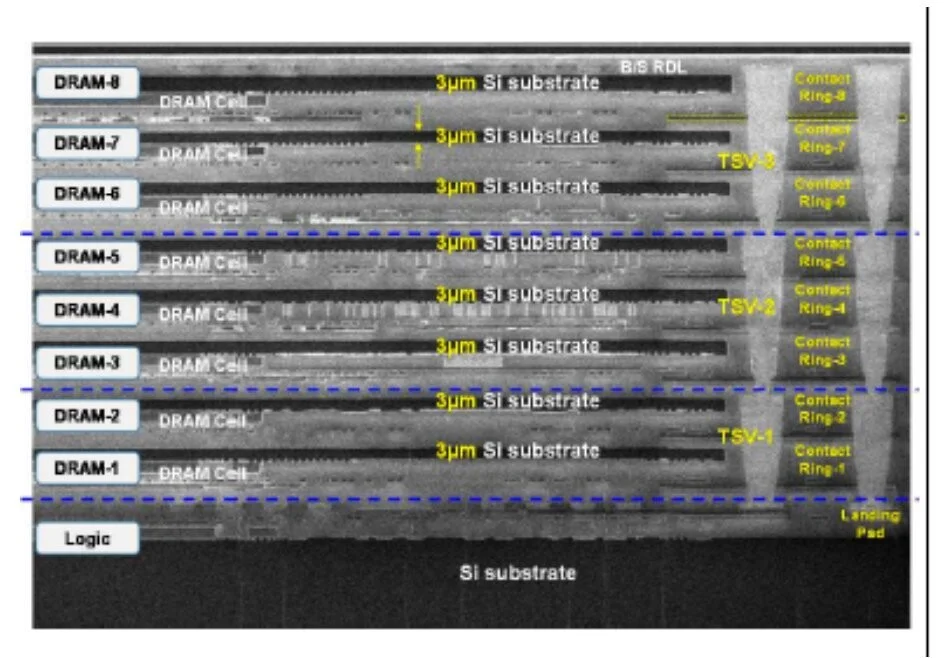
As the world’s leading provider of semiconductor test equipment, Advantest sits at a strategic chokepoint in the AI supply chain. The explosion in demand for high-performance GPUs and specialized High Bandwidth Memory (HBM) has made Advantest’s testing solutions more vital than ever. AI chips require near-zero failure rates and must operate under extreme thermal conditions, necessitating highly complex—and thus high-margin—testing platforms.
Advantest has successfully pivoted from general-purpose memory testing to AI-specific validation, securing its position as an indispensable partner for foundries and chip designers who cannot afford a single point of failure in their multi-billion dollar AI clusters.
Hitachi: Powering the AI Data Center Infrastructure
Hitachi’s transformation from a traditional industrial conglomerate into a digital-first leader is bearing fruit in the era of large-scale AI deployment. Through its Lumada platform, Hitachi provides the essential physical and digital infrastructure that keeps global AI data centers operational. This includes advanced power grid management systems to handle the massive energy consumption of AI training clusters and AI-driven predictive maintenance for cooling systems.
As global tech giants scramble to build out data center capacity, Hitachi’s ability to merge massive power infrastructure with sophisticated monitoring software has turned it into a premier provider for the global AI build-out, commandingly high margins in a sector hungry for reliability.
Sustainability and the Global Supply Chain Outlook
The financial performance of these two companies suggests that the AI boom is not a speculative bubble but a fundamental shift in global industrial priorities. Unlike previous tech cycles, the AI expansion requires massive physical assets—transformers, grid systems, and precision testers—a field where Japanese engineering remains peerless. However, the sustainability of this profit cycle will depend on how these giants navigate the complexities of the US-China tech decoupling.
By diversifying their client bases and investing in next-generation testing for 2nm chips and beyond, Advantest is securing its future. Similarly, Hitachi’s expansion into green energy management for data centers ensures it remains relevant in an increasingly carbon-conscious market.
Competitive Landscape: The Japanese Hardware Moat
In the competitive landscape, Advantest and Hitachi have built formidable defensive moats. While software startups emerge daily, it takes decades of precision manufacturing experience to compete in the semiconductor testing or power grid management sectors. This hardware barrier protects Japan Inc.
from the volatility of the software market. As AI evolves towards more specialized edge-computing applications, the demand for Hitachi’s localized industrial AI and Advantest’s specialized testing will only intensify. The 2026 profit surge is likely just the beginning of a long-term re-valuation of Japanese industrial assets in the global tech portfolio.