🔍 Executive Summary
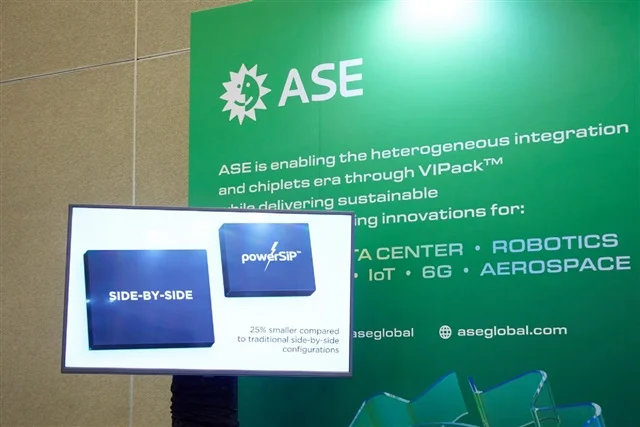
- ASE Technology is aggressively expanding its 2026 capital expenditure to $8.5 billion, driven by record-breaking demand for high-end semiconductor packaging and testing services.
Strategic Deep-Dive
As a data systems architect monitoring the semiconductor supply chain, ASE Technology Holding’s decision to elevate its 2026 capital expenditure to a record $8.5 billion marks a definitive structural shift in the industry. For decades, the OSAT (Outsourced Semiconductor Assembly and Test) sector was viewed as a low-margin, labor-intensive segment of the value chain. However, the emergence of generative AI and High-Performance Computing (HPC) has fundamentally redefined the ‘back-end’ as the new frontier of innovation.
The $8.5 billion figure is not merely a capacity expansion; it is a strategic response to the increasing architectural complexity of modern chipsets. As we reach the economic and physical limits of monolithic die scaling, advanced packaging—specifically 2.5D and 3D integration—has become the primary vehicle for performance gains. ASE is investing heavily in technologies that mitigate signal integrity issues and power delivery bottlenecks inherent in multi-die configurations.
In HBM-GPU clusters, the interconnect density required to maintain low latency and high bandwidth is staggering. To achieve this, ASE is deploying sophisticated redistribution layers (RDL) and through-silicon via (TSV) management systems that were previously the domain of front-end foundries. Furthermore, thermal management at the package level has become a primary design constraint; as power densities exceed 500W-700W per module, the packaging must facilitate efficient heat dissipation through specialized materials and integrated cooling structures.
This Capex surge also addresses the testing segment, which is seeing a dramatic increase in valuation. Modern AI chips, with their billions of transistors and complex interconnects, require more rigorous automated test equipment (ATE) cycles to ensure long-term reliability in data center environments. By scaling up to $8.5 billion, ASE is positioning itself as a vital buffer for fabless giants like Nvidia, AMD, and Apple, who are seeking to diversify their packaging partners away from a sole reliance on TSMC’s CoWoS capacity.
In comparison to competitors like Amkor or JCET, ASE’s massive financial commitment ensures it maintains the technological lead in sub-micron interconnect precision. This investment signals that the semiconductor industry is moving toward a ‘heterogeneous integration’ era, where the ability to stitch different chiplets together is just as valuable as the ability to print the circuits themselves. For global stakeholders, this means ASE is no longer just a service provider but a critical architect of the hardware systems that power the global AI economy.