🔍 Executive Summary
- Chunghwa Precision Test Tech (CHPT) has delivered a landmark Q1 2026 performance, with revenue hitting NT$1.357 billion and HPC probe cards contributing a record 30% of total sales. The company is aggressively scaling capital expenditure to address the technical bottlenecks in testing next-generation 2nm and 3nm AI chips, positioning itself as a critical leading indicator for the broader high-performance computing market.
Strategic Deep-Dive
Chunghwa Precision Test Tech (CHPT), a sophisticated architect of semiconductor testing interfaces, has reported a robust financial trajectory for the first quarter of 2026, marking a definitive shift toward high-performance computing (HPC) dominance. The company’s consolidated revenue reached NT$1.357 billion, supported by an operating profit of NT$342 million. Despite the traditional Q1 downturn that typically plagues the semiconductor supply chain, CHPT achieved an EPS of 10.43, a testament to its operational resilience and the high-margin nature of its specialized probe card portfolio.
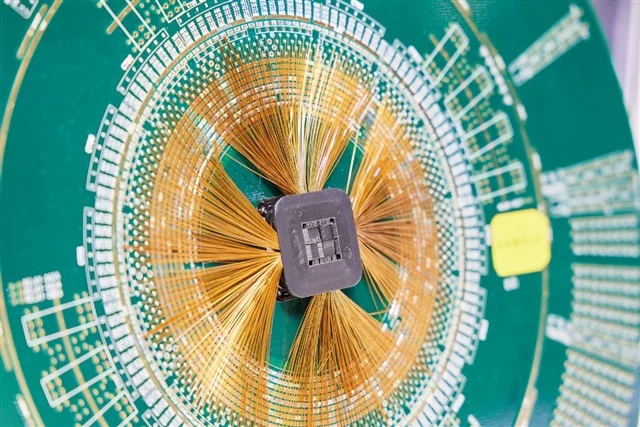
As a data systems architect would observe, the complexity of modern silicon—characterized by massive transistor counts and heterogeneous integration—has moved the primary bottleneck from design to validation and testing. CHPT is addressing this by pivoting its core business toward HPC probe cards, which now account for 30% of its total revenue, or approximately NT$405 million. Probe cards are the critical mechanical and electrical interface between the automated test equipment (ATE) and the wafer.
In the context of AI and HPC, these cards must handle unprecedented pin densities and maintain signal integrity at extreme frequencies. The surge in HPC orders reflects the industry’s move toward advanced packaging technologies like CoWoS (Chip on Wafer on Substrate) and chiplet-based architectures, which require exponentially more test probes per die to ensure thermal and electrical stability. To maintain its competitive edge, CHPT is significantly increasing its capital expenditure (Capex).
This investment is targeted at expanding production lines for advanced MEMS (Micro-Electro-Mechanical Systems) probe cards. MEMS technology allows for finer pitch and better mechanical consistency, which is indispensable for testing 3nm and 2nm nodes where traditional cantilever or vertical probe technologies fail to meet precision requirements. Furthermore, as global hyperscalers develop proprietary AI silicon, the demand for customized, high-speed testing solutions has skyrocketed.
CHPT’s ability to offer bespoke vertical probe cards that support high-speed SerDes (Serializer/Deserializer) testing at 112G and beyond has made it an indispensable partner for major chip designers. Looking forward, the company’s fiscal outlook remains bullish as it aligns its R&D with the next wave of AI hardware deployments. The technical necessity of these probe cards in the semiconductor lifecycle ensures that CHPT acts as a leading indicator for the entire HPC sector; as probe card orders rise, it signals that mass production of the next generation of AI GPUs and CPUs is imminent.
By securing its role in the physical testing layer, CHPT is not just a component supplier but a gatekeeper of AI hardware quality and reliability in an era where silicon performance is the ultimate currency.