🔍 Executive Summary
- Delta Electronics has posted a stellar 34% revenue growth in Q1 2026, driven by an insatiable demand for high-efficiency power and thermal management in AI data centers. To capitalize on this, the board has authorized a massive NT$12.1 billion investment in its Taoyuan facilities. This strategic expansion focuses on next-generation liquid cooling and high-density power supply units (PSUs), securing Delta’s role as the primary utility architect for the generative AI era.
Strategic Deep-Dive
Delta Electronics has delivered a formidable statement of operational strength in its Q1 2026 financial disclosure, reporting a 34% year-over-year revenue surge that underscores its dominance in the AI infrastructure layer. This growth is not merely a byproduct of general market expansion but a result of Delta’s specialized capabilities in addressing the ’thermal and power walls’ inherent in modern high-density computing. Following these results, the company’s board has greenlit an NT$12.1 billion (US$380 million) investment aimed at expanding and automating its manufacturing facilities in Taoyuan, Taiwan.
As a data systems architect would emphasize, the power requirements of a modern AI rack have escalated from 10kW to over 100kW, necessitating a complete overhaul of data center power delivery and thermal management architectures. Delta is positioning itself as the primary architect of this transition. The NT$12.1 billion investment is strategically earmarked for the development of advanced 48V DC-DC converters and high-efficiency power supply units (PSUs) that boast energy conversion rates exceeding 98%.
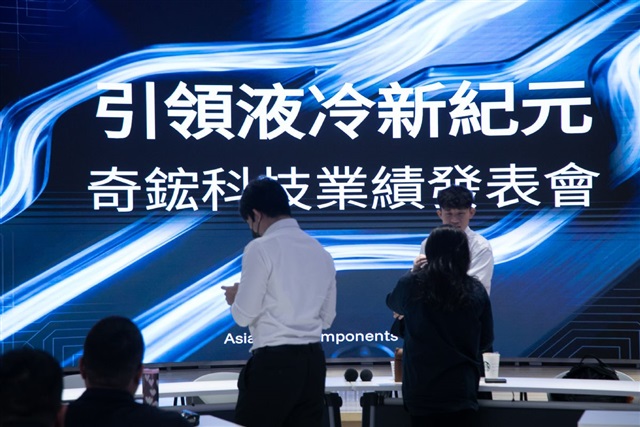
Furthermore, a significant portion of this capital will be directed toward scaling liquid cooling production lines, specifically cold-plate and immersion cooling technologies, which are becoming the standard for NVIDIA’s Blackwell and subsequent Blackwell Ultra GPU architectures. By centralizing this high-tech manufacturing in Taoyuan, Delta is securing its intellectual property while leveraging Taiwan’s unique semiconductor cluster for rapid prototyping and deployment. This domestic expansion is complemented by a global strategy to localize assembly for hyperscale clients, but the core ‘intelligence’ of the hardware remains rooted in Delta’s Taiwanese R&D centers.
The competitive landscape for AI server components is narrowing; as power densities increase, only a handful of vendors can meet the stringent safety and efficiency standards required by global cloud providers. Delta’s aggressive capital expenditure is a calculated move to lock in market share and create high barriers to entry for competitors. The investment also addresses the critical need for ‘N+1’ redundancy and modular power designs in data centers, which are essential for maintaining the 24/7 uptime required for generative AI services.
For Delta, the AI boom is a once-in-a-generation catalyst that transforms the company from a passive component supplier into a strategic utility provider for the digital age. By expanding capacity now, Delta is ensuring that as the world’s compute capacity doubles and triples, it will possess the production volume and technical superiority to remain the industry’s primary choice for power and cooling infrastructure.