🔍 Executive Summary
- Intel is undergoing a structural transformation led by Kevork Kechichian and backed by CEO Lip-Bu Tan, pivoting toward a CPU-centric orchestration model to compete with Nvidia and Arm in the data center market.
Strategic Deep-Dive
Intel’s recent strategic maneuvers, spearheaded by the appointment of Kevork Kechichian and reinforced by the strategic oversight of CEO Lip-Bu Tan, represent a definitive ‘multi-year reset’ of the company’s data center ambitions. For the past several quarters, Intel has faced immense pressure from Nvidia’s overwhelming dominance in the AI training market and the steady encroachment of Arm-based custom silicon within hyperscale environments. The Kechichian-led reorganization is a direct response to these existential threats, marked by a brutal prioritization of resources that has already seen the cancellation of three major projects in just a two-month span.
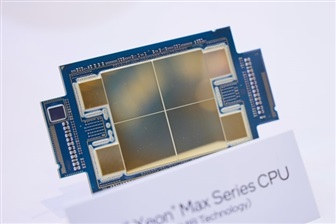
Central to this reset is a bold architectural wager: CPU-centric orchestration. While much of the industry has moved toward a GPU-first paradigm, Intel is doubling down on the premise that the CPU remains the most versatile and essential brain of the data center. By positioning the CPU as the primary orchestrator that manages and optimizes the workflows of secondary accelerators like GPUs and ASICs, Intel aims to solve the growing issues of memory latency and inefficient resource allocation that plague massive AI clusters.
This approach is not just a technical preference but a strategic economic play. Intel argues that a CPU-centric model can significantly lower the Total Cost of Ownership (TCO) for data center operators by reducing the need for expensive, specialized interconnects and simplifying the software stack. The success of this strategy is tied to the industry’s shift toward AI inference, where efficiency, power consumption, and latency are often more critical than raw training throughput.
In this environment, Intel’s integrated approach could offer a more balanced and cost-effective solution than the monolithic GPU clusters currently in favor. However, the path ahead is fraught with difficulty. Nvidia’s CUDA ecosystem remains a massive moat, and the ‘Kechichian Reset’ requires a flawless execution of Intel’s future roadmap to regain market trust.
CEO Lip-Bu Tan’s backing of this plan is crucial, as it lends industry credibility and a focus on operational discipline that has sometimes been lacking in Intel’s recent history. The cancellation of legacy projects, while painful, is seen as a necessary cleansing of the portfolio to allow for the concentration of engineering talent on high-impact areas like advanced packaging and next-generation Xeon architectures. Furthermore, Intel is betting that its deep relationship with enterprise software vendors will allow for a more seamless transition to this orchestrated model compared to the relatively new and specialized AI frameworks.
As the competition heats up over the next two to three years, Intel’s goal is to prove that its silicon can provide superior value through synergy rather than just individual component specs. Whether Intel can truly break the Nvidia-Arm duopoly remains the defining question for the company’s future, but the current reset is the most coherent and aggressive plan to emerge from the Santa Clara giant in years, signaling that the status quo is no longer an option.