🔍 Executive Summary
- SK Chairman Chey Tae-won proposes a Korea-Japan economic bloc to counter US-China tech rivalry.
- The integration aims to combine manufacturing and material strengths to boost global bargaining power.
- The vision focuses on securing autonomy in energy, semiconductors, and AI infrastructure.
Strategic Deep-Dive
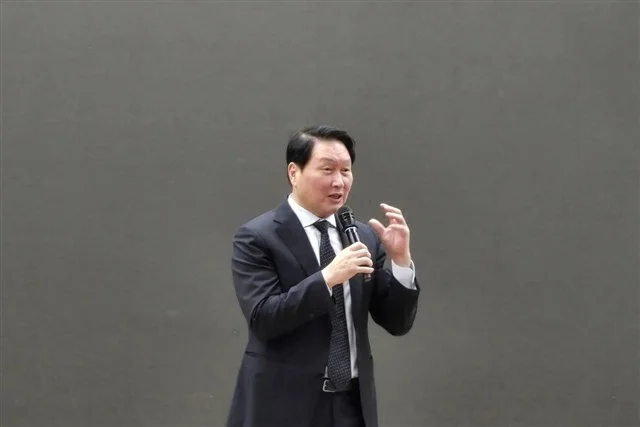
SK Group Chairman Chey Tae-won has issued a provocative call for the deep economic and technological integration of South Korea and Japan, framing it as a strategic necessity in the face of the intensifying US-China rivalry. Chey’s thesis centers on the concept of ‘strategic scale’; in an era of techno-nationalism, neither nation possesses sufficient bargaining power individually to dictate terms to global superpowers. By merging their economic interests into a unified bloc, Korea and Japan could leverage a synergistic combination of Korea’s leading-edge semiconductor manufacturing and Japan’s dominance in materials, components, and equipment (MCE).
This proposed integration is designed to bolster bargaining power across three critical sectors: energy, semiconductors, and AI infrastructure. Chey argues that a combined Korea-Japan entity would hold enough sway to stabilize global supply chains and influence international diplomatic dynamics. The feasibility of this proposal hinges on transcending historical and competitive friction to focus on shared survival.
If realized, such an alliance would transform the regional landscape, moving away from being pawns in the US-China conflict toward becoming a formidable tech-bloc with the autonomy to shape its own industrial destiny. The proposal marks a shift toward a pragmatic ‘Geoeconomic Realism’ that prioritizes regional scale over traditional isolationist policies.