🔍 Executive Summary
- In a surprising disclosure that highlights the changing face of professional computing, Apple CEO Tim Cook has warned that supply constraints for the Mac mini and Mac Studio could persist for several months. This shortage is not a result of general supply chain malaise but is specifically driven by a localized AI gold rush. Developers and data scientists are increasingly moving away from cloud-based AI inference, which can be prohibitively expensive and fraught with latency issues, in favor of running large language models (LLMs) and agentic AI systems directly on their hardware. As a result, ...
Strategic Deep-Dive
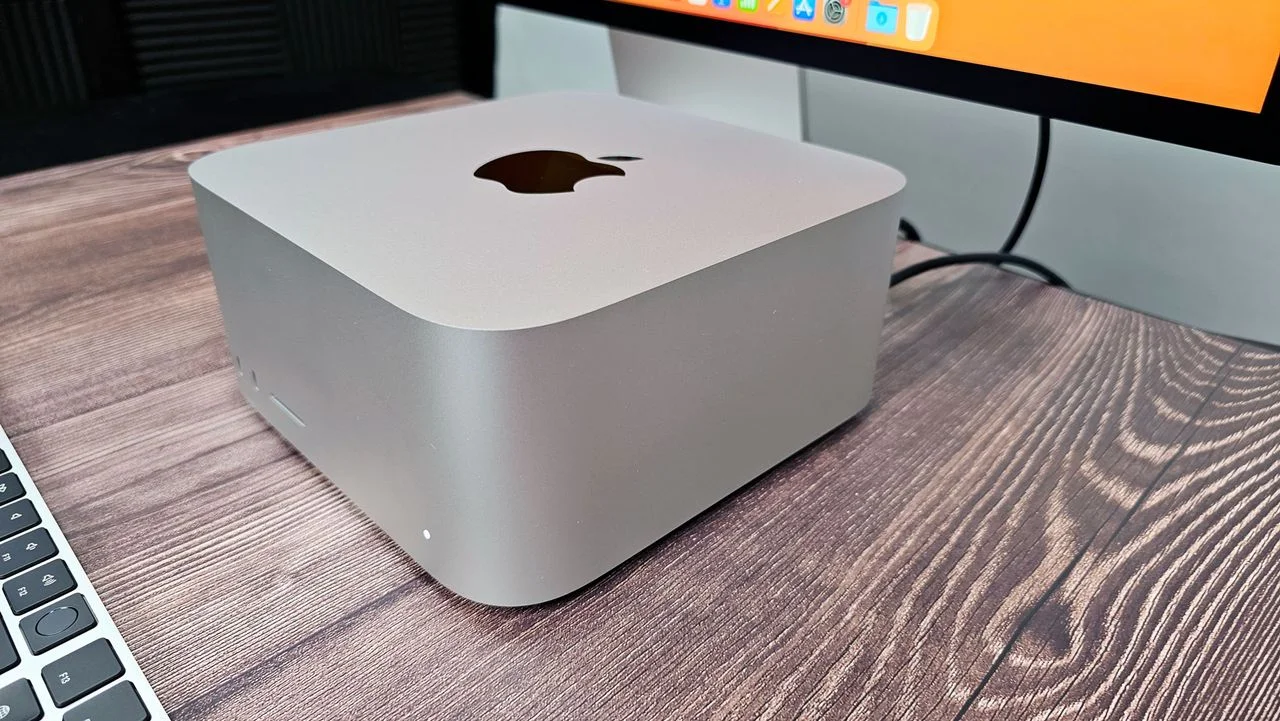
In a surprising disclosure that highlights the changing face of professional computing, Apple CEO Tim Cook has warned that supply constraints for the Mac mini and Mac Studio could persist for several months. This shortage is not a result of general supply chain malaise but is specifically driven by a localized AI gold rush. Developers and data scientists are increasingly moving away from cloud-based AI inference, which can be prohibitively expensive and fraught with latency issues, in favor of running large language models (LLMs) and agentic AI systems directly on their hardware.
As a result, the demand for high-specification Apple Silicon machines—those configured with maximum unified memory—has surged far beyond Apple’s initial manufacturing forecasts. This shift reflects a broader industry transition toward ‘Edge AI,’ where the power to process complex neural networks is decentralized from the data center to the developer’s desk.
The technical allure of the Mac mini and Mac Studio lies in Apple’s proprietary Unified Memory Architecture (UMA). From a systems architecture perspective, UMA is superior for AI tasks because it allows the CPU, GPU, and Neural Engine to access a single, high-bandwidth pool of memory without the overhead of data copying across a PCI Express bus. For instance, a Mac Studio with an M2 Ultra chip can support up to 192GB of unified memory with a bandwidth of 800GB/s.
This is a critical threshold for running 70B-parameter models or complex ‘Agentic AI’ pipelines that require massive amounts of VRAM to function in real-time. Traditional PC setups often struggle with the latency introduced when swapping data between system RAM and discrete GPU VRAM, making Apple’s tightly integrated silicon the most efficient platform for LLM local testing and deployment. This high performance-per-watt profile is exactly what AI engineers are prioritizing in 2026.
However, this demand has collided with a localized ‘memory crunch.’ Apple’s supply chain is currently struggling to source and integrate the specialized high-density DRAM modules required for these pro-level configurations. Unlike standard consumer models that use 8GB or 16GB of RAM, the AI-ready variants of the Mac mini and Studio require complex multi-die memory packaging. Tim Cook’s warning suggests that the bottleneck is likely at the assembly and testing stage for these high-memory SKUs.
For professional studios and research labs, this means that procurement cycles are being pushed into late 2026, potentially stalling critical development projects. This scarcity is turning the Mac mini and Studio into the new ’essential infrastructure’ for the AI era, much like the NVIDIA H100s were for the cloud. As we move forward, the definition of a ‘high-end workstation’ is being rewritten to prioritize memory bandwidth and capacity above all else.
Apple is scrambling to optimize its assembly lines, but for the immediate future, the AI-driven appetite for silicon remains larger than the supply available at retail.