🔍 Executive Summary
- Large Language Models like Claude are evolving from simple content creators into sophisticated structural organizers for Personal Knowledge Management (PKM). By using targeted prompts, users can transform cluttered Obsidian vaults into efficient digital second brains.
Strategic Deep-Dive
From Junk Drawer to Second Brain: The AI Organization Revolution in PKM
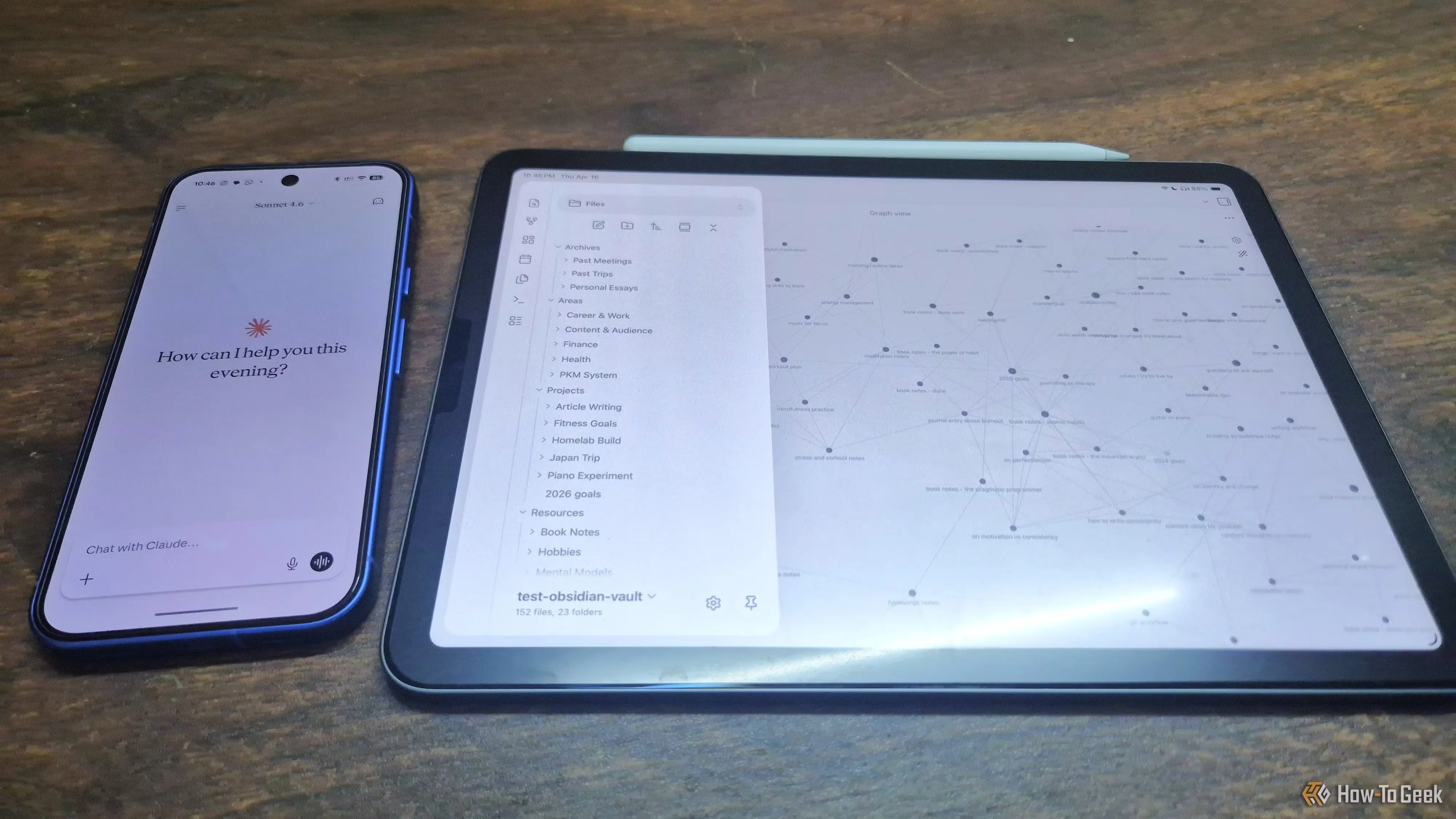
Obsidian has emerged as a powerhouse for those seeking to build a ‘Second Brain,’ but the tool is only as effective as the organization system supporting it. Without constant maintenance, digital vaults inevitably descend into chaos, reaching a state colloquially known as the ‘junk drawer’ effect. This occurs when the frictionless capture of information results in a mountain of disconnected notes, rendering search functions useless and stifling creativity.
However, the emergence of Large Language Models (LLMs) like Claude has introduced a transformative solution, moving AI from a generative toy to a sophisticated structural architect for Personal Knowledge Management (PKM).
The Synergy of Semantic Intelligence and Knowledge Systems
Claude AI is uniquely suited for organizing digital vaults because it excels at understanding the semantic relationships between disparate pieces of information. Unlike traditional search algorithms that rely on keyword matching, Claude can interpret the core intent of a note. By feeding Claude a list of filenames or a summary of folder structures, users can leverage the AI to identify thematic clusters that were previously invisible.
This capability allows the user to shift their focus from the tedious administrative task of manual filing to the high-level work of synthesizing ideas and generating new insights. Claude effectively acts as a professional librarian who has already read and understood every word in your vault.
Implementing the PARA Method via Targeted Prompts
One of the most effective strategies for reclaiming an Obsidian vault is applying the PARA method—an organizational framework developed by Tiago Forte that categorizes information into Projects, Areas, Resources, and Archives. While implementing PARA manually can be daunting for an existing vault with hundreds of notes, Claude can automate the heavy lifting. By using specific prompts included in the latest technical guides, users can provide Claude with their current ‘messy’ structure and ask it to redistribute files into the PARA hierarchy.
The AI’s ability to reason through which notes belong to active ‘Projects’ versus static ‘Resources’ provides a level of precision that standard automation tools cannot match. This process, which would traditionally take a full weekend of sorting, can now be accomplished in under five minutes.
The Future of AI as a Personal Data Librarian
This evolution marks a significant shift in the productivity landscape. We are moving away from an era where we use AI solely to create new content and into an era where AI serves as a guardian of our existing knowledge. For Obsidian users, this means that their ‘Second Brain’ remains a functional, living extension of their intellect rather than a graveyard for forgotten data.
As Claude and similar models continue to expand their context windows, the possibility of real-time, autonomous organization of personal data becomes a reality. The integration of AI into markdown-based productivity tools represents the next frontier of human-AI collaboration, where the machine manages the structure so the human can focus on the soul of the work.