🔍 Executive Summary
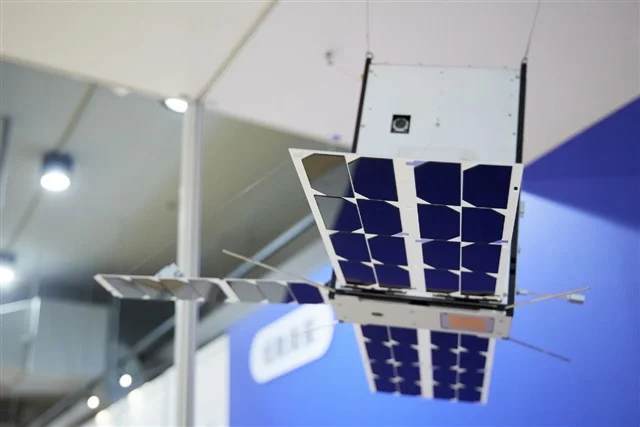
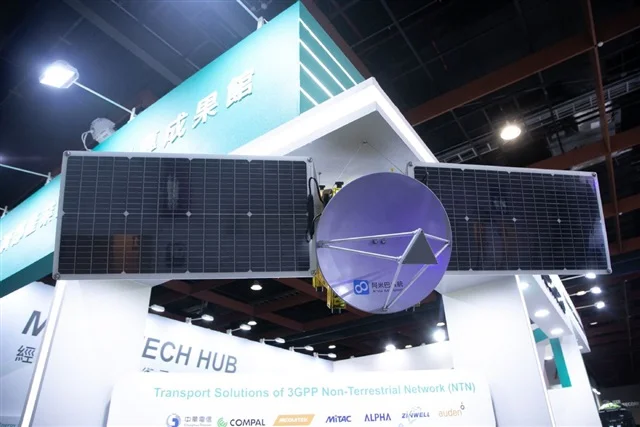
- Foxconn has successfully deployed its 2nd-gen PEARL-1A and PEARL-1B LEO satellites aboard a SpaceX Falcon 9, marking a significant step in its transition to space hardware.
- The mission, a rideshare with South Korea's CAS500-2, focuses on testing inter-satellite link (ISL) technology to build a foundation for global orbital mesh networks.
Strategic Deep-Dive
From iPhone Assembly to Orbital Infrastructure: Foxconn’s Leap
Foxconn, the world’s dominant contract electronics manufacturer, has solidified its transition into a high-stakes aerospace player with the successful launch of its second-generation Low Earth Orbit (LEO) satellites. On May 3, 2026, the PEARL-1A and PEARL-1B units were deployed via a SpaceX Falcon 9 rocket from Vandenberg Space Force Base. This mission is a significant component of the CAS500-2 rideshare mission, where Foxconn shared the payload capacity with South Korea’s medium-sized Earth observation satellite.
For a technical analyst, the inclusion of Foxconn in such a high-profile mission underscores the maturity of their space-grade hardware and their growing reputation within the ‘New Space’ ecosystem.
Technical Depth: Inter-Satellite Links (ISL) as the Backbone
The primary objective of the PEARL-1A and PEARL-1B mission is the rigorous testing of Inter-Satellite Link (ISL) technology. As the orbital environment becomes increasingly crowded with constellations from SpaceX, Amazon, and China, the ability for satellites to communicate directly with one another—bypassing ground stations—is no longer a luxury but a requirement. ISL minimizes latency and ensures continuous data coverage across oceanic and remote terrestrial regions where ground infrastructure is absent.
Foxconn’s hardware is designed to sustain these high-speed links for a five-year operational lifespan, testing the limits of thermal management and signal integrity in vacuum conditions. By mastering ISL, Foxconn isn’t just launching hardware; it’s building the switchgear for an orbital internet backbone.
Vertical Integration and the Commoditization of Space
Foxconn’s entry into the LEO sector represents a strategic vertical integration that mirrors its success in the smartphone industry. By controlling the design and manufacturing of the satellite bus and communication payloads, Foxconn can leverage its unmatched economies of scale to drive down the cost of orbital hardware. The global demand for LEO constellations is skyrocketing, driven by autonomous vehicles, remote sensing, and military applications.
Foxconn is positioning itself to be the ‘primary foundry’ for these satellites, much like it has for Apple’s consumer products. The PEARL mission proves that space hardware is transitioning from a bespoke, artisan craft to a mass-producible industrial product. As orbital slots become a contested resource, the speed at which a company can manufacture and deploy reliable hardware will determine its market dominance.
Foxconn’s 2nd-gen mission is a clear warning to legacy aerospace firms: the manufacturing giants of the terrestrial world have arrived in orbit, and they are bringing their ruthless efficiency with them.