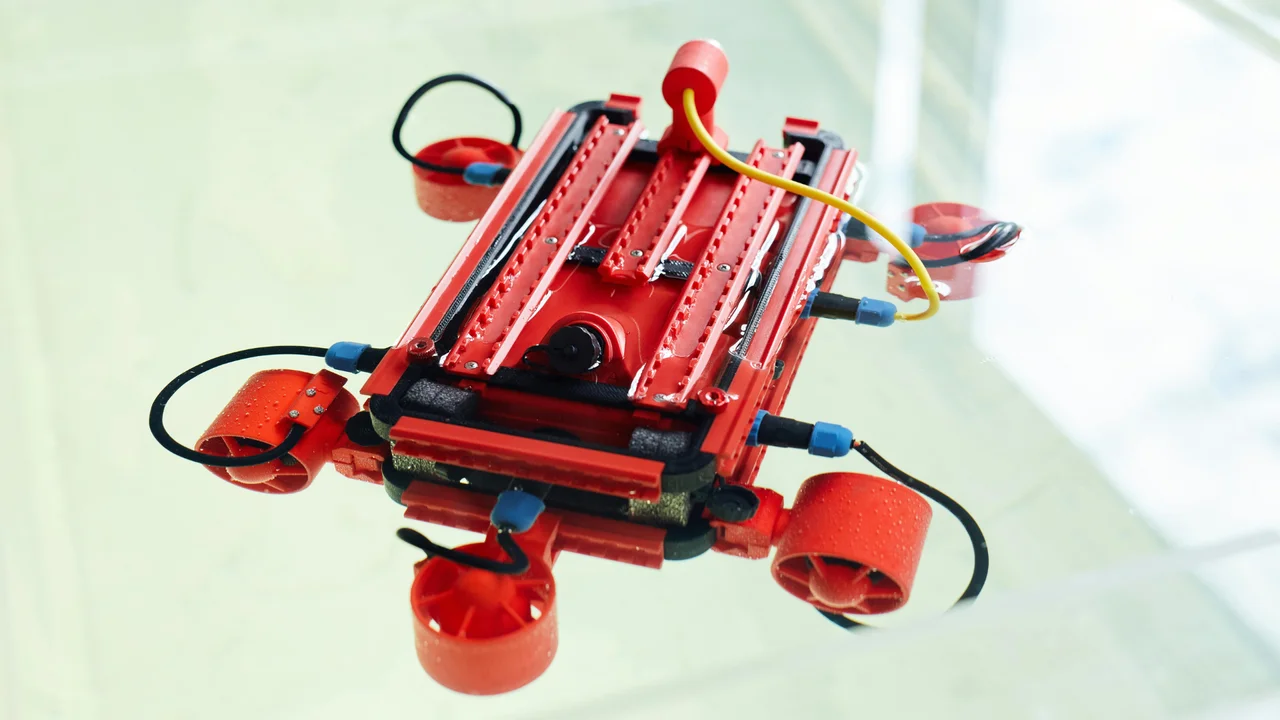
🔍 Executive Summary
- Japan has deployed the AirKamuy 150, a $2,000 cardboard drone engineered to disrupt military economics through ultra-low-cost, mass-producible hardware.
- Utilizing a logistics-optimized 'flat-packed' design, this drone represents a fundamental shift toward expendable swarm warfare and asymmetric economic attrition.
Strategic Deep-Dive
The Economic Paradigm Shift: Hardware as a Sacrificial Asset
In a decisive move that challenges the foundational economics of modern defense, Japan is deploying the AirKamuy 150—an ultra-low-cost drone constructed primarily from specially treated cardboard. At a manufacturing price point of just $2,000 per unit, the hardware costs significantly less than a professional-grade workstation or a high-end gaming PC. This marks a radical departure from the traditional defense procurement model, which typically prioritizes multi-million dollar precision platforms.
By embracing the philosophy of ‘hardware expendability,’ the AirKamuy 150 forces an economic dilemma upon adversaries: the cost of interdiction now vastly exceeds the cost of deployment, creating a sustainable model for asymmetric attrition.
Technical Synthesis: Flat-Packed Logistics and Field Assembly
The engineering brilliance of the AirKamuy 150 lies not in its aerodynamic complexity, but in its logistical footprint. Adopting a ‘flat-packed’ design methodology—reminiscent of consumer furniture giants like IKEA—the drone can be stored and transported in large quantities within minimal spatial constraints. This flat-pack approach solves the most critical bottleneck in drone warfare: the logistical burden of moving bulky, fragile airframes to the front lines.
These units are shipped as flat sheets of durable, weather-resistant material that can be rapidly folded and assembled on-site with minimal tools. From a data analysis perspective, this capability triples the operational density of a standard logistical convoy, allowing a single transport vehicle to carry an entire swarm’s worth of hardware.
Strategic Implications of Mass-Produced Attrition Platforms
The AirKamuy 150 is the physical manifestation of ‘Swarm Warfare.’ When hardware becomes a consumable rather than an asset, tactical focus shifts from preservation to saturation. A primary mission for these cardboard drones is to overwhelm enemy radar and air defense systems. By flooding the airspace with dozens of low-signature, low-cost targets, the attacker forces the defender to reveal their positions and deplete their stocks of expensive surface-to-air missiles (SAMs).
Even if 90% of the swarm is intercepted, the economic victory remains with the attacker, as the total cost of the swarm is often less than a single interceptor missile. This democratization of aerial warfare through low-tech materials signifies a global shift. Traditional defense contractors, focused on high-margin, low-volume production, are now faced with a burgeoning market for ‘disposable’ hardware that prioritizes scale over sophistication.
As we look toward future conflicts, the AirKamuy 150 serves as a harbinger of a new era where the winner is determined not by who has the best hardware, but by who can lose the most hardware at the lowest cost.