🔍 Executive Summary
- Yichen Shen, a 37-year-old MIT physicist, successfully listed his photonics chipmaking company on the Hong Kong Stock Exchange on April 28, 2026.
- The IPO marks a pivotal shift from traditional electronic semiconductors to light-based optical computing for the AI era.
- The strategic Hong Kong listing aims to secure capital for scaling hardware capable of exceeding current electronic processing benchmarks.
Strategic Deep-Dive
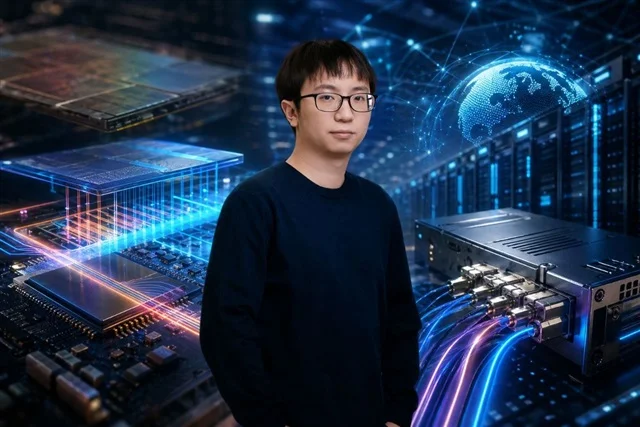
On the morning of April 28, 2026, the Hong Kong Stock Exchange became the epicenter of a technological milestone as 37-year-old MIT physicist Yichen Shen struck the ceremonial gong to mark his photonics chipmaker’s initial public offering. This event is not merely a financial success story; it represents the formal entry of optical computing into the mainstream global hardware market, signaling an architectural pivot that will define the next decade of high-performance computing. For decades, the semiconductor industry has relied on the movement of electrons through silicon and copper.
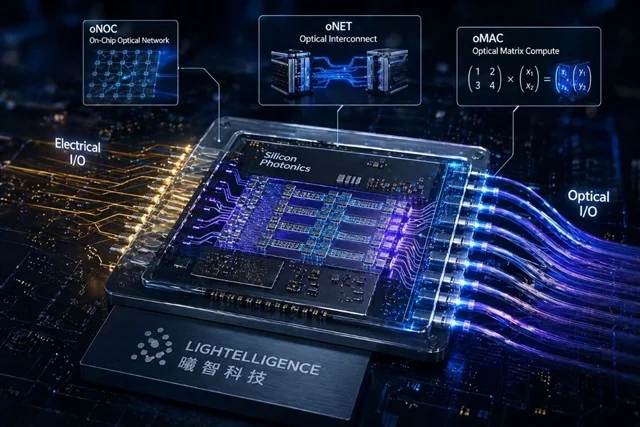
However, as data throughput requirements for Large Language Models (LLMs) and generative AI reach the Terabit-per-second (Tbps) threshold, traditional electronic interconnects have hit a ’thermal wall.’ The physical resistance inherent in copper wiring leads to significant heat dissipation and signal degradation at high frequencies, such as those required by PAM4 or the emerging PAM8 modulation schemes. The ‘Photonics Revolution’ led by innovators like Shen offers the only viable path forward by utilizing photons—particles of light—to transmit and process information with near-zero heat and unprecedented speed. By integrating lasers, modulators, and photodetectors onto a single silicon substrate—a process known as Silicon Photonics or Photonic Integrated Circuits (PICs)—Shen’s company has managed to break the I/O bottleneck that currently limits even the most advanced GPUs.
The strategic importance of the Hong Kong listing cannot be overstated in this context. By choosing Hong Kong over Western exchanges, Shen is positioning the company at the nexus of international capital and the robust electronics manufacturing infrastructure of East Asia, particularly the advanced packaging ecosystems in Taiwan and mainland China. The capital raised will be instrumental in moving from laboratory prototypes to mass-market hardware deployment, focusing on high-density optical engines that can be co-packaged with existing logic units.
From a Data Architect’s perspective, this shift represents a move toward ‘Hyperscale Density,’ where the physical limitations of server racks are redefined by the superior thermal envelope of optical components. Industry analysts view this as the first major step in the transition from electronics to photonics, where light-based hardware will eventually handle the heavy lifting of AI training and inference. Shen’s background as an MIT physicist provides the scientific provenance necessary to reassure institutional investors that the complex integration of optical and electronic components—once a theoretical dream—is now a commercial reality ready for industrial scaling.
As the hardware industry looks toward 2030, the success of this Hong Kong listing will likely be remembered as the moment when the world’s financial markets fully embraced the potential of photonics to redefine the boundaries of silicon-based civilization. This is not an incremental upgrade; it is a fundamental transformation of the global semiconductor value chain, forcing a total rethink of how we design, power, and cool the engines of the AI era.