🔍 Executive Summary
- OpenAI is transitioning its US$500 billion Stargate initiative from a rigid joint venture model to a flexible capacity strategy to better navigate the accelerating demand for AI compute infrastructure and power grid constraints.
Strategic Deep-Dive
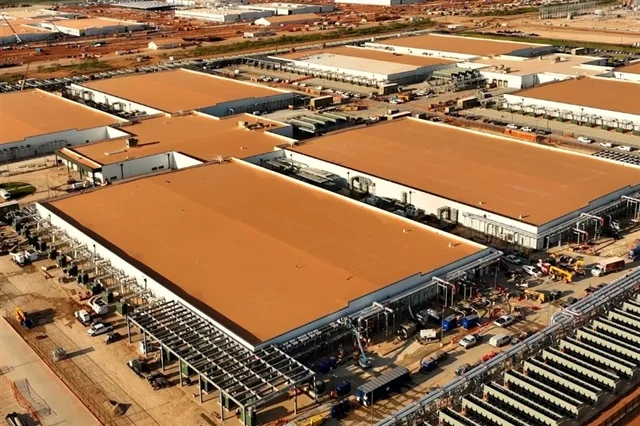
The strategic realignment of OpenAI’s Stargate initiative, a monumental US$500 billion infrastructure project, marks a significant turning point in the race for artificial intelligence supremacy. Originally conceptualized as a massive, centralized data center joint venture, the project is now evolving into a more modular and flexible framework for securing immense computing capacity. This pivot is primarily driven by the unprecedented acceleration of AI demand, which has made long-term, static infrastructure planning increasingly risky and potentially obsolete before completion.
As a Senior Global Tech Analyst, I interpret this move as a pragmatic response to the dual challenges of power availability and the rapid evolution of AI hardware architectures.
The primary reason for abandoning the rigid site-specific model lies in the deepening crisis of global power grid bottlenecks. Building a centralized facility requiring gigawatts of power often involves decade-long regulatory hurdles and massive grid upgrades that cannot keep pace with 6-month AI innovation cycles. By moving away from a fixed-site joint venture model, OpenAI is effectively adopting a ‘just-in-time’ philosophy for hyperscale compute.
The US$500 billion scale remains staggering, but the deployment of this capital will now likely be distributed across a broader array of partnerships and technological formats. This flexibility allows OpenAI to bypass the bottlenecks associated with single-site developments, such as local utility limitations or environmental regulatory hurdles.
Furthermore, this transition enables the organization to integrate the latest advancements in liquid cooling, high-density rack designs, and HBM3e-integrated accelerators as they become available, rather than being locked into specifications decided years in advance during the initial design-build phase of a traditional data center. From a systems architecture standpoint, the shift toward ‘flexible capacity’ reflects a move toward software-defined infrastructure where the location is secondary to low-latency connectivity and sustainable power access.
From a strategic standpoint, this rework emphasizes that ‘capacity’ is now a more valuable currency than ‘real estate.’ In the high-stakes environment of Large Language Model (LLM) training, the ability to pivot resources to wherever green energy and high-bandwidth networking are available is a competitive necessity. This shift also reflects a broader industry trend where the software-defined nature of AI is forcing hardware infrastructure to become equally agile. OpenAI is signaling that while its appetite for compute remains insatiable, its method for securing that compute will be characterized by strategic diversification and operational fluidity.
This approach not only hedges against construction delays but also positions OpenAI to exploit regional advantages in utility costs and hardware availability, ensuring that the Stargate vision—providing the foundational compute for next-generation AGI—remains viable in a volatile global market. The financial implications are profound: instead of sinking massive CapEx into a single asset that depreciates over 15 years, OpenAI can now treat infrastructure as a dynamic resource, optimizing for total cost of ownership (TCO) in real-time.