🔍 Executive Summary
- Synopsys is redefining hardware design by merging its stack with Ansys, moving simulation from post-design verification to a front-end decision engine with the release of Ansys 2026 R1 to tackle multi-physics challenges in 2nm and 3D-IC designs.
Strategic Deep-Dive
The integration of Synopsys and Ansys marks the beginning of a fundamental system-level reset in hardware engineering. For decades, the semiconductor industry has operated under a linear workflow: design first, then verify. However, the release of Ansys 2026 R1 signifies a radical departure from this tradition.
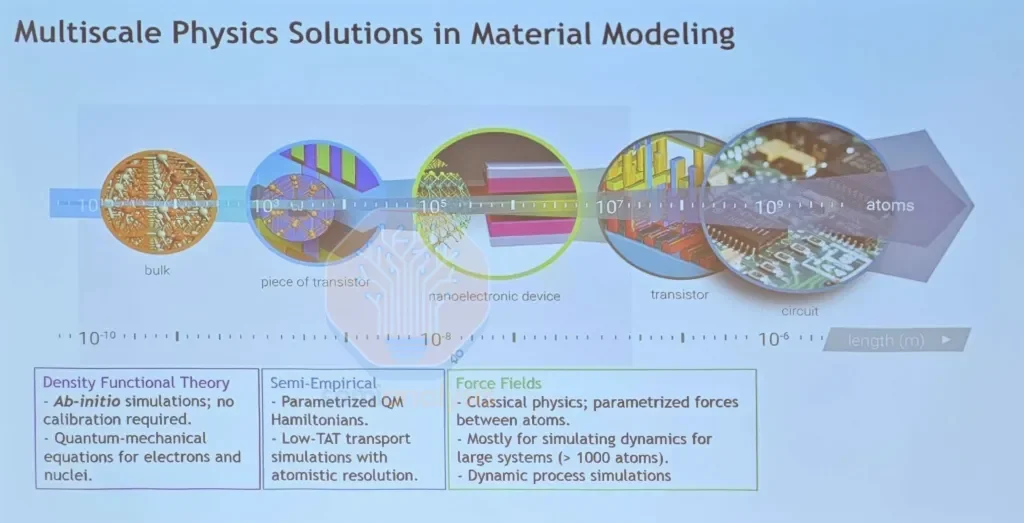
By shifting Simulation and Analysis (S&A) to the front-end of the product development lifecycle, Synopsys is empowering architects to use physics-based insights as a decision engine at the very inception of a project. This ‘System to Silicon’ approach ensures that every gate placement and power delivery network choice is validated against thermal, mechanical, and electromagnetic constraints in real-time.
As we push toward the physical limits of Moore’s Law with 1.8nm and 2nm process nodes, the margin for error has virtually disappeared. At these scales, the physical behavior of the silicon is as critical as the logical design. One of the most pressing challenges in modern AI silicon is thermal throttling in 3D-IC architectures.
When chips are stacked using CoWoS (Chip on Wafer on Substrate) or TSV (Through-Silicon Via) technologies, the heat generated in the middle layers can lead to catastrophic failure if not addressed during the initial architectural floorplanning. By merging the two stacks, Synopsys provides a unified environment where multi-physics simulation is no longer a separate silo but a core component of the EDA suite.
This integration is particularly vital for managing electromagnetic interference (EMI) and power integrity in high-frequency designs. With the advent of HBM3e and high-speed SerDes, the electromagnetic interaction between the interposer and the silicon die can degrade signal integrity significantly. A front-end decision engine allows designers to run thousands of ‘what-if’ scenarios, optimizing the micro-bump patterns and decoupling capacitor placements before the design reaches the synthesis stage.
The strategic value of this merger lies in its ability to reduce time-to-market. When simulation acts as a front-end decision engine, designers can explore architectural permutations through automated workflows. This drastically reduces the likelihood of late-stage design failures, which are increasingly common in heterogeneous integration.
From a Senior Global Tech Analyst’s perspective, this is more than an incremental improvement; it is an architectural revolution. It reflects a world where the complexity of the hardware system is so high that traditional verification methods can no longer keep pace. By placing Ansys’s world-class simulation capabilities at the heart of the Synopsys design engine, the industry is moving toward a future of ‘first-time-right’ manufacturing, where the digital twin of the system is perfected before a single atom of silicon is etched.
This reset will define the competitive landscape of hardware design for the next decade, making simulation the primary driver of performance gains.