🔍 Executive Summary
- The surge in Low Earth Orbit (LEO) satellite launches is creating a new 'Space Economy' supply chain centered on Taiwanese component specialists.
- Key components such as connectors, battery modules, and specialized cables are seeing increased demand, though certification hurdles remains a challenge.
- The shift in manufacturing footprints provides Tier 2 and Tier 3 suppliers with opportunities to influence downstream costs and global sourcing strategies.
Strategic Deep-Dive
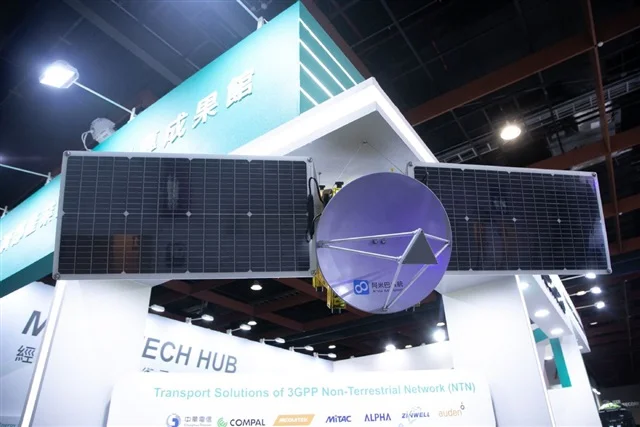
The rapid escalation in low Earth orbit (LEO) satellite launches is fundamentally reshaping the architecture of global electronics supply chains, shifting the gravity of aerospace manufacturing toward Taiwan. At the heart of this transformation are Taiwanese component manufacturers who are pivoting their precision engineering expertise toward the specialized, high-stakes requirements of the ‘New Space’ economy. Companies focusing on ruggedized connectors, specialized battery modules, and high-durability cables are finding themselves at the center of a strategic shift as satellite constellations move from experimental phases to mass deployment.
Historically, space-grade components were the domain of a select few aerospace giants utilizing MIL-STD or high-cost proprietary standards. However, the move toward mega-constellations necessitates a Tier 2 and Tier 3 supplier base capable of high-volume production without sacrificing the extreme reliability required for orbital environments. For Taiwanese makers, the primary challenge—and subsequent competitive advantage—lies in clearing the ‘Space Grade’ certification hurdles.
These components must survive the rigors of outgassing in vacuum conditions, where volatile materials can condense on sensitive optical sensors, and maintain structural integrity during extreme thermal cycling ranges from -150°C to +150°C. Furthermore, radiation hardening against Total Ionizing Dose (TID) and Single Event Effects (SEE) is no longer optional for components that manage power and data in orbit. By mastering these technical specifications, Taiwanese suppliers are directly influencing the downstream costs of satellite programs.
The ability to source mission-critical connectors and battery modules at scale allows satellite operators to reduce their Total Cost of Ownership (TCO) and accelerate launch cadences. Moreover, the global manufacturing footprint is being redrawn as satellite operators seek to diversify their sourcing strategies to mitigate geopolitical risks. This diversification provides a unique opportunity for Taiwanese firms to embed themselves into the long-term roadmaps of major space enterprises.
As we move through 2026, the strategic alignment between Taiwanese hardware ingenuity and the global space race will dictate the cost structures and deployment speeds of the next generation of global connectivity. For these suppliers, the LEO boom represents a chance to escape the thin margins of the consumer electronics market and enter a high-value sector characterized by multi-year contracts and rigorous technical lock-ins. The emergence of this specialized supply chain highlights a broader trend where traditional hardware centers are reinventing themselves to serve the most demanding frontiers of technology, ensuring that the components orbiting 500 kilometers above us are built with the same precision and silicon provenance as the logic gates on the ground.