🔍 Executive Summary
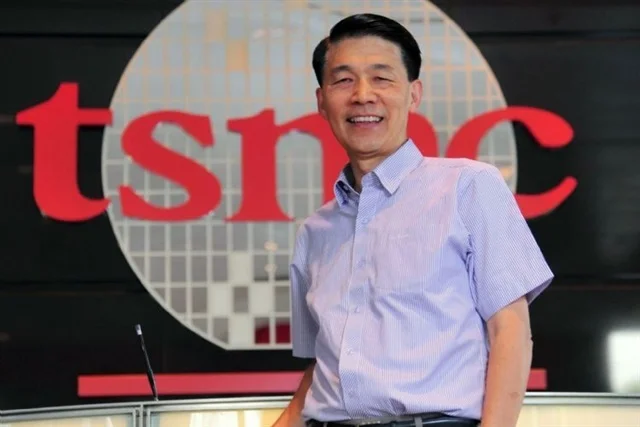
- MediaTek has made a significant strategic move by securing the services of Dr. Chen-Hua Douglas Yu, one of the most revered figures in the history of semiconductor manufacturing. Dr. Yu is famously known as one of the 'Six Knights'—the elite band of R&D leaders at TSMC who transformed the company from a mere foundry into a global technology powerhouse. During his tenure, Dr. Yu was the primary architect behind TSMC’s advanced packaging revolution, spearheading the development of CoWoS (Chip on Wafer on Substrate) and InFO (Integrated Fan-Out) technologies. These processes are now the backbone ...
Strategic Deep-Dive
MediaTek has made a significant strategic move by securing the services of Dr. Chen-Hua Douglas Yu, one of the most revered figures in the history of semiconductor manufacturing. Dr.
Yu is famously known as one of the ‘Six Knights’—the elite band of R&D leaders at TSMC who transformed the company from a mere foundry into a global technology powerhouse. During his tenure, Dr. Yu was the primary architect behind TSMC’s advanced packaging revolution, spearheading the development of CoWoS (Chip on Wafer on Substrate) and InFO (Integrated Fan-Out) technologies.
These processes are now the backbone of the global AI boom, enabling the integration of high-bandwidth memory (HBM) with logic dies for giants like NVIDIA and Apple. Following his retirement from TSMC in 2025, MediaTek has confirmed that Dr. Yu will join the company as an informal adviser, a role that carries immense technical weight in the current competitive landscape.
The logic behind this recruitment is deeply tied to the current architectural shift in chip design. As traditional Moore’s Law scaling becomes increasingly expensive and physically difficult, ‘Advanced Packaging’ has emerged as the new frontier for performance gains. In the era of the ‘Chiplet,’ the speed and efficiency of the interconnect—the physical bridges between different parts of a chip—are more important than the size of the transistors themselves.
By bringing Dr. Yu into its orbit, MediaTek is gaining an unprecedented insider’s understanding of how to optimize its Dimensity mobile SoCs and burgeoning High-Performance Computing (HPC) designs for TSMC’s most advanced fabrication nodes. This isn’t about switching foundries; it’s about doubling down on its partnership with TSMC to ensure MediaTek-designed silicon is perfectly synchronized with TSMC’s manufacturing limits.
For MediaTek, mastering the ‘interconnect bottleneck’ is the only way to challenge Qualcomm’s dominance in the premium smartphone segment and compete effectively in the server-side AI market.
Industry analysts view this as a clear signal that MediaTek is prioritizing ‘foundry synergy’ over diversification. While there have been rumors of MediaTek exploring Intel’s foundry services, the appointment of a TSMC legend suggests a commitment to a deep, specialized vertical integration within the TSMC ecosystem. Dr.
Yu’s expertise will likely guide MediaTek through the complexities of 3D IC stacking and hybrid bonding, allowing them to design chips that are inherently more efficient to produce and cooler to operate. This is a critical advantage for the next generation of 3nm and 2nm devices where thermal management is a primary constraint. In the high-stakes game of mobile SoC design, having the person who literally wrote the book on modern packaging is a formidable asset.
MediaTek is no longer just aiming to be a fast follower; it is positioning itself as a primary architect of the advanced packaging era, ensuring that its silicon can fully exploit the cutting-edge capabilities of the world’s leading foundry. The move reshapes MediaTek’s R&D profile, shifting the focus from instruction set architecture alone to the complex physical reality of chip assembly and thermal dynamics.