🔍 Executive Summary
- Many consumers fall victim to 'Ethernet marketing lies,' purchasing expensive Cat8 or gold-plated cables that offer zero benefit for home environments. True cost-efficiency in wired networking comes from understanding actual bandwidth requirements rather than following misleading premium labels.
Strategic Deep-Dive
The Technical Reality Behind Ethernet Marketing and Consumer Misconceptions
In the competitive realm of home networking, there is a pervasive trend of marketing products that promise ‘ultra-high-speed’ and ‘future-proof’ connectivity through expensive, enterprise-grade cabling. However, a deep dive into the technical specifications reveals that many of these products—specifically Cat8 cables and gold-plated connectors—are functionally unnecessary for the vast majority of consumer applications. As a global tech journalist, it is critical to deconstruct these marketing lies that often drain consumer wallets without providing a single millisecond of improved performance.
The Cat8 Delusion: Enterprise Specs for Home Tasks
Category 8 (Cat8) cabling is a specialized standard designed for top-of-rack and end-of-row topologies in data centers, supporting bandwidths of up to 2000MHz and speeds between 25Gbps and 40Gbps over short distances. In a residential context, where the most advanced consumer internet plans typically max out at 2.5Gbps or 5Gbps, Cat8 offers zero functional benefit. The hardware inside a standard PC, gaming console, or smart TV is physically incapable of utilizing the frequencies that Cat8 supports.
Even for enthusiasts running 10Gbps local networks, Cat6a remains more than sufficient for runs up to 100 meters. By opting for these ‘over-spec’ cables, users are paying a premium for a capability that will remain dormant throughout the lifetime of the hardware. This is not future-proofing; it is an inefficient allocation of resources driven by a fear of missing out (FOMO) on performance.
The Gold-Plated Ploy: Metallurgy vs. Marketing
Another common marketing tactic involves highlighting gold-plated RJ45 connectors. While it is true that gold is a superior conductor and highly resistant to oxidation, its impact on a digital Ethernet signal is statistically insignificant in a typical home or office environment. Unlike analog audio signals, where connector quality can subtly affect fidelity, digital packets are robust against the minor resistance variations that might occur at the contact point.
Standard nickel-plated connectors are engineered to maintain link integrity for decades. The premium pricing attached to gold-plating is a psychological play, leveraging the perceived value of precious metals to justify a higher markup. In reality, unless you are operating your router in a high-salinity maritime environment or an industrial chemical plant, the anti-corrosive properties of gold provide no tangible advantage over standard alternatives.
Strategic Recommendation: Investing Where It Counts
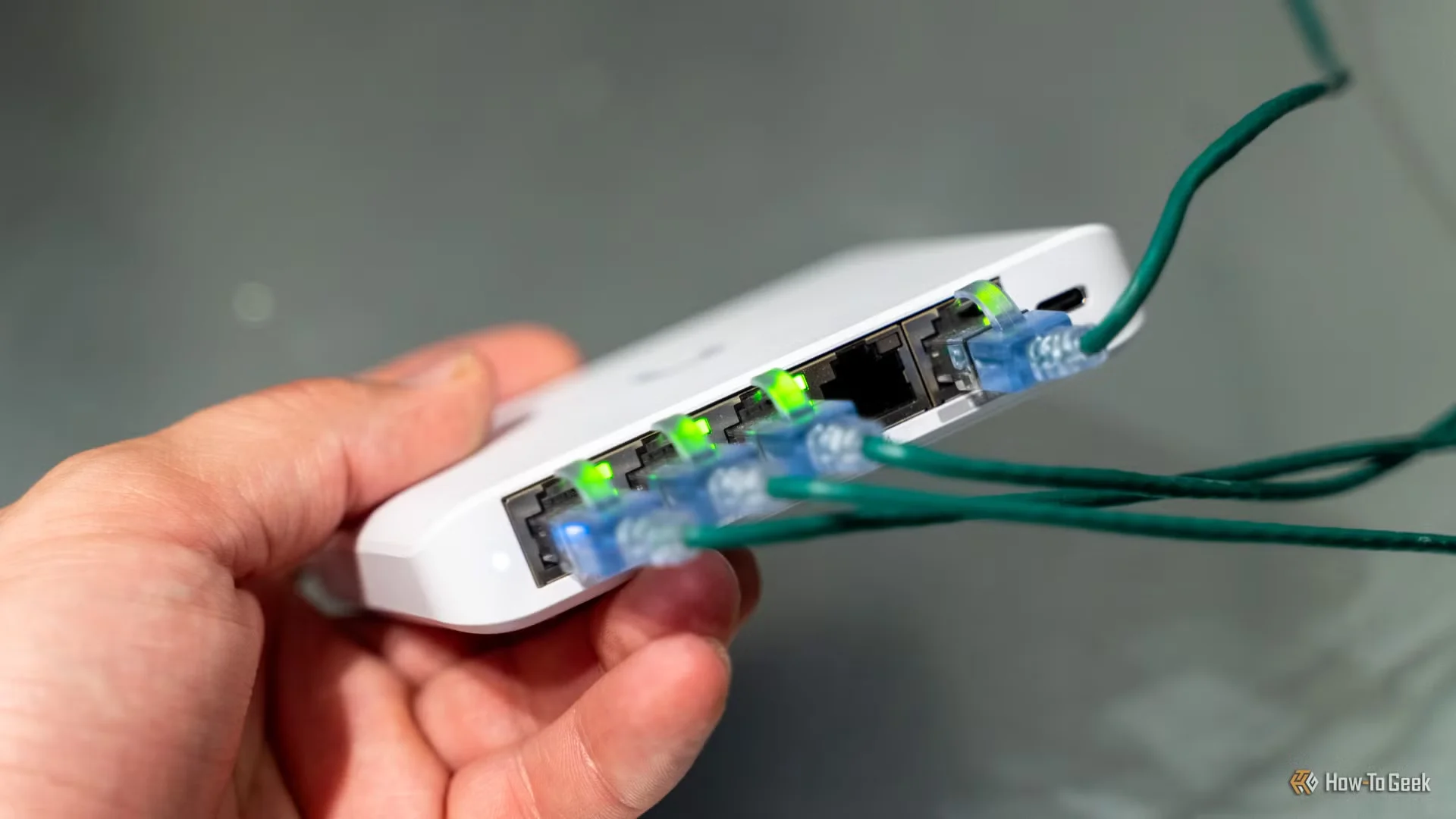
Technical literacy is the best defense against predatory marketing. When building or upgrading a wired home network, consumers should focus on the true bottlenecks: ISP throughput, router processing power, and internal storage write speeds. Instead of spending $50 on a single high-end cable, that budget would be better directed toward a quality unmanaged switch or improving the thermal management of existing network equipment.
The pursuit of enterprise-grade specifications for basic consumer tasks is a classic case of marketing-led overspending. Modern networking should be built on the foundation of standardized, proven hardware that matches actual usage patterns rather than chasing the diminishing returns of specialized industrial components. The industry must shift toward transparency, ensuring that consumers understand that a cable is only as fast as the ports it connects.