🔍 Executive Summary
- Anthropic is pursuing a high-stakes partnership with London-based startup Fractile to develop specialized inference chips. This move is designed to alleviate the pressures of the global AI compute crunch and reduce Anthropic's long-term reliance on NVIDIA, providing critical strategic leverage and operational efficiency for its Claude models.
Strategic Deep-Dive
Analysis: The Critical Shift from Training to Inference Dominance
As the generative AI landscape matures into its next phase, the industry is witnessing a pivotal transition from the ’training era’ to the ‘inference era.’ While the initial gold rush was defined by building massive training clusters to forge foundation models, the long-term economic viability of AI companies now hinges on inference—the process of running those models for hundreds of millions of users. Anthropic’s reported discussions with Fractile, a London-based semiconductor startup, signal a proactive response to this structural shift. By focusing on specialized inference silicon, Anthropic aims to optimize the execution of its Claude models, ensuring that performance does not come at an unsustainable energy or financial cost that current general-purpose architectures demand.
Strategic Leverage and Supplier Negotiation Tactics
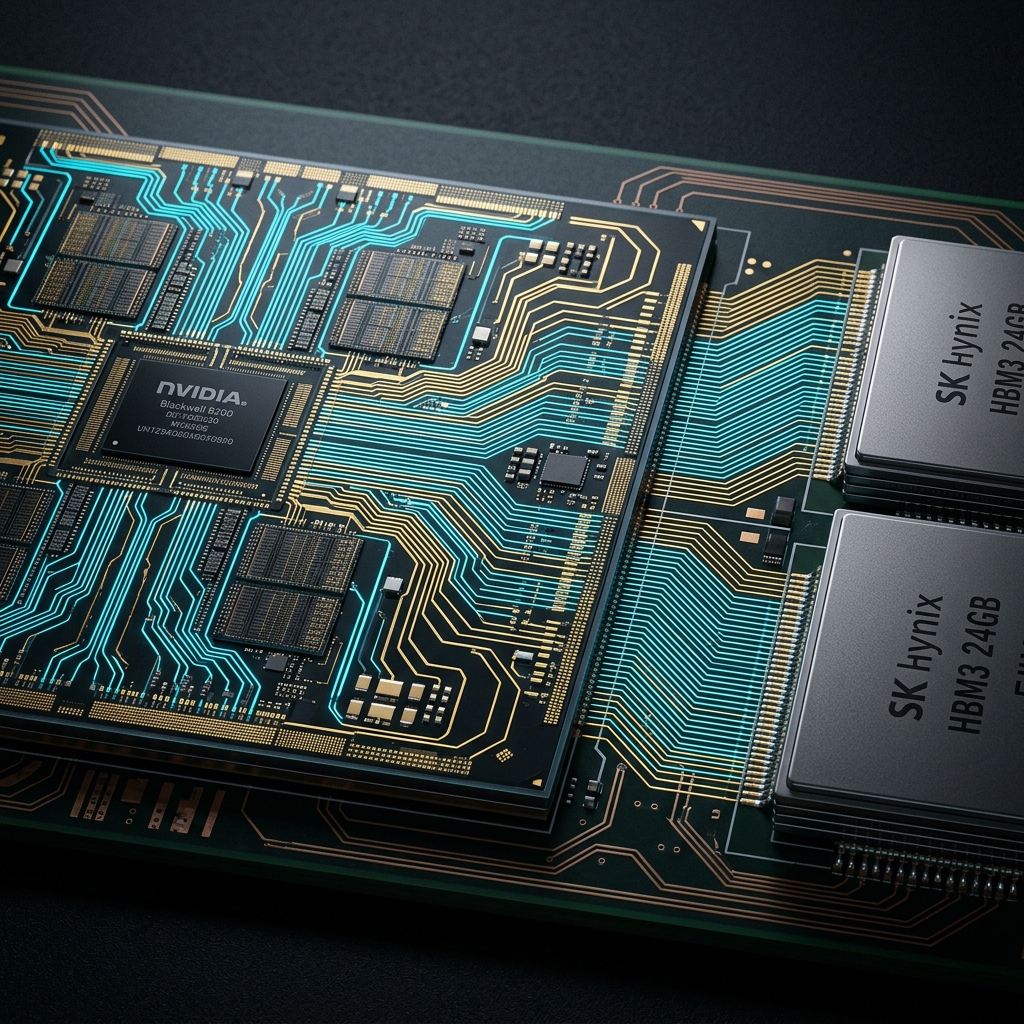
The AI hardware ecosystem has long been characterized by a bottleneck centered around NVIDIA’s H-series and Blackwell GPUs. For a major model developer like Anthropic, this dependency represents both a single point of failure and a massive drain on capital expenditures. Engaging with a startup like Fractile is a masterclass in supply chain diplomacy.
Even before a single chip is delivered to a rack, the existence of a viable hardware partnership provides Anthropic with vital leverage when negotiating supply contracts and pricing with established giants like NVIDIA. By signaling that they are not ’locked in’ to a single proprietary architecture, Anthropic can exert downward pressure on licensing and hardware costs, a necessary tactic as the cost of remaining at the frontier of AI intelligence continues to skyrocket.
Technical Efficiency and the 2027 Architectural Horizon
The ‘AI compute crunch’ is not merely a shortage of physical cards but a shortage of efficient compute. General-purpose GPUs, while remarkably versatile, carry significant overhead—silicon real estate dedicated to tasks that are irrelevant to LLM inference. Fractile’s architecture is expected to address these inefficiencies head-on, potentially utilizing novel approaches like compute-in-memory or ultra-high bandwidth interconnects that minimize the energy-intensive ‘memory wall’ problem.
Although the timeline for mass availability points toward 2027 at the earliest, the groundwork being laid today is essential for the next generation of reasoning models. Anthropic’s willingness to bet on an early-stage startup underscores the industry’s desperation for more specialized compute solutions that can handle the specific matrix multiplication and KV-cache demands of transformer models. If successful, this partnership could redefine the unit economics of generative AI services.
It would allow Anthropic to deploy more complex, low-latency reasoning capabilities—features that are currently cost-prohibitive on standard H100 hardware—giving them a distinct competitive edge against OpenAI and Google in the race for ‘intelligence-as-a-service.’ This move represents a broader trend of vertical integration, where the boundary between software research and hardware engineering effectively disappears.