🔍 Executive Summary
- The Honor D1 humanoid robot outperformed a competitive field of 112 teams to win the Beijing half-marathon with record-breaking times.
- The D1 achieved completion times of 48:19 under remote control and 50:26 in a fully autonomous mode, showcasing advanced navigation capabilities.
- This engineering milestone was made possible by integrating liquid-cooling technology originally developed for high-performance smartphones into the robot's thermal architecture.
Strategic Deep-Dive
A Landmark Achievement in Robotic Endurance and Autonomy
The Beijing half-marathon held in April served as a pivotal demonstration of the rapid maturation within the humanoid robotics sector. Competing against a diverse field of 112 teams, the Honor D1 emerged as the undisputed standout, clocking a completion time of 48 minutes and 19 seconds under remote operation. Even more impressively, the D1 navigated the grueling 21-kilometer course in 50 minutes and 26 seconds in fully autonomous mode, effectively securing the top spot in the robotic category.
This feat is not merely a display of speed; it represents a significant breakthrough in the ability of humanoid systems to manage real-world variables, such as uneven terrain and navigational obstacles, without consistent human guidance.
Thermal Management: The Hidden Hero of Robotic Mobility
From a technical standpoint, the Honor D1’s success can be traced back to its sophisticated thermal management system. Engineers at Honor took a radical approach by integrating liquid-cooling technology originally developed for their high-end smartphones to address the heat generated during sustained locomotion. In the world of humanoid robotics, maintaining thermal stability is one of the most significant engineering challenges; prolonged physical exertion often leads to thermal throttling, where the onboard AI and motor controllers reduce performance to prevent hardware failure.
By repurposing mobile liquid-cooling architectures, the D1 was able to maintain peak computational and mechanical efficiency across the entire race. This specific application of smartphone technology proves that the barriers to long-range robotic mobility are increasingly being solved by consumer electronics innovations.
The Industrial Shift: From Smartphones to Humanoids
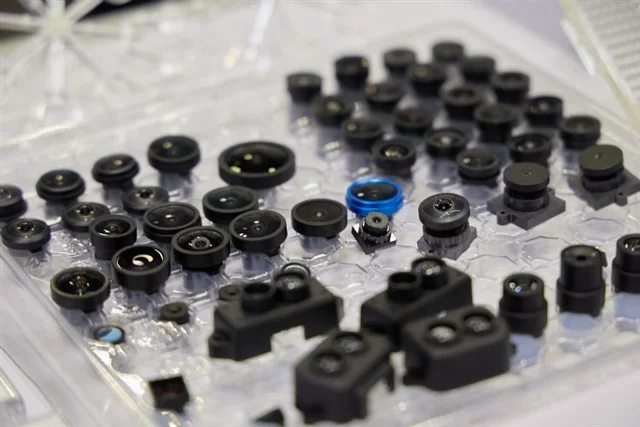
The broader implication of the D1’s victory lies in the shifting industrial landscape of global manufacturing. The very factory infrastructures that were once exclusively dedicated to high-volume smartphone production—including facilities famous for assembling the iPhone—are now being reconfigured to build advanced humanoid robots. This “cross-pollination” of supply chains allows robotics companies to leverage highly refined, mass-produced components such as high-density batteries, power-efficient processors, and advanced cooling systems that have been perfected over years of mobile device cycles.
This synergy significantly reduces production costs and shortens the development timeline for robotic hardware. As the mobile supply chain matures, it is providing the foundational hardware layer necessary for the mass adoption of humanoid robots. The Beijing marathon is just the beginning of a trend where the technical standards of the smartphone industry become the benchmarks for the next generation of autonomous machines.