🔍 Executive Summary
- Intel CEO Lip-Bu Tan has reframed the company’s mission from mere survival to aggressive scaling, designating TSMC as a vital partner to meet the soaring demand for Intel's advanced silicon architectures.
Strategic Deep-Dive
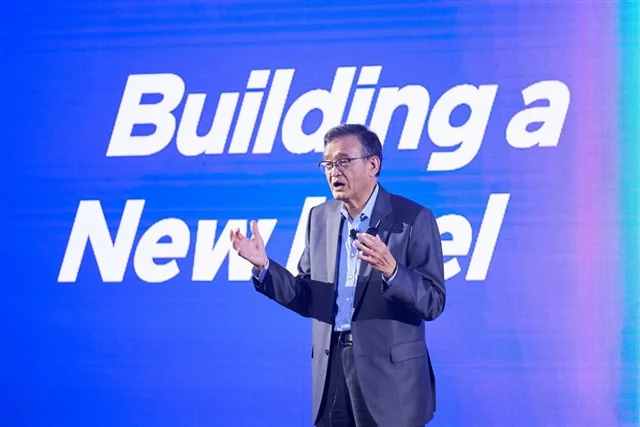
The narrative surrounding Intel Corporation is being aggressively rewritten under the stewardship of CEO Lip-Bu Tan. During the company’s first-quarter 2026 earnings call, Tan delivered a pointed assessment of Intel’s trajectory, noting that the existential dread that characterized the firm just a year ago has been replaced by the tactical challenges of rapid scaling. The primary concern is no longer whether Intel has a future, but whether its supply chain can expand fast enough to accommodate a tidal wave of orders for its next-generation processors.
This shift in sentiment signals a stabilization of the ‘Intel Comeback’ narrative, moving from theoretical restructuring to operational execution.
A central, albeit controversial, pillar of this comeback is the formal elevation of TSMC to the status of a ‘key partner.’ This move represents a seismic shift in Intel’s corporate DNA, which was long defined by a strict adherence to internal manufacturing. By outsourcing significant portions of its leading-edge product line to TSMC, Tan is prioritizing market share and product availability over the prestige of 100% internal fabrication. This hybrid IDM 2.0 model allows Intel to utilize TSMC’s proven high-volume yields while its internal foundry teams focus on ramping the 18A and 20A nodes.
However, from an analyst’s perspective, this heavy reliance on a competitor highlights the ongoing pressure on Intel’s internal manufacturing roadmap. The question remains: is this partnership a temporary bridge or a permanent admission that Intel can no longer outpace the industry alone?
Tan’s leadership style, described as ‘insider-driven’ and pragmatic, focuses on the cold reality of the semiconductor landscape. By scaling capacity through TSMC, Intel ensures that its architectural innovations—particularly in AI and server chips—are not bottlenecked by internal process delays. This strategy has already begun to pay dividends in client confidence, as hyperscalers and OEM partners see a more reliable roadmap.
Yet, the long-term success of the Tan era will ultimately be judged by Intel’s ability to eventually bring those volumes back in-house. If the internal 18A ramp fails to meet efficiency targets by 2026-2027, the current reliance on TSMC could transition from a strategic bridge to a dangerous dependency. For now, the ‘Lip-Bu Tan effect’ has successfully moved the needle from survival to growth, providing Intel with the breathing room necessary to attempt a return to its former glory as a manufacturing powerhouse.