🔍 Executive Summary
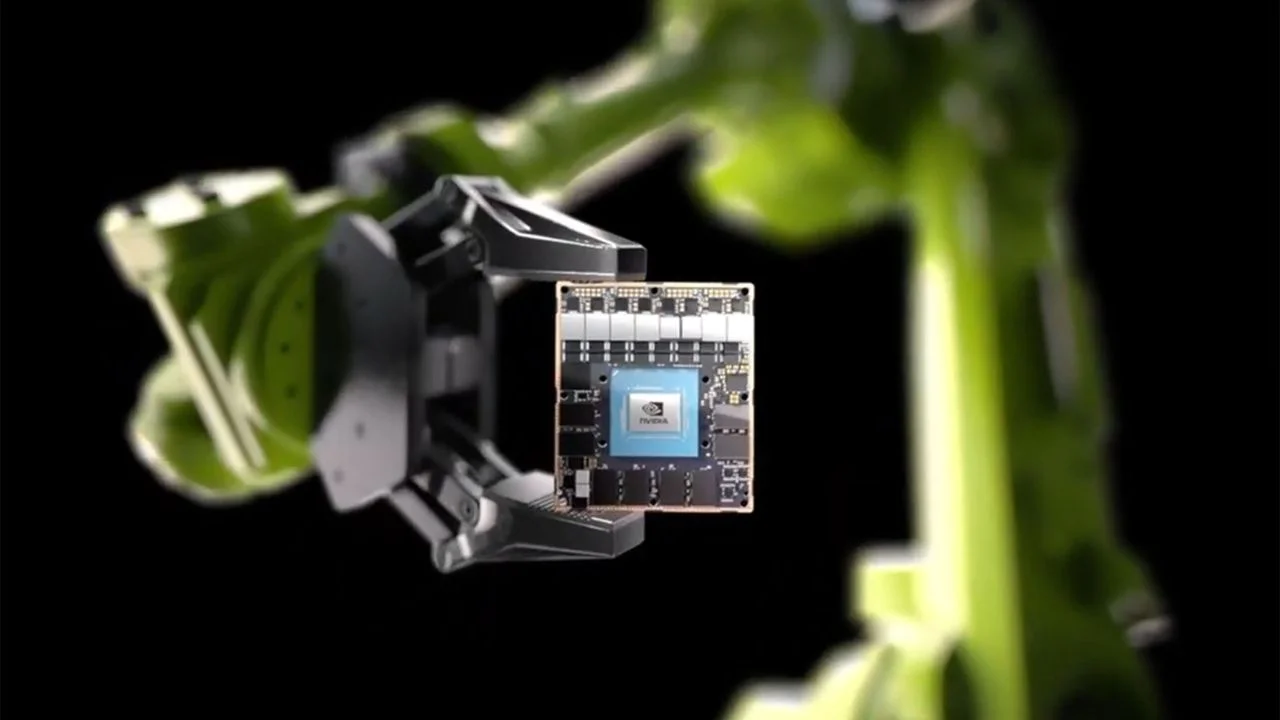
- Nvidia is forced to truncate the lifecycle of its legacy DDR4-based Jetson modules, including Nano and TX2 series, due to a severe component shortage termed the 'RAMpocalypse,' necessitating an immediate shift toward the LPDDR5-powered Orin platform.
Strategic Deep-Dive
The Anatomy of the RAMpocalypse: A Senior Analyst’s Perspective
As a Senior Global Tech Analyst, I view Nvidia’s recent decision to expedite the End-of-Life (EOL) roadmap for legacy Jetson modules as a critical case study in supply chain fragility. For years, the Jetson Nano and TX2 series served as the bedrock of the edge AI revolution, democratizing AI deployment for robotics and industrial automation. However, the industry is now witnessing a phenomenon colloquially termed the ‘RAMpocalypse.’ This is not merely a strategic product cycle refresh; it represents a critical point of failure in the procurement lifecycle for edge-deployment OEMs.
The global semiconductor market’s aggressive pivot toward LPDDR5 and subsequent standards has left legacy DDR4 modules in a precarious position, effectively starving the production lines of older hardware.
Comparative Architecture: The Forced Shift to LPDDR5
The fundamental driver behind this acceleration is the scarcity of DDR4 components. As leading memory vendors like Samsung and SK Hynix reallocate their fab capacity to satisfy the insatiable demand for high-bandwidth memory (HBM) and LPDDR5X for mobile and server sectors, the availability of the specific DDR4 dies required for older Jetson modules has plummeted. The technical gap between the outgoing modules and the successor Orin platform is vast.
While the legacy TX2 and Nano systems struggled with bandwidth bottlenecks, the Orin series utilizes LPDDR5, providing superior throughput and energy efficiency. However, for an OEM, the migration involves significant technical debt, necessitating a comprehensive rewrite of the Board Support Packages (BSP) and potentially re-training models to leverage the newer Tensor core architectures.
Risk Mitigation & Strategic Recommendations for OEMs
For embedded AI developers and manufacturers who have built their entire product ecosystems on legacy Jetson hardware, the ‘RAMpocalypse’ serves as a wake-up call regarding hardware lifecycle management. To mitigate the risks associated with this premature EOL, I propose the following strategic framework:
- Immediate Architecture Audit: Engineering teams must evaluate the dependency on legacy libraries (such as older versions of JetPack) that are tied to the DDR4-based modules. Identifying these dependencies is the first step toward a successful migration to the Orin platform.
- Procurement Resiliency: Future hardware selections must prioritize components with a clear 10-year availability roadmap. Relying on consumer-adjacent memory standards for industrial-grade products is no longer a viable long-term strategy.
- Modular System Design: Developers should adopt a carrier-board approach where the compute module can be swapped without redesigning the entire mechanical and electrical interface of the robot or industrial sensor.
Conclusion: Resiliency as a Core Metric
Nvidia’s move to send older Jetson modules to the ‘great scrapheap in the sky’ is a necessary, albeit painful, adjustment to market reality. In an era where geopolitical tensions and material scarcities can disrupt production overnight, ‘Resiliency’ must become as important a metric as ‘TOPS’ (Tera Operations Per Second) in hardware evaluation. The transition to the Orin platform is now an immediate necessity for survival in the competitive edge AI landscape.
Developers who fail to pivot now risk being left with unfulfillable orders and obsolete inventories, as the DDR4 shortage continues to prune the tree of aging embedded platforms.