🔍 Executive Summary
- At SEMICON Southeast Asia 2026, held under the theme 'Transform Tomorrow,' Malaysia has solidified its status as a critical node in the AI and HPC supply chain. The event showcased the nation's transition from traditional backend services to advanced semiconductor assembly, testing, and packaging (ATP) required for next-generation silicon.
Strategic Deep-Dive
SEMICON Southeast Asia (SEA) 2026, convened from May 5 to 7 at the Malaysia International Trade and Exhibition Center (MITEC) in Kuala Lumpur, has provided a powerful platform for showcasing Malaysia’s evolving role in the global semiconductor ecosystem. As AI and High-Performance Computing (HPC) demand continues to skyrocket, the industry is shifting its focus from front-end node shrinking to back-end innovation—specifically in advanced packaging and heterogeneous integration. Under the theme ‘Transform Tomorrow,’ the conference highlighted how Malaysia is leveraging its decades-old industrial base in Penang and Kuala Lumpur to meet the rigorous technical demands of the AI era.
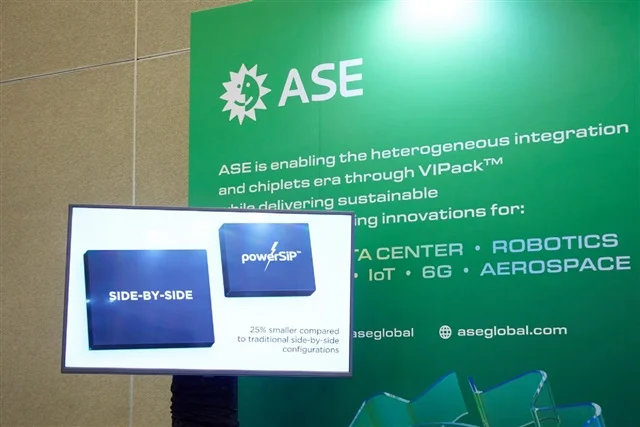
The technical focus of the 2026 event was notably on System-in-Package (SiP), Chip-on-Wafer-on-Substrate (CoWoS) alternatives, and Fan-Out Panel Level Packaging (FOPLP). As top-tier AI chips face thermal and interconnect density bottlenecks, the assembly, testing, and packaging (ATP) stage has become the new frontier for performance gains. Malaysia is positioning itself to capture this value by moving up the value chain, transitioning from labor-intensive manual assembly to fully automated, high-precision facilities capable of handling complex 3D IC architectures.
Data architects at the event emphasized that without the scaling of these back-end services, the throughput of the global AI supply chain would remain severely constrained.
Geopolitically, SEMICON SEA 2026 underscored the success of the ‘China+1’ strategy. Global semiconductor firms are increasingly looking to Malaysia as a neutral, stable hub to diversify their supply chains away from single-source risks. The participation of major global OSATs (Outsourced Semiconductor Assembly and Test) indicates a consensus that Malaysia is no longer just a peripheral player but a central node in the HPC supply chain.
Discussions also delved into the development of local talent and policy frameworks designed to support high-tech manufacturing investments. Furthermore, the exhibition floor showcased innovations in automated testing equipment (ATE) specifically designed for the high-power, low-latency requirements of AI-grade silicon. The expansion of these facilities in Malaysia is set to provide the necessary infrastructure for the continued rollout of global edge computing and hyperscale data center projects.
By aligning regional industrial policy with the specific needs of the AI hardware revolution, Malaysia has effectively transformed its semiconductor trajectory, moving toward a future of high-tech autonomy and strategic importance in the global technology landscape.