🔍 Executive Summary
- SPIL, a subsidiary of ASE Technology Holding, has acquired two major facilities in the Nanke region to drastically scale its advanced packaging capacity, targeting the persistent supply constraints in the AI chip market.
Strategic Deep-Dive
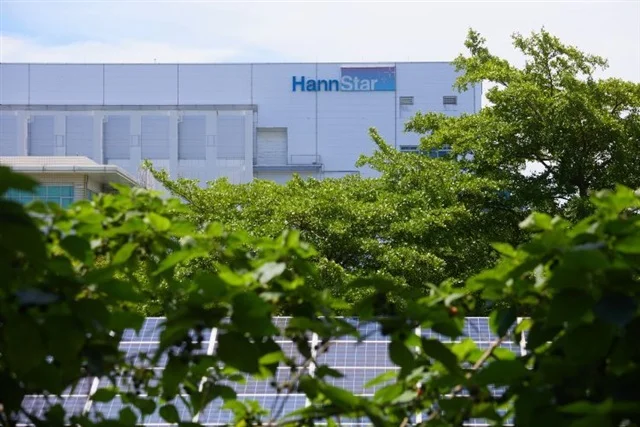
Siliconware Precision Industries Co., Ltd. (SPIL), a cornerstone subsidiary of ASE Technology Holding, has executed a pivotal acquisition in May 2026, purchasing two strategic manufacturing plants in the Nanke (Southern Taiwan Science Park) area. The transaction involves assets previously owned by HannStar Display and its affiliate HannsTouch Technology.
This move is not merely a horizontal expansion; it is a surgical strike aimed at neutralizing the primary bottleneck in the 2026 AI semiconductor value chain: advanced packaging capacity. As generative AI models and large-scale inference workloads demand unprecedented compute density, the industry has hit a wall where packaging, rather than wafer fabrication, dictates total market supply.
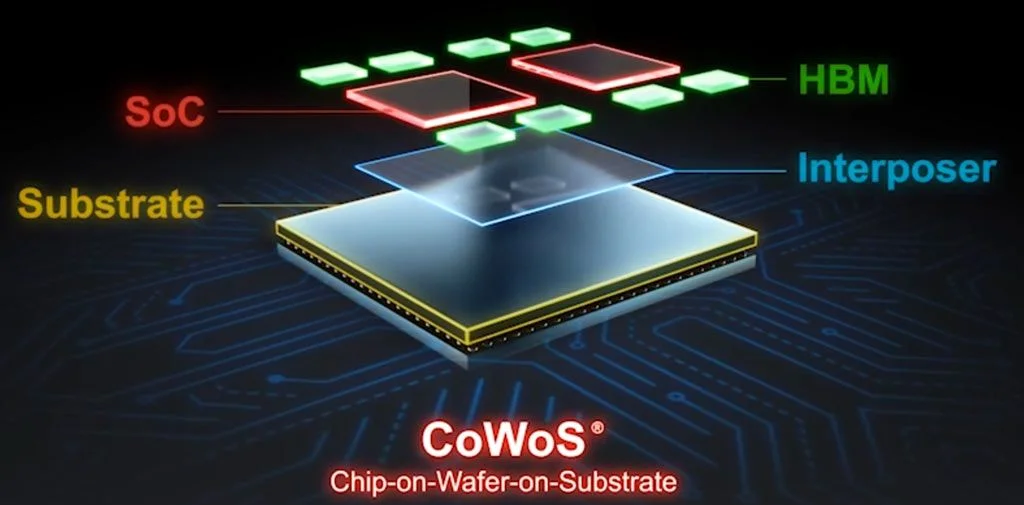
The technical necessity for this expansion is rooted in the rise of 2.5D and 3D integration technologies, such as CoWoS (Chip on Wafer on Substrate) and Fan-Out Wafer-Level Packaging (FOWLP). These processes are essential for stitching together high-performance GPUs and High Bandwidth Memory (HBM). By acquiring existing facilities from HannStar and HannsTouch, SPIL achieves a superior ‘Time-to-Market’ compared to rivals like Amkor or Intel who may be pursuing greenfield expansions.
The conversion of these plants into high-cleanroom environments for advanced OSAT (Outsourced Semiconductor Assembly and Test) operations allows SPIL to absorb the massive overflow of orders from leaders like NVIDIA, AMD, and hyperscalers developing in-house silicon.
Strategically, the Nanke region serves as a hyper-efficient semiconductor cluster. Proximity to TSMC’s advanced nodes in the same park ensures that the physical transit of wafers to the packaging line is minimized, reducing both cycle times and potential yields loss due to environmental exposure. This geographic consolidation is vital in an era where thermal management and signal integrity at the package level are the new frontiers of performance.
SPIL’s aggressive move also signals a consolidation phase in the Taiwan supply chain, where legacy display or sensor manufacturing assets are being repurposed to feed the insatiable AI infrastructure machine.
Competition in the advanced packaging space has intensified in 2026, with Samsung and Intel making significant strides in their integrated device manufacturing (IDM) back-end offerings. However, as an independent OSAT player backed by the global scale of ASE, SPIL offers a neutral and highly specialized alternative that appeals to fabless giants wary of IDM lock-in. The financial health of HannStar and HannsTouch also benefits from this liquidity event, allowing them to pivot their business models while SPIL secures the physical real estate necessary to maintain Taiwan’s dominance in the global backend segment.
Ultimately, these two Nanke plants represent the next generation of ‘AI Foundries,’ where the complex architecture of tomorrow’s intelligence is physically assembled.