🔍 Executive Summary
- The 2026 Beijing Auto Show marks a definitive shift in the automotive industry, where intelligence software, predictive smart cockpits, and AI-driven supply chain resilience have replaced traditional engine or battery specs as the primary competitive metrics.
Strategic Deep-Dive
The 2026 Beijing Auto Show has successfully transitioned from a showcase of mechanical engineering to a premier summit for artificial intelligence and software architecture. Observations by DIGITIMES Research indicate that the traditional benchmarks of automotive excellence—such as acceleration, range, and interior luxury—have been relegated to baseline requirements. In their place, a new set of metrics has emerged: the sophistication of the ‘Smart Cockpit,’ the reliability of autonomous driving stacks, and the agility of the underlying AI supply chain.
This shift represents the industry’s full-scale commitment to the Software-Defined Vehicle (SDV) paradigm.
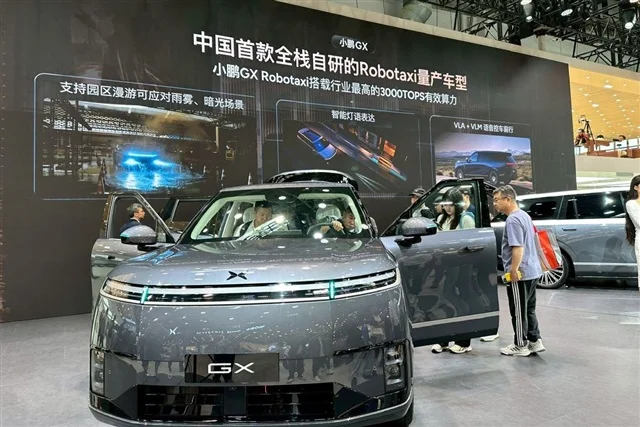
A primary focus of the 2026 exhibition is the ‘Smart Cockpit’ as the ultimate differentiator for user experience (UX). These cockpits are no longer just infotainment screens; they are proactive AI environments. Leveraging high-performance System-on-Chips (SoCs) from the likes of NVIDIA and Qualcomm, these systems utilize sensor fusion to monitor driver fatigue, deploy large language models (LLMs) for natural interaction, and integrate augmented reality head-up displays (AR-HUDs) that overlay real-time data onto the physical road.
The vehicle has effectively become a personalized AI agent. Domestic Chinese manufacturers like Xiaomi, BYD, and Li Auto are leading this charge, forcing global legacy OEMs to either innovate at a digital pace or risk obsolescence in the world’s largest automotive market.
Furthermore, the 2026 show highlights a radical transformation in supply chain dynamics. The ‘Automotive Intelligence’ sector has seen a surge in collaborative ecosystems where Tier-1 suppliers are replaced by direct partnerships between automakers and AI silicon/software specialists. DIGITIMES Research notes that ‘Supply Chain Intelligence’ is now a critical asset—the ability to secure high-end AI chips and integrate complex neural networks into vehicle hardware is the new barrier to entry.
We are seeing a convergence where foreign manufacturers are adopting Chinese autonomous driving stacks for local models, while Chinese firms are utilizing international high-performance computing platforms for their global expansions.
Data throughput and edge computing capabilities within the vehicle are the new ‘horsepower.’ As level 3 and level 4 autonomous systems become commercially viable in urban environments, the battle for the ‘Smart Cockpit’ has become a battle for data sovereignty and ecosystem stickiness. The Beijing Auto Show serves as a stark reminder that the 2026 automotive market is an arena for data scientists and software architects. For global manufacturers, the takeaway is clear: the future is not built in the foundry alone, but in the neural networks that define the driving experience.
The show proves that in the 2020s, the car is no longer a vehicle for transport, but a vessel for intelligence.