🔍 Executive Summary
- ● Executive Briefing: Croma ATE 1Q26 ● Performance: Record-breaking revenue/profit despite traditional seasonal headwinds. ● Market Driver: 100% capacity booking for FY2026 driven by AI server testing requirements. ● Technical Focus: Dominance in System Level Test (SLT) and high-growth Silicon Photonics testing. ● Outlook: Sustained structural growth as AI infrastructure complexity necessitates rigorous verification cycles.
Strategic Deep-Dive
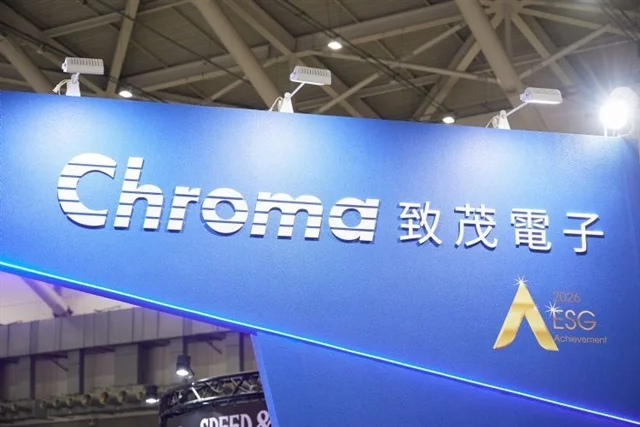
Croma ATE has shattered historical market patterns with its first-quarter 2026 financial disclosure, reporting record-breaking revenue and profitability in a period traditionally marked by a cyclical slowdown in the electronic measurement sector. The company’s announcement that customers have already booked its entire manufacturing capacity for the fiscal year 2026 is a significant market anomaly, reflecting the desperate urgency within the AI hardware ecosystem. As AI servers transition toward more complex heterogeneous architectures, the demand for System Level Test (SLT) and silicon photonics verification has reached a critical boiling point.
From a technical perspective, the rise of SLT is a response to the increasing failure costs associated with high-value AI clusters. Unlike traditional functional tests, SLT evaluates the entire integrated system—comprising hundreds of GPUs, high-bandwidth memory (HBM3e/4), and specialized power management ICs—under real-world operational stress. Croma ATE has captured this niche by offering testers that can handle the massive transient power loads and thermal profiles unique to AI silicon.
Furthermore, as data center interconnects migrate from electrical to optical signaling to overcome latency, Croma’s photonics testing equipment has become a prerequisite for ensuring signal integrity in high-speed transceivers.
The company emphasized that its growth in AI server power supply testing is particularly robust. These power units must manage fluctuating loads that are significantly higher than previous server generations, requiring sophisticated measurement tools that can simulate extreme power scenarios. The ‘AI super-cycle’ is essentially overriding the typical Q1 doldrums, as hyperscalers and server OEMs prioritize supply chain security and testing throughput over cost considerations.
For Croma ATE, this means an shift from a reactive order-based model to a strategic capacity-allocation model. Analysts view these results as a leading indicator for the broader AI infrastructure market; when testing equipment is booked out a year in advance, it signals that the physical rollout of AI hardware is still in its early-to-mid acceleration phase. As complexity increases with the adoption of 1.6T networking and advanced liquid cooling, the role of advanced ATE (Automated Test Equipment) will only become more vital.
Croma ATE’s ability to outpace market trends underscores its position as an essential enabler of the AI hardware revolution, turning the ’testing bottleneck’ into a lucrative technological moat that is set to sustain growth well into 2027.