🔍 Executive Summary
- An empirical comparison using 3D printed models demonstrates that while smartphone-based LiDAR is revolutionary for room-scale accessibility, it cannot match the point cloud density and geometric fidelity of industrial structured light scanners.
Strategic Deep-Dive
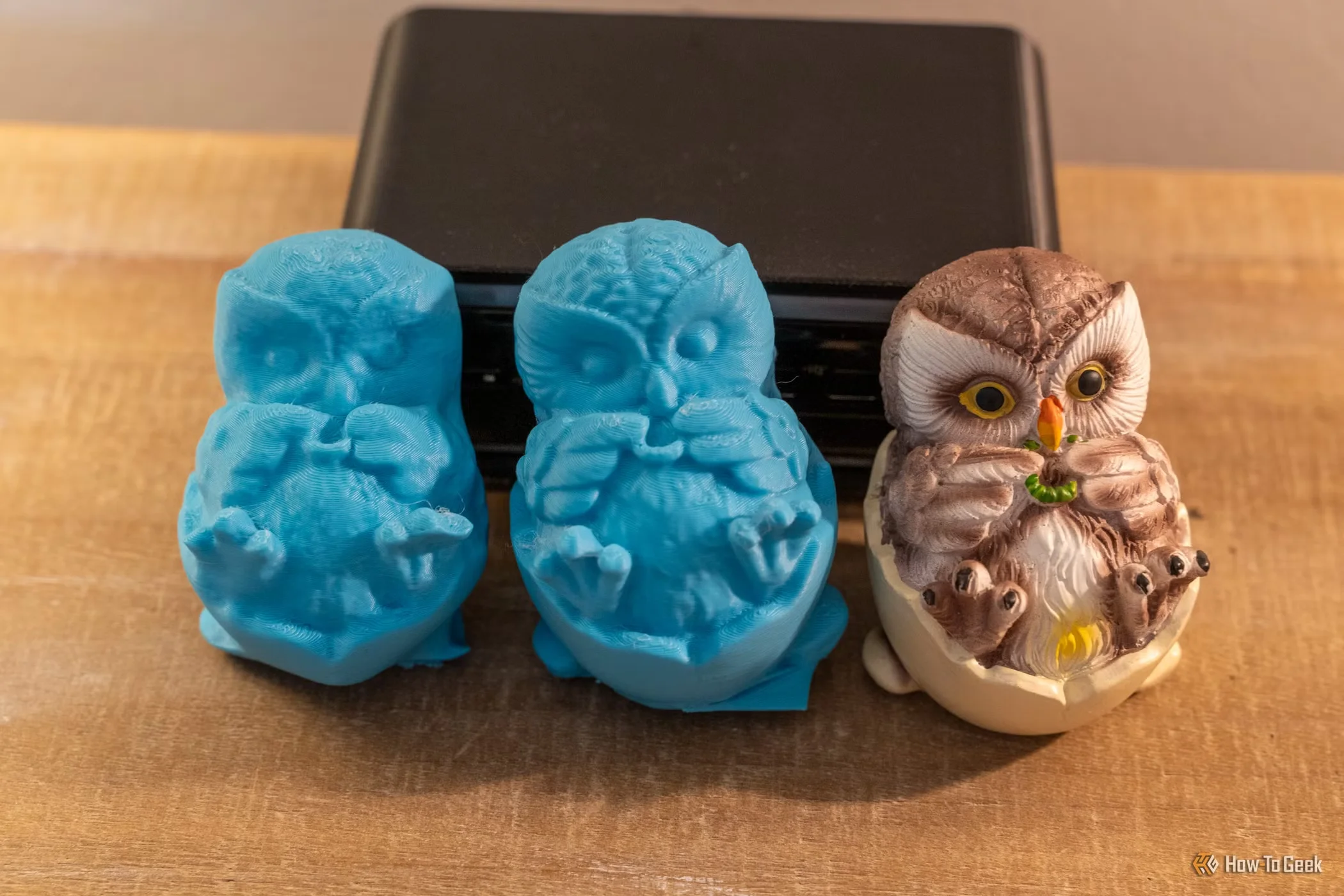
The integration of LiDAR and advanced photogrammetry into modern smartphones has revolutionized the accessibility of 3D scanning technology, bringing what was once an industrial capability to the palm of a consumer’s hand. However, a technical synthesis of recent experiments—specifically comparing high-end iPhones to professional-grade 3D scanning hardware—reveals a significant performance disparity that remains a critical hurdle for industry professionals. The primary experiment involved scanning a complexly textured, painted owl figurine using both an iPhone and a dedicated industrial scanner, with the subsequent 3D printed models serving as physical evidence of the digital reconstruction’s accuracy.
The technical divergence begins at the sensor level. Modern iPhones utilize Time-of-Flight (ToF) LiDAR, which emits broad laser pulses optimized for room-scale mapping and augmented reality applications. While effective for distance measuring up to five meters, it lacks the resolution required for sub-millimeter object precision.
In contrast, professional scanners employ ‘Structured Light’ or ‘Active Stereo Depth Sensing’ technologies. These systems project high-contrast patterns onto a surface and use high-resolution cameras to triangulate the displacement of those patterns with microscopic accuracy. When comparing the raw data, the professional unit produces a vastly superior point cloud density, capturing the nuances of the figurine’s individual brushstrokes and fine structural cracks that the iPhone simply cannot perceive.
Furthermore, the processing pipelines differ fundamentally. Due to mobile hardware constraints, smartphones rely heavily on software interpolation and aggressive mesh decimation. To create a manifold (3D-printable) model in real-time, the mobile software effectively ‘guesses’ the geometry of missing data points, leading to a visible ‘softening’ effect where sharp edges and intricate details are merged or smoothed out.
During the 3D printing phase of this test, the iPhone’s output manifested as a generalized representation of the owl, lacking the geometric fidelity required for high-end artistic replication or engineering reverse-modeling. The professional scan, however, maintained the sharp facets of the original figurine’s mold. This performance gap is rooted in the Hardware-vs-Software trade-off: mobile devices prioritize user experience and real-time visualization, whereas professional units focus on raw data acquisition and environmental noise suppression.
For tasks where every fraction of a millimeter is essential—such as industrial quality control or dental prosthetics—dedicated scanners remain the only viable solution. This synthesis confirms that while the iPhone serves as an excellent ‘gateway’ technology for casual hobbyists or quick field previews, it functions more as a complementary tool rather than a replacement for high-fidelity industrial infrastructure. As we look toward the future, the ‘utility-per-scan’ for smartphones will continue to improve, but the physical constraints of miniaturized optics ensure that professional scanners will maintain their dominance in the high-precision domain.