🔍 Executive Summary
- Essential homelab services like VPNs and reverse proxies represent a strategic investment where constant availability outweighs usage frequency, acting as the foundational security layer for personal digital ecosystems.
Strategic Deep-Dive
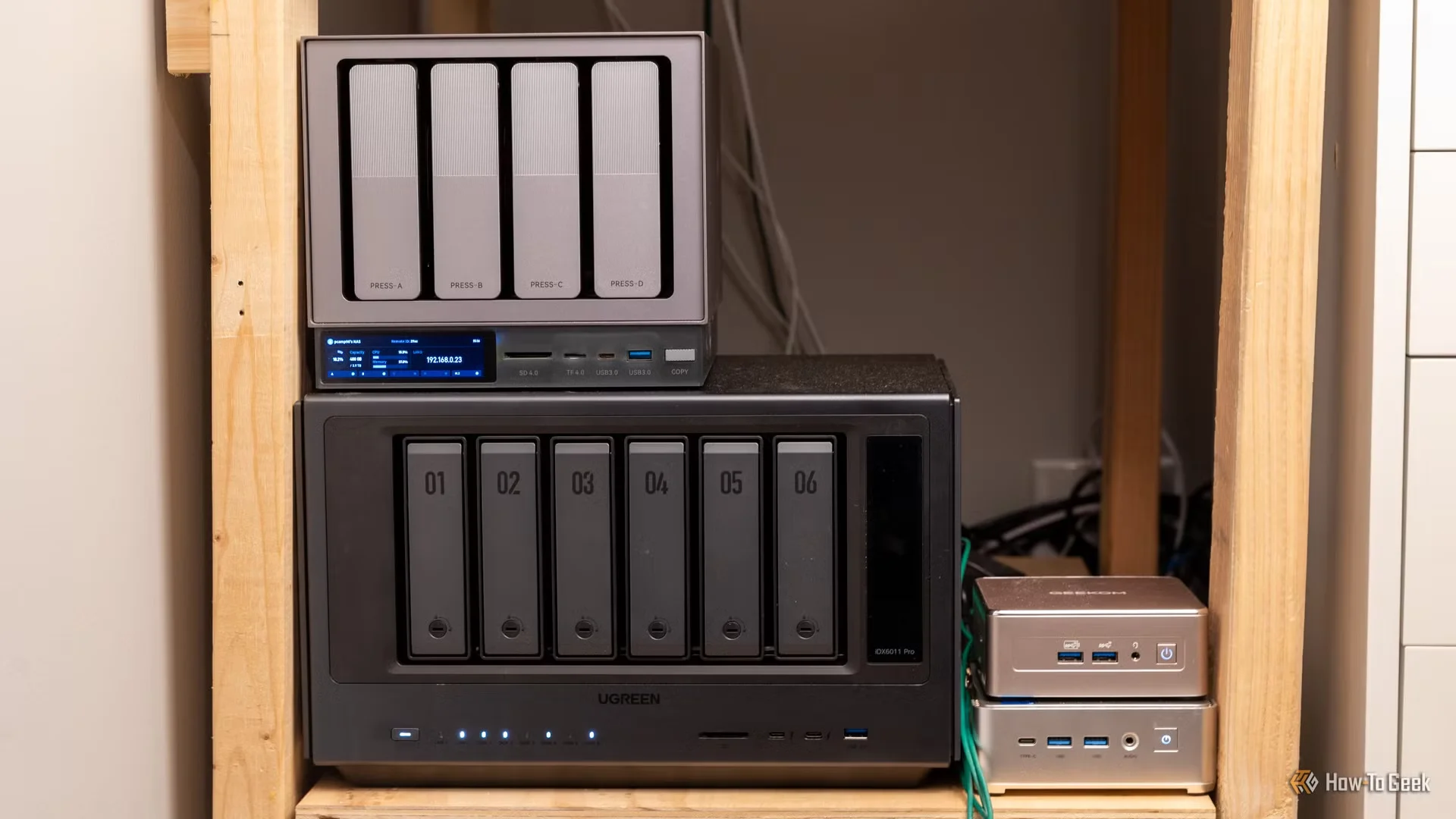
A fundamental paradox exists within the modern homelab community: the most critical services are often those that consume the most uptime while seeing the least amount of active engagement. According to a technical synthesis of essential home server components, services like VPNs and reverse proxies have become the bedrock of personal digital infrastructure, regardless of their ‘utility-per-hour’ metrics. For an enthusiast running a sophisticated setup involving a Ugreen NAS or high-performance Geekom mini-PCs, the objective isn’t to maximize CPU utilization every hour, but to ensure robust, always-on connectivity and security for the moments that matter.
From an architectural standpoint, the reverse proxy—typically managed via Nginx Proxy Manager or Traefik—serves as the ‘front door’ to the entire ecosystem. It handles SSL/TLS termination and directs domain-based traffic to internal local IP addresses and Docker containers. Because it sits at the edge of the network, its failure represents a Single Point of Failure (SPOF) for the entire lab’s external accessibility.
Even if a user only checks their internal dashboard once a week, the proxy must remain operational 24/7 to maintain the integrity of automated scripts, SSL certificate renewals, and unpredictable remote access needs. Similarly, VPN protocols like WireGuard have shifted the landscape of encrypted tunneling. Unlike older, heavier protocols, WireGuard offers high-speed, kernel-level performance with minimal overhead, making it ideal for the ‘always-on’ requirement.
Its value isn’t derived from constant data transfer, but from the peace of mind that a secure SD-WAN-like connection is available instantly whenever a user connects from an untrusted public network.
This shift in home networking philosophy moves away from simple storage toward complex infrastructure engineering. The Total Cost of Ownership (TCO) of running these services is now negligible thanks to the power efficiency of modern N100 or Ryzen-based mini-PCs, which draw minimal wattage while idling. Therefore, the strategic value of these services is defined by ‘availability-when-needed’ rather than raw frequency of use.
If the reverse proxy or VPN fails at a moment of critical need—such as accessing emergency documents or managing a home security camera while traveling—the entire utility of the homelab is negated. This underscores why veteran server administrators prioritize the stability of these silent, background services over more visible applications. Ultimately, the maturity of a homelab is measured not by the variety of hosted apps, but by the reliability of its foundational gateway services, which ensure that the user’s digital sovereignty remains intact and accessible every second of the year.