🔍 Executive Summary
- The 2026 Beijing Auto Show has solidified China's position as the primary testbed for software-defined mobility. As J.P. Morgan highlights the standardization of ultra-fast charging and embodied AI, the industry faces a radical shift toward a 'disposable-car' lifecycle model, prioritizing rapid hardware iteration over long-term mechanical durability.
Strategic Deep-Dive
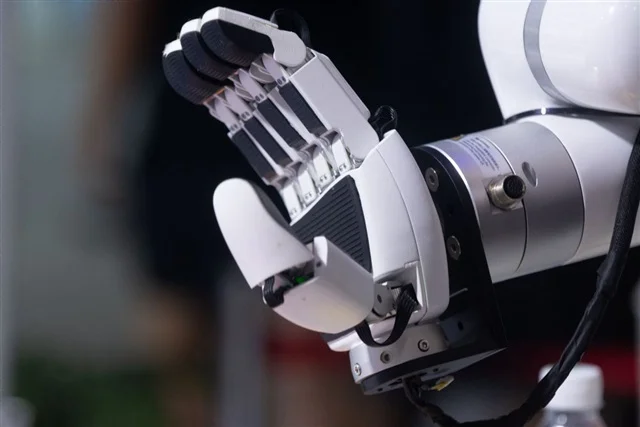
The 2026 Beijing Auto Show has emerged as the definitive venue for the convergence of automotive engineering and advanced robotics, signaling a departure from traditional electrification toward deep-integrated ‘Embodied AI.’ According to comprehensive research notes from J.P. Morgan and primary supply-chain intelligence, Chinese Original Equipment Manufacturers (OEMs) are no longer positioning intelligent features as premium upgrades. Instead, ultra-fast charging (800V/900V architectures), intelligent powertrains with real-time optimization, and embodied AI are now presented as standard baseline configurations for the mass market.
This shift represents a massive commoditization of high-level intelligence that is set to disrupt the global competitive landscape.
A core highlight of the show is the rapid adoption of L2+ and L4 autonomous driving capabilities. The integration of embodied AI—where the vehicle operates as a unified intelligent agent capable of complex physical-world interaction—is being facilitated by a transition to centralized E/E (Electrical/Electronic) architectures and high-compute zonal controllers. J.P.
Morgan points out that this aggressive technological scaling is central to China’s global export strategy, providing a technological ‘shock and awe’ factor for international consumers. However, the most controversial trend emerging is the ‘disposable-car’ concept. This implies a radical reimagining of the vehicle lifecycle, where the focus shifts from 10-year mechanical durability to 24-month hardware-software iteration cycles.
By treating the vehicle as a piece of high-tech consumer electronics rather than a long-term asset, Chinese manufacturers can bypass the legacy constraints of traditional automotive reliability testing to deploy the latest AI silicon at a blistering pace.
Technically, this is enabled by modular vehicle platforms that allow for easy replacement of battery packs and compute modules. The implications are profound: it aligns the automotive replacement cycle with the Moore’s Law-driven pace of the semiconductor industry. While this risks high depreciation for the consumer, it ensures that the hardware environment never becomes a bottleneck for evolving AI software capabilities.
Furthermore, advancements in intelligent powertrains demonstrated at the show highlight a move toward integrated silicon carbide (SiC) inverters and solid-state battery precursors, addressing the charging latency that has long plagued NEV adoption. The show effectively serves as a declaration that the future of mobility is not just electric, but autonomous, robotic, and increasingly transient. As Chinese brands push these standards globally, legacy OEMs in Europe and North America will be forced to choose between adopting this rapid-iteration model or risking technological obsolescence in a market that no longer values long-term mechanical permanence.