🔍 Executive Summary
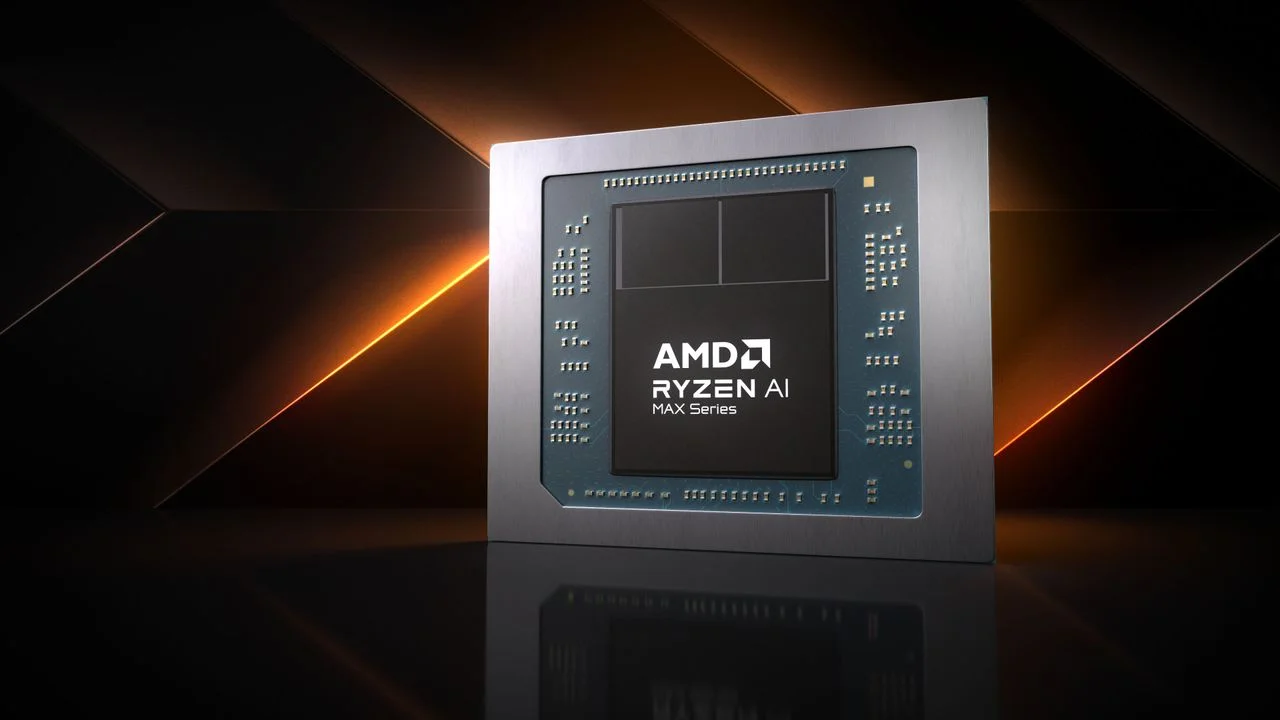
- Leaked specifications for the AMD Ryzen AI Max+ PRO 495 reveal a massive 192GB unified memory pool. While PassMark results show only modest gains over the Strix Halo architecture, the expanded memory capacity positions this APU as a formidable tool for local AI development and professional workloads.
Strategic Deep-Dive
Technical Deep Dive: The 192GB Unified Memory Advantage
The leaked specifications for the AMD Ryzen AI Max+ PRO 495 mark a significant milestone in APU (Accelerated Processing Unit) architecture. By integrating a staggering 192GB of unified memory, AMD is addressing the most critical bottleneck in modern computing: the data transfer overhead between the CPU and the GPU. In a traditional system equipped with a discrete GPU, data must constantly travel across the PCIe bus—a process that introduces latency and consumes significant power.
With a unified architecture, the CPU and the integrated GPU share the same memory pool, allowing for ‘zero-copy’ operations where both processors can access the same data points simultaneously. This 192GB pool isn’t just about size; it’s about the architectural synergy that enables high-speed data manipulation without the traditional hardware roadblocks found in separate silicon layouts.
Quantifying Performance: APU vs. Discrete GPU Paradigms
Initial PassMark benchmark results suggest that the Ryzen AI Max+ PRO 495 offers what analysts call a ‘modest update’ compared to its predecessor, the Strix Halo. While raw clock speeds and core counts haven’t seen a revolutionary leap, focusing solely on these metrics misses the broader strategic shift. A discrete GPU with 24GB of VRAM, such as an RTX 4090, often struggles with professional-grade AI tasks due to memory capacity limits, even if its compute speed is superior.
The Ryzen AI Max+ PRO 495 flips this script by prioritizing capacity and access speed. By providing 192GB of addressable memory to the GPU cores, AMD allows professional users to bypass the PCIe bottleneck entirely, providing a smoother experience for high-resolution 3D rendering and complex simulations that would otherwise choke on a standard discrete card’s limited VRAM.
Professional Justification: Running Llama 3 70B Locally
The ‘PRO’ designation of this chip is justified primarily by its suitability for Large Language Models (LLMs). For instance, a model like Meta’s Llama 3 70B, when run at 16-bit precision, requires roughly 140GB of memory just to load the weights, not accounting for the KV cache needed during inference. On typical hardware, this requires expensive multi-GPU setups.
The Ryzen AI Max+ PRO 495, however, can house the entire model within its 192GB footprint with ample room to spare for active context and system tasks. This capability transforms a high-end laptop or small-form-factor workstation into a standalone AI development hub. As AI workloads become more pervasive in enterprise environments, the ability to maintain massive models entirely within the unified memory architecture—without the cost and heat of multiple discrete GPUs—becomes a decisive competitive advantage for AMD in the professional workstation market.