🔍 Executive Summary
- Nvidia CEO Jensen Huang has reaffirmed a strategic commitment to restrict China's access to top-tier AI hardware, prioritizing national security and Western technological hegemony over immediate market expansion.
Strategic Deep-Dive
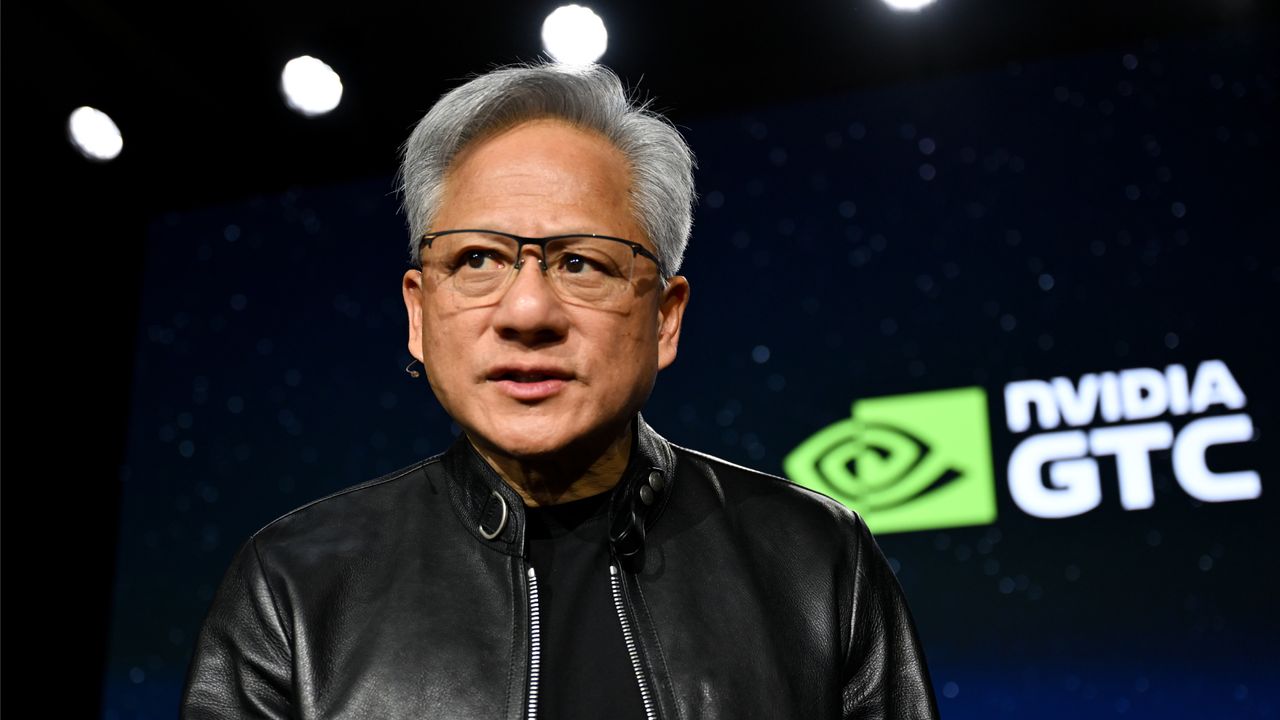
The semiconductor landscape reached a definitive inflection point on May 5, 2026, as Nvidia CEO Jensen Huang utilized a high-profile Nikkei Asia Tech platform to formalize the company’s restrictive stance on China. This pronouncement is not merely a reaction to shifting U.S. Department of Commerce export controls but a proactive strategic alignment that prioritizes long-term technological dominance over short-term revenue retention.
Huang’s assertion that China must not have access to the ‘most advanced’ chips underscores a shift in global tech journalism from reporting on market growth to analyzing the weaponization of high-performance computing (HPC).
At the core of this conflict is the widening gap between the ‘Blackwell’ or ‘Rubin’ architectures and the downgraded silicon currently permissible for export. Historically, China accounted for over 20% of Nvidia’s data center revenue, a significant financial stake that Nvidia has attempted to protect through the creation of China-specific variants like the H20 and L20. However, as 2026 progresses, the definition of ‘red line’ technology has migrated toward the sub-3nm and 2nm nodes.
Huang’s comments suggest that Nvidia will no longer attempt to walk a tightrope; instead, it is reinforcing a technological moat. This is particularly devastating for Chinese AI players because hardware optimization and software workarounds—such as those attempted by Bytedance and Huawei—eventually hit a physical wall when compared to the massive FLOPs (Floating Point Operations per Second) and interconnect bandwidth offered by Nvidia’s premier HBM3e-integrated systems.
The data analysis of the current landscape reveals a stark reality for the Chinese semiconductor industry. Without access to Extreme Ultraviolet (EUV) lithography machines from ASML, SMIC’s attempts at 5nm and 7nm nodes using Deep Ultraviolet (DUV) multi-patterning result in prohibitively low yields and high power consumption. By restricting the most advanced chips, Huang is effectively capping China’s AI model training capacity at a level that is generations behind the West.
This leads to an asymmetric information and intelligence environment where the most potent tools for scientific discovery, cryptography, and military strategy remain under a specific geopolitical umbrella.
Looking forward, this stance will likely accelerate the bifurcation of the global technology economy. We are witnessing the emergence of two distinct tech stacks: a Western-centric stack powered by Nvidia’s cutting-edge AI and TSMC’s leading-edge nodes, and a Chinese stack centered around domestic alternatives like Huawei’s Ascend series. While Beijing is pouring billions into the ‘Big Fund’ to achieve self-reliance, the complexity of 2nm production and the scarcity of high-bandwidth memory (HBM) supply suggest that the hardware divide will persist for the remainder of the decade.
Huang’s remarks represent the end of the globalized semiconductor consensus, signaling a new era where chips are treated as the most vital strategic assets of national security rather than mere commodities.