🔍 Executive Summary
- Industry giants Samsung, SK hynix, and Micron have commenced the development of DDR6 memory in collaboration with JEDEC, aiming for a 2028 commercial rollout to address the massive bandwidth demands of future AI-driven data centers.
Strategic Deep-Dive
The Architectural Evolution: From DDR5 to DDR6
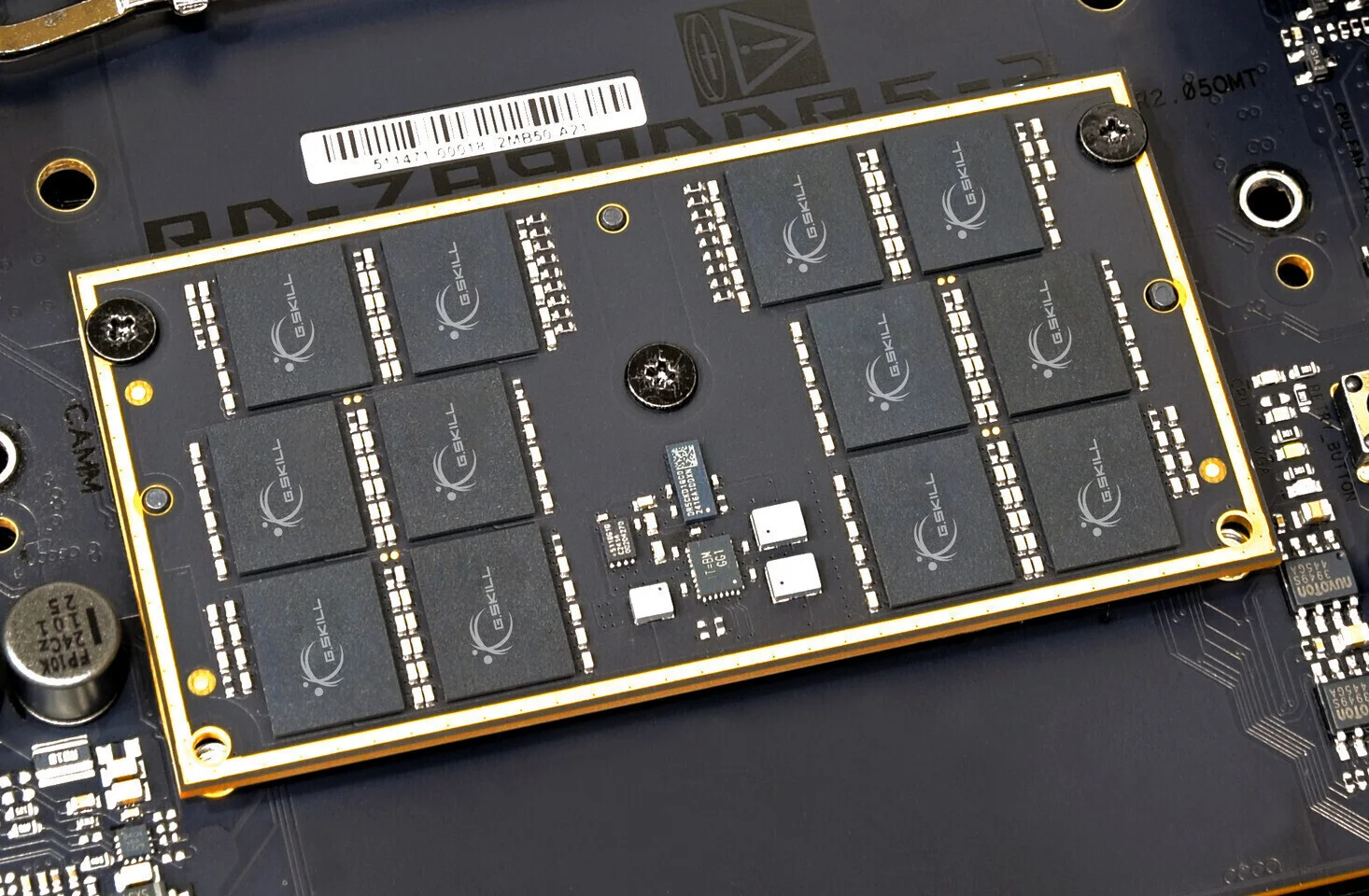
As the computing world begins to saturate the capabilities of DDR5 memory, the semiconductor industry is pivoting toward the next frontier: Double Data Rate 6 (DDR6). This upcoming standard is not merely an incremental speed bump but a fundamental redesign of memory architecture necessitated by the insatiable appetite for bandwidth in the Artificial Intelligence era. The Joint Electron Device Engineering Council (JEDEC) is currently the theater for intense collaboration and negotiation between the world’s leading silicon architects.
The goal is to establish a specification that can support the next generation of server and desktop processors, ensuring that memory performance does not become the primary bottleneck in hyperscale data centers.
The ‘Big Three’ Alliance: Strategic Design and Lab Progress
According to detailed reports from the South Korean industry publication ‘The Elec,’ the undisputed leaders of the memory market—Samsung Electronics, SK hynix, and Micron Technology—have officially moved DDR6 from the theoretical phase into active laboratory design. This phase involves rigorous testing of new signaling technologies. While DDR5 utilized NRZ (Non-Return-to-Zero) signaling, there is widespread speculation that DDR6 may adopt more advanced modulation schemes like PAM3 or PAM4 to double the effective data rate without requiring impossible increases in clock frequency.
This transition presents significant challenges in signal integrity and thermal management. The fact that the ‘Big Three’ are already coordinating on module development suggests a unified push to overcome these physical barriers, ensuring that the global hardware ecosystem remains on a predictable path toward 2028.
Market Impact and the 2028 Commercial Horizon
The consensus within the industry points to a 2028 commercialization window for DDR6. This timeline is strategic; it aligns with the projected maturity of PCIe Gen 7 and the arrival of next-decade CPU architectures from Intel and AMD. For the enterprise sector, DDR6 will be the backbone of ‘AI-First’ server infrastructures, providing the throughput necessary for real-time processing of massive neural networks.
For the South Korean semiconductor industry, which holds nearly 70% of the global DRAM market share, the successful standardization and early rollout of DDR6 are critical to maintaining its technological hegemony. By 2028, we expect to see the first production-ready DDR6 modules integrated into high-performance computing (HPC) nodes, marking a definitive shift in the landscape of volatile memory. This roadmap provides a vital blueprint for hardware engineers and data center architects as they prepare for the high-bandwidth requirements of the late 2020s.